Sealife guideThe green sea turtleChelonia mydas
Last updated on 08/03/2026 at 11:01 PM
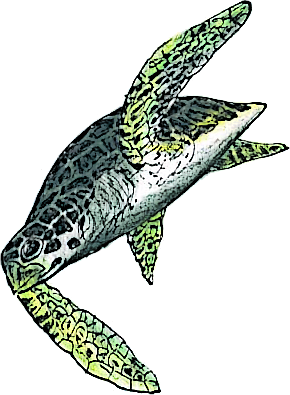
The green sea turtle (Chelonia mydas)
Taxonomy
English names
Green sea turtle
French namesTortue de mer verte
Spanish namesTortuga verde
Scientific nameChelonia mydas (Linnaeus, 1758)
Description
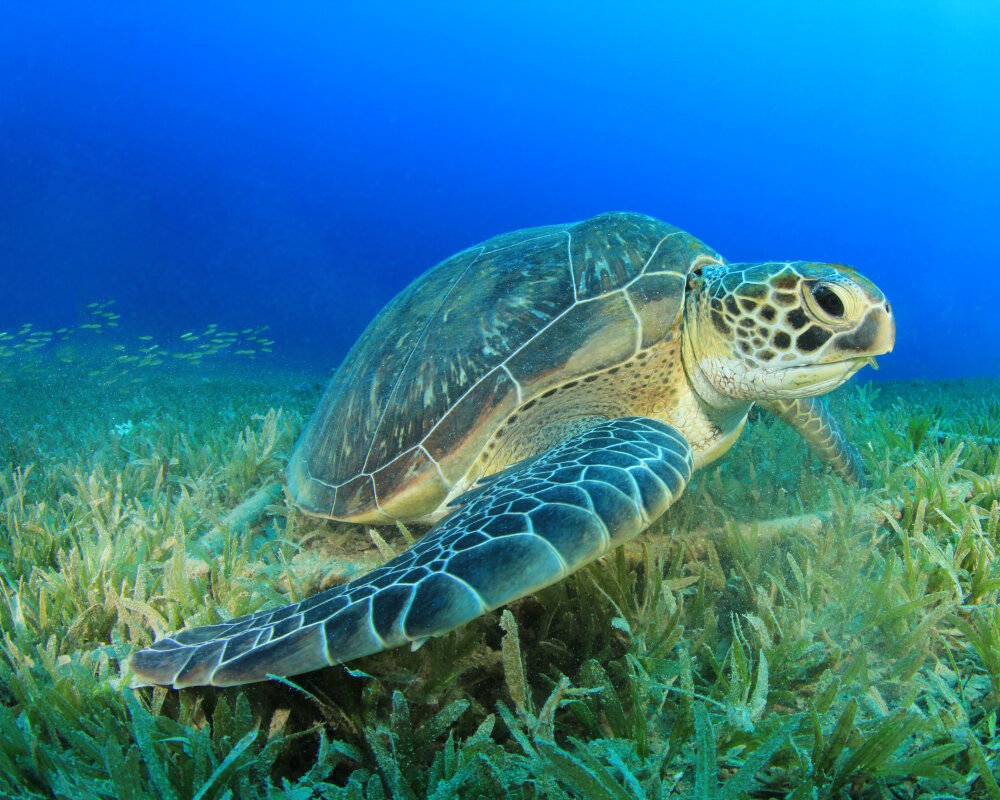
The green sea turtle, as its name suggests, has a predominantly greenish coloration, although it can also sometimes appear brownish with marbled patterns. The surface of its shell is smooth.
The green sea turtle weighs between 220 and 660 pounds and reaches an average length of about 4 feet.
The dorsal surface of the green sea turtle's shell is covered with scutes, including 5 vertebral scutes bordered on each side by 4 pairs of lateral scutes, just like the
hawksbill sea turtle.
Geographic range
The green sea turtle inhabits tropical and subtropical waters around the world and travels long distances to return to the beach where it was born. They migrate over vast distances between their nesting sites and feeding grounds.
Habitat
The green sea turtle favors coral reefs and coastal areas rich in seagrass beds.
Diet
The green sea turtle is herbivorous as an adult. It feeds exclusively on algae and marine plants, which it grazes for much of the day, helping maintain the health of marine ecosystems.
In contrast, the diet of juvenile turtles is primarily carnivorous. They feed on small marine invertebrates, small fish, and jellyfish.
Reproduction
The female mates with several males. She may travel thousands of miles to reach her nesting site, but like all
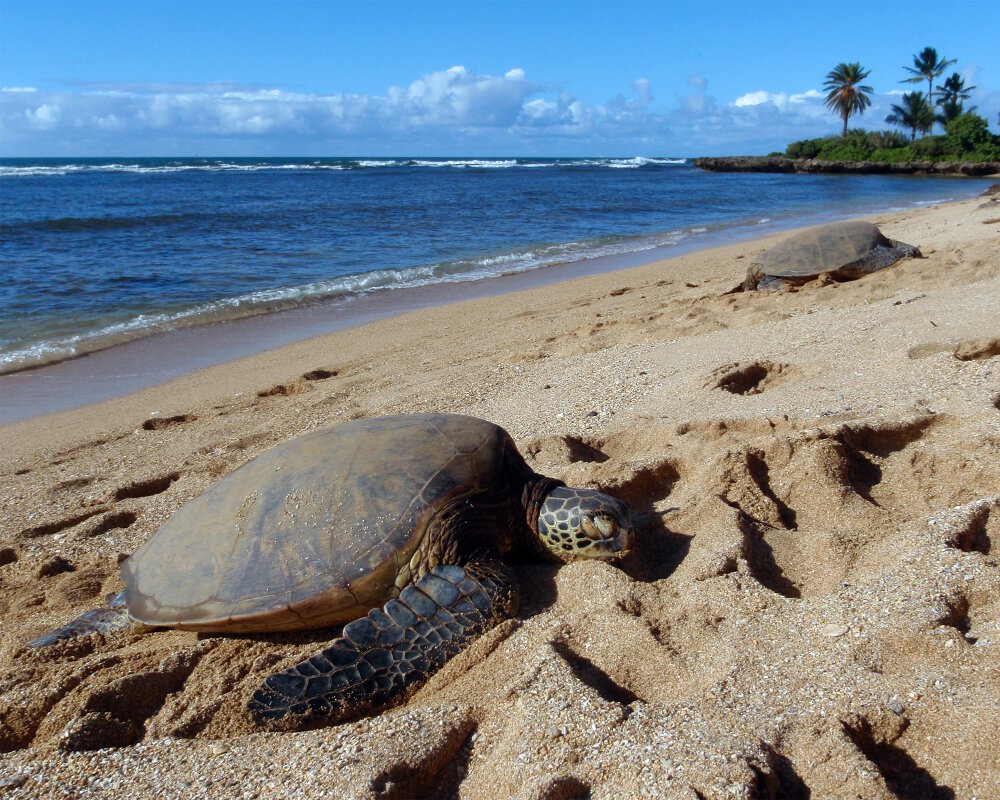
sea turtles, the green sea turtle does not care for her eggs after burying them in the sand during the night. After about 2 months of incubation, the hatchlings emerge from their eggs and make their way toward the ocean, where many predators await.
The temperature determines the sex of hatchlings at birth: if the temperature does not exceed 84.2°F, the hatchlings will be males, whereas if it reaches 86°F, they will be females !
Did you know ?
The green sea turtle is one of the few
sea turtle species still found in the Mediterranean sea.
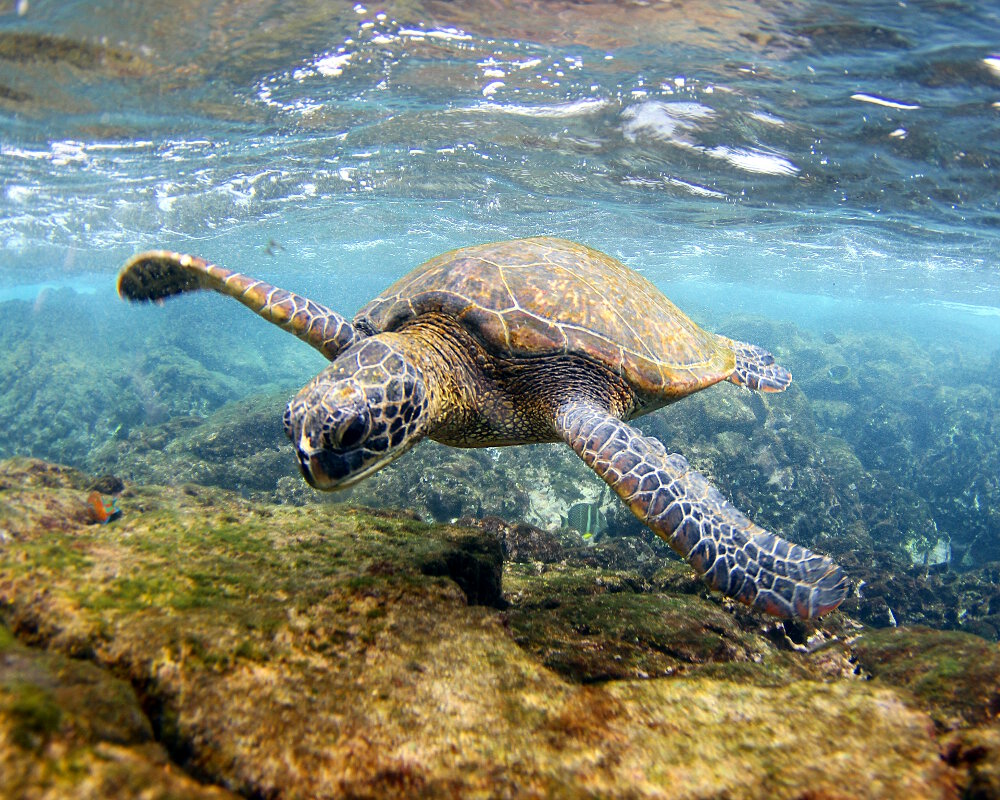
The green sea turtle, as its name suggests, has a predominantly greenish coloration, although it can sometimes also appear brownish
© NOAA Photo Library sous licence Creative CommonsThe green sea turtle can build around 4 to 5 nests per season and lay an average of up to 100 eggs per nest.
The green sea turtle is listed as many other marine species within The
IUCN Red List of threatened species. The green sea turtle appears in the
IUCN Red List since 2004 within the category Endangered !
Within the same family
Flatback sea turtle
(Natator depressus)
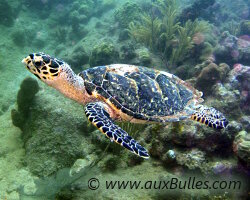
Hawksbill sea turtle
(Eretmochelys imbricata)
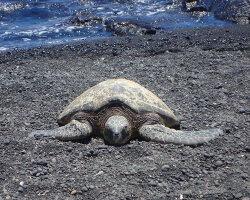
Kemp's ridley sea turtle
(Lepidochelys kempii)
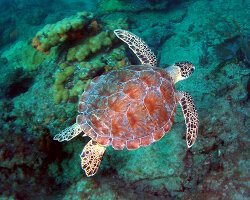
Loggerhead sea turtle
(Caretta caretta)
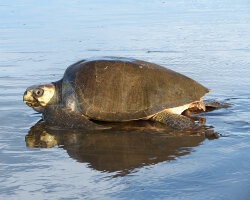
Olive ridley sea turtle
(Lepidochelys olivacea)
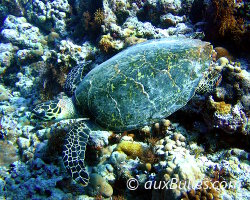
Sea turtles
(7 espèces)
Discover also
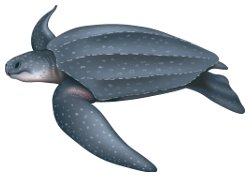
Leatherback sea turtle
(Dermochelys coriacea)
The marine species in the Northwestern Atlantic
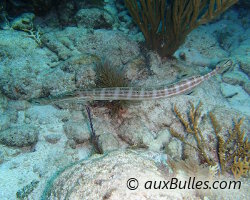
Atlantic trumpetfish
(Aulostomus maculatus)

Banded cleaner shrimp
(Stenopus hispidus)
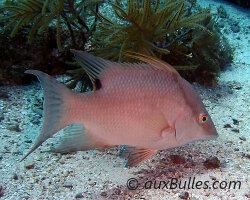
Hogfish
(Lachnolaimus maximus)
Lemon shark
(Negaprion brevirostris)
Mahi-mahi
(Coryphaena hippurus)
Queen angelfish
(Holacanthus ciliaris)
Saucereye porgy
(Calamus calamus)

Schoolmaster snapper
(Lutjanus apodus)