

Sealife guideThe taxonomy of marine species
Last updated on 10/20/2026 at 12:29 AM
The phylogenetic classification of marine life organizes organisms based on their evolutionary relationships, showing which groups share a common ancestor. Rather than relying solely on appearance, this approach uses genetics and evolution to group living beings into clades, or branches of the tree of life. This helps to better understand how marine biodiversity has developed and how different ocean animals and plants are connected through evolution.
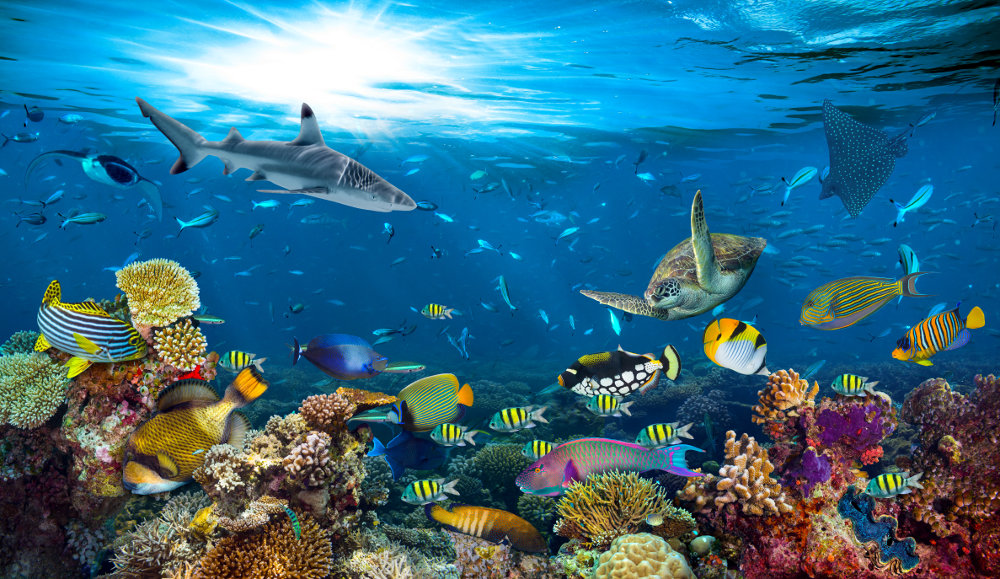
Explore the incredible biodiversity of marine life ! © Grafner | Dreamstime.com
Among marine organisms are seaweeds and marine plants, invertebrates such as sponges, corals, mollusks, and crustaceans, and marine vertebrates like fish, dolphins, seabirds and marine reptiles. This classification provides insight into the diversity of species and the specific adaptations they have developed to survive in the ocean, whether for swimming, feeding or breathing.
Find all data related to our sea plants as well as our sea animals listed according to the phylogenetic tree, with the name of the phylum to which they belong, the class, the order, the family, the common name and to finish the scientific name itself made by the genus name followed by the specie name !
In opposite to common names, the scientific name is unique and same whatever the language. Thus it provides a unique name to make sure people are referring to the same marine specie. This is not the case with common names.
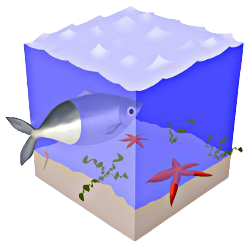
Explore the list of our 1041 marine species, either sea plants or sea animals, listed on our auxBulles website according to the following classification format:
Phylum name
Class name
Order name
Family name
Start your search by either selecting in our form the phylum you are interested in from our list of proposed phyla or by filling in the various fields related to the marine specie your are looking for !
The sealife guide of marines species per phylum
The latest sea life news
Our latestUpdates
The Guide des poissons de Nouvelle-CalédonieDiscover Guide to the Fishes of New Caledonia by Pierre Laboute and René Grandperrin, an illustrated reference featuring nearly 1,200 species, from rivers and coral reefs to the depths of the ocean.Read more
The neon gobyDiscover the neon goby (Elacatinus oceanops), a small western Atlantic reef fish known for its brilliant blue stripe and its role as a cleaner fish that removes parasites from other fish.Read more

The poison gobyDiscover the poison goby (Gobiodon citrinus), a tiny reef fish with a bright yellow body and distinctive blue markings. It lives among branching Acropora corals in the tropical waters of the Indo-Pacific.Read more
Photo of the Day
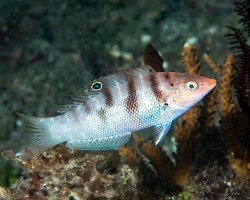
Girelle de Batu
(Coris batuensis)
(Coris batuensis)
 Copyright © 2007-2026 auxBulles.com - All rights reserved. Legal notices.
Photo credits - Our partners