

Sealife guideDolphins: ocean's smartest creaturesSea mammals
Last updated on 01/22/2026 at 12:03 AM
Playful, curious, and incredibly intelligent, dolphins are among the most fascinating animals on the planet. Behind their spectacular leaps and legendary smiles lies a marine mammal with remarkable cognitive abilities, sophisticated communication, and a complex social life. What does science really know about these « geniuses of the ocean » ? Dive into the world of dolphins.
An amazing diversity
Today, there are around thirty species of dolphins, all grouped within the Delphinidae family, which belongs to the toothed whale group (odontocetes). Unlike baleen whales, these marine mammals have real teeth and primarily feed on fish and cephalopods. These species are found in almost every ocean on the planet, as well as in some rivers and estuaries. Their diversity is impressive: some dolphins measure barely 5 feet, while others, like the orca (the largest member of the family), can exceed 26 feet. Despite these differences, they share common biological traits that reflect their remarkable adaptation to the marine environment.
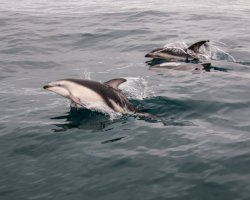
Pacific white-sided dolphin
(Sagmatias obliquidens)
(Sagmatias obliquidens)
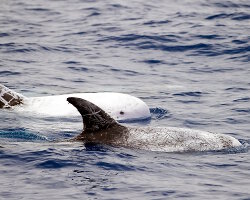
Risso's dolphin
(Grampus griseus)
(Grampus griseus)

Short-beaked common dolphin
(Delphinus delphis)
(Delphinus delphis)

Spinner dolphin
(Stenella longirostris)
(Stenella longirostris)
Their streamlined, hydrodynamic bodies allow dolphins to reach high speeds, sometimes exceeding 22 mph. The dorsal fin provides stability, while the pectoral fins enable agile maneuvers and quick turns. Dolphins breathe through a blowhole located on the top of their heads, allowing them to take in air without fully leaving the water. Their rostrum, more or less elongated depending on the species, is equipped with conical teeth adapted for catching fish and squid. This optimized morphology makes dolphins efficient swimmers and formidable hunters.

Dolphin anatomy
But beyond these physical adaptations, what fascinates most about dolphins is their remarkable intelligence. Their sophisticated brains, problem-solving abilities, and complex social life make them true geniuses of the ocean, ready to surprise us even more.
Extraordinary intelligence
Dolphins are not just fast swimmers and efficient hunters, they are also exceptionally intelligent animals. Their brains, highly developed for a marine mammal, feature a folded cortex and a large number of neurons, allowing them to memorize, learn, and solve complex problems. Experiments have shown that they can recognize their own reflection in a mirror, understand human symbols or signals, and even cooperate to achieve a common goal.

Their sleek, hydrodynamic bodies allow dolphins to slice through the water at impressive speeds
This intelligence also shows in their cooperative abilities. In the wild, dolphins use collective hunting strategies, coordinate to surround their prey, and adapt their behavior according to the situation. These skills demonstrate remarkable cognitive flexibility.
Sophisticated communication
Dolphins communicate using a wide range of sounds: whistles, clicks, and acoustic pulses. Each individual has a « signature whistle », similar to a first name, which allows group members to identify and call each other over a distance. This form of sound-based identity is unique in the animal kingdom.
They also use body language, movements, and physical contact to convey information. This combination of vocal and visual signals creates a complex communication system, essential for group cohesion and the survival of the species.
Highly organized social animals
Dolphins live in groups called « schools » or « pods », ranging from just a few individuals to several dozen. These groups are often structured by strong family ties, particularly between mothers and their calves. Learning occurs largely through imitation, allowing behaviors to be passed down from one generation to the next.

Dolphins live in groups called schools or pods, which can range from just a few individuals to several dozen © Shane Myers | Dreamstime.com
Some scientists even speak of « culture » among dolphins. For example, certain populations use specific hunting techniques or natural tools, such as marine sponges to protect their snouts while foraging on the seafloor. These practices vary by region, providing evidence of local adaptation.
Sentinels of ocean health
Dolphins occupy an important place in the marine food chain. As predators, they help maintain the balance of fish populations and other organisms. Their health status is often considered an indicator of the overall quality of the marine environment.
However, dolphins are now threatened by pollution, underwater noise, fishing nets, and the decline of food resources. Protecting dolphins therefore also means preserving entire ocean ecosystems, on which a large portion of global biodiversity depends.
Famous icons
Dolphins have always fascinated humans with their intelligence, sociability, and apparent curiosity. Some of them have become true stars, whether real or fictional, capturing the public imagination through cinema, television, and history.
Flipper
Flipper is without a doubt the most famous dolphin in the world. Star of the 1960s television series and the film of the same name, Flipper popularized the image of the intelligent dolphin and protector of humans.
Winter
Winter was a wild female bottlenose dolphin who became world-famous after surviving the loss of a large portion of her tail due to a crab trap line. Treated at the Clearwater Marine Aquarium (Florida), she was fitted with a prosthetic tail fluke, and her story inspired the film « Dolphin Tale » (2011).
Pelorus Jack
Pelorus Jack was a wild Risso's dolphin famous in the early 20th century in New Zealand. He was known for escorting and guiding ships through a dangerous navigation area, the Cook Strait. Pelorus Jack was even protected by government law, making him one of the rare wild animals to receive such official protection.
Fungie
Fungie was a wild dolphin who lived in Dingle Bay, Ireland, for nearly 37 years, from 1983 to 2020. He became a major tourist attraction and a true national icon, known for his constant and friendly interactions with humans. He is widely regarded as one of the most famous wild dolphins in the world.
Snowflake
Snowflake is a fictional dolphin made famous by the cult film « Ace Ventura: Pet Detective » (1994). In the movie, Snowflake is the mascot of the Miami Dolphins football team and plays a central role in the comedic plot after being kidnapped shortly before the Super Bowl.
Discover sea mammals

Atlantic spotted dolphin
(Stenella frontalis)
(Stenella frontalis)

Commerson's dolphin
(Cephalorhynchus commersonii)
(Cephalorhynchus commersonii)

False killer whale
(Pseudorca crassidens)
(Pseudorca crassidens)
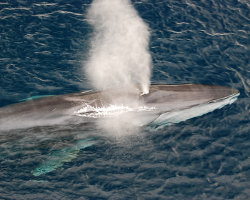
Fin whale
(Balaenoptera physalus)
(Balaenoptera physalus)
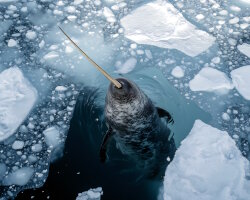
Narwhal
(Monodon monoceros)
(Monodon monoceros)
Risso's dolphin
(Grampus griseus)
(Grampus griseus)
Short-beaked common dolphin
(Delphinus delphis)
(Delphinus delphis)
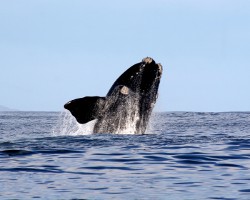
Southern right whale
(Eubalaena australis)
(Eubalaena australis)
Our latestUpdates
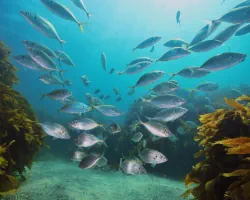
The white trevallyDiscover the white trevally (Pseudocaranx dentex), a silvery fish with a blue-green back that schools near reefs and rocky bottoms.Read more

Morrocoy National ParkDiscover Morrocoy National Park in Venezuela, with white-sand beaches, turquoise waters, coral reefs, mangroves, scenic cayos, and remarkable marine biodiversity.Read more

Milos IslandDiscover Milos Island in the Cyclades, known for its volcanic landscapes, crystal-clear beaches, traditional villages, and the famous Venus de Milo.Read more
Photo of the Day
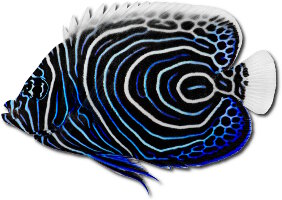
Poisson ange empereur
(Pomacanthus imperator)
(Pomacanthus imperator)
 Copyright © 2007-2026 auxBulles.com - All rights reserved. Legal notices.
Photo credits - Our partners