

Sealife guideThe marine arthropods
Last updated on 09/02/2025 at 12:22 AM
The phylum marine arthropods includes over a million species. We will focus specifically on the class of crustaceans, which itself totals about 40,000 species. Among crustaceans, we find familiar names like the lobster, crayfish, shrimp, crab and others.
Marine arthropods encompass a wide variety of species, some of which are smaller in size, like the sea spiders and some even escape our view, such as micro-crustaceans or krill.
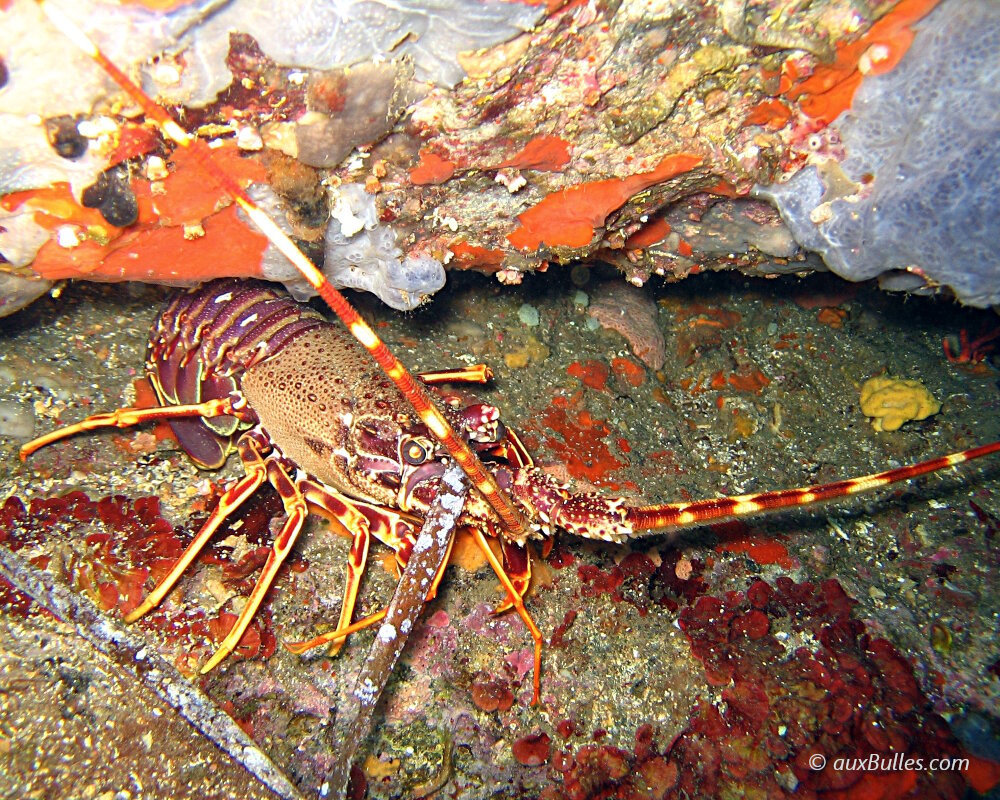
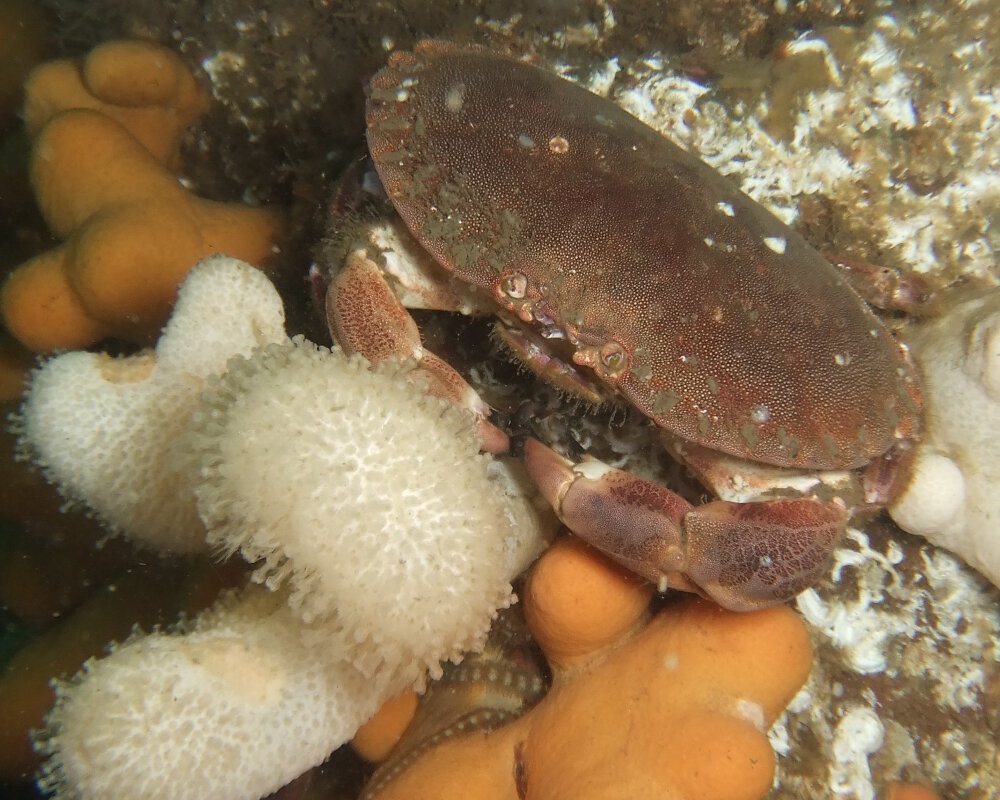
Marine arthropods play a fundamental role in marine trophic ecosystems, both as predators and prey, and are involved in key ecological processes, including decomposition and nutrient recycling.
The physiological adaptations of marine arthropods are particularly remarkable. Their rigid exoskeletons, primarily composed of chitin and sometimes reinforced with minerals like calcium carbonate, provide protection against predators and occasionally harsh environmental conditions. Furthermore, the presence of specialized structures for respiration, such as gills in crustaceans, as well as for locomotion, such as legs and antennae, enables them to adapt to the diverse marine environments in which they live.
The distribution and physiology of different species are influenced by various factors such as salinity, water temperature and pressure. These marine organisms are of considerable interest to medical research.
Some marine arthropods to discover



Our latestUpdates
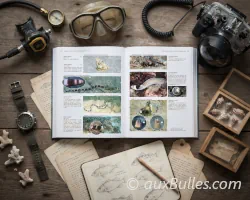
The Guide des poissons de Nouvelle-CalédonieDiscover Guide to the Fishes of New Caledonia by Pierre Laboute and René Grandperrin, an illustrated reference featuring nearly 1,200 species, from rivers and coral reefs to the depths of the ocean.Read more
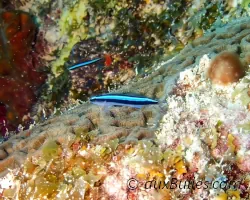
The neon gobyDiscover the neon goby (Elacatinus oceanops), a small western Atlantic reef fish known for its brilliant blue stripe and its role as a cleaner fish that removes parasites from other fish.Read more

The poison gobyDiscover the poison goby (Gobiodon citrinus), a tiny reef fish with a bright yellow body and distinctive blue markings. It lives among branching Acropora corals in the tropical waters of the Indo-Pacific.Read more
Photo of the Day
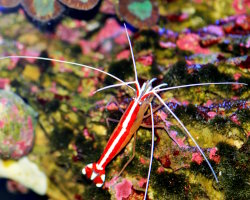
Crevette nettoyeuse d'Amboine
(Lysmata amboinensis)
(Lysmata amboinensis)
 Copyright © 2007-2026 auxBulles.com - All rights reserved. Legal notices.
Photo credits - Our partners