

Sealife guideThe short-finned pilot whaleGlobicephala macrorhynchus
Last updated on 05/06/2026 at 10:17 PM
The short-finned pilot whale is a large dolphin belonging to the Delphinidae family. Despite its English name of pilot whale, it is in fact a cetacean closely related to dolphins, known for its strong sociability and deep diving behavior in search of squid.
Taxonomy
English names
Short-finned pilot whale
French namesGlobicéphale tropical
Spanish namesCalderón tropical
Scientific nameGlobicephala macrorhynchus (Gray, 1846)
FamilyDelphinidae
OrderCetacea
ClassMammalia
Description
The short-finned pilot whale has a robust body, entirely dark in color, ranging from black to very dark gray. Its head is highly distinctive: large, rounded, and bulbous, with no true beak like the classic dolphin shape, giving it a massive profile.
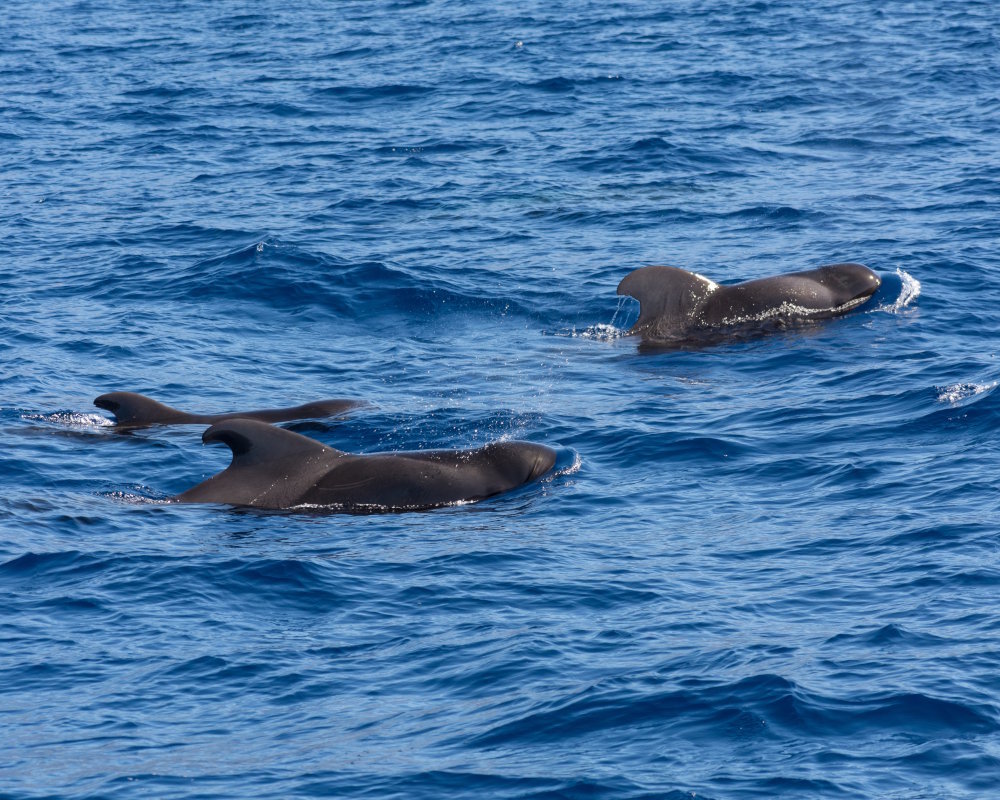
The dorsal fin of the short-finned pilot whale is low and broad, with a slightly curved, rounded shape © Gema Álvarez | Dreamstime.com
The short-finned pilot whale measures between 10 and 23 feet in length, with males generally larger than females. Its dorsal fin is relatively low but broad, located toward the front of the body and showing a rounded and slightly hooked shape. The pectoral fins are slender and pointed, sickle-shaped, shorter than those of the long-finned pilot whale, and play an important role in stability and maneuvering during deep dives.
Geographic range
The short-finned pilot whale is found in tropical and subtropical waters worldwide, including the Atlantic, Pacific, and Indian Oceans. In some regions such as the Canary islands, it is one of the most frequently observed cetaceans, especially around deep submarine canyons.
Habitat
The short-finned pilot whale mainly inhabits deep waters, often near continental shelves or above submarine canyons. It prefers deep oceanic zones, squid-rich areas, and warm to temperate waters.
It is a highly social species, living in stable family groups called pods, typically consisting of 15 to 30 individuals, and sometimes up to around 100.
It is also a highly mobile species that follows its prey over long distances.
Diet
The diet of the short-finned pilot whale consists almost exclusively of cephalopods, mainly squid, but also occasionally octopus and, more rarely, small fish.
It usually hunts at night or at depth, performing dives that can exceed several hundred meters (over 1,000 feet).
Reproduction
The reproductive cycle of the short-finned pilot whale is slow, with a gestation period of about 14 to 15 months, spaced several years apart, after which a single calf is born per female.
Females play a key role in the group, and family bonds are very strong. Young individuals remain with their mother and the group for many years, sometimes several years.
Did you know ?
The short-finned pilot whale is listed as many other marine species within The IUCN Red List of threatened species. The short-finned pilot whale appears in the IUCN Red List since 2018 within the category Least Concern !
Tips for observing
Pilot whales are regularly observed during whale-watching excursions in Madeira as well as in the Canary islands, especially off Tenerife, where resident populations of short-finned pilot whales are present.
Within the same genus
Within the same family

Atlantic spotted dolphinStenella frontalis
Common bottlenose dolphinTursiops truncatus

False killer whalePseudorca crassidens
Indo-Pacific humpback dolphinSousa chinensis
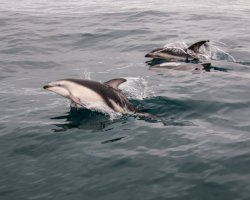
Pacific white-sided dolphinSagmatias obliquidens
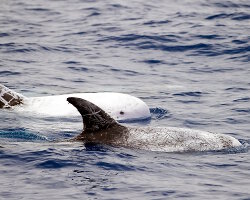
Risso's dolphinGrampus griseus
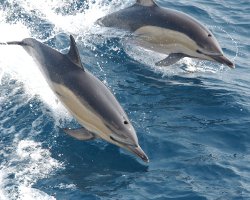
Short-beaked common dolphinDelphinus delphis
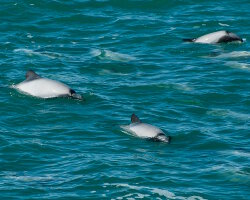
White headed dolphinCephalorhynchus hectori
Discover also



Our latestUpdates
The Guide des poissons de Nouvelle-CalédonieDiscover Guide to the Fishes of New Caledonia by Pierre Laboute and René Grandperrin, an illustrated reference featuring nearly 1,200 species, from rivers and coral reefs to the depths of the ocean.Read more
The neon gobyDiscover the neon goby (Elacatinus oceanops), a small western Atlantic reef fish known for its brilliant blue stripe and its role as a cleaner fish that removes parasites from other fish.Read more

The poison gobyDiscover the poison goby (Gobiodon citrinus), a tiny reef fish with a bright yellow body and distinctive blue markings. It lives among branching Acropora corals in the tropical waters of the Indo-Pacific.Read more
Photo of the Day
Sabelle paon
(Sabella pavonina)
(Sabella pavonina)
 Copyright © 2007-2026 auxBulles.com - All rights reserved. Legal notices.
Photo credits - Our partners