

Sealife guideThe long-finned pilot whaleGlobicephala melas
Last updated on 05/06/2026 at 10:17 PM
The long-finned pilot whale is a large cetacean belonging to the Delphinidae family, meaning it belongs to the same group as dolphins and orcas. Despite its name, it is not a whale but a large oceanic dolphin, recognizable by its massive silhouette, bulbous head, and highly social behavior. This species lives in tightly bonded groups, sometimes made up of dozens of individuals, and fascinates observers with its strong family cohesion and impressive diving abilities.
Taxonomy
English names
Long-finned pilot whale
French namesGlobicéphale noir
Spanish namesCalderón negro
Scientific nameGlobicephala melas (Traill, 1809)
FamilyDelphinidae
OrderCetacea
ClassMammalia
Description
The long-finned pilot whale has a robust and elongated body, ranging in color from deep black to dark gray, sometimes marked with a lighter patch behind the dorsal fin or on the belly. Its head is broad, rounded, and lacks a beak, forming a very distinctive melon that becomes even more pronounced in adult males.
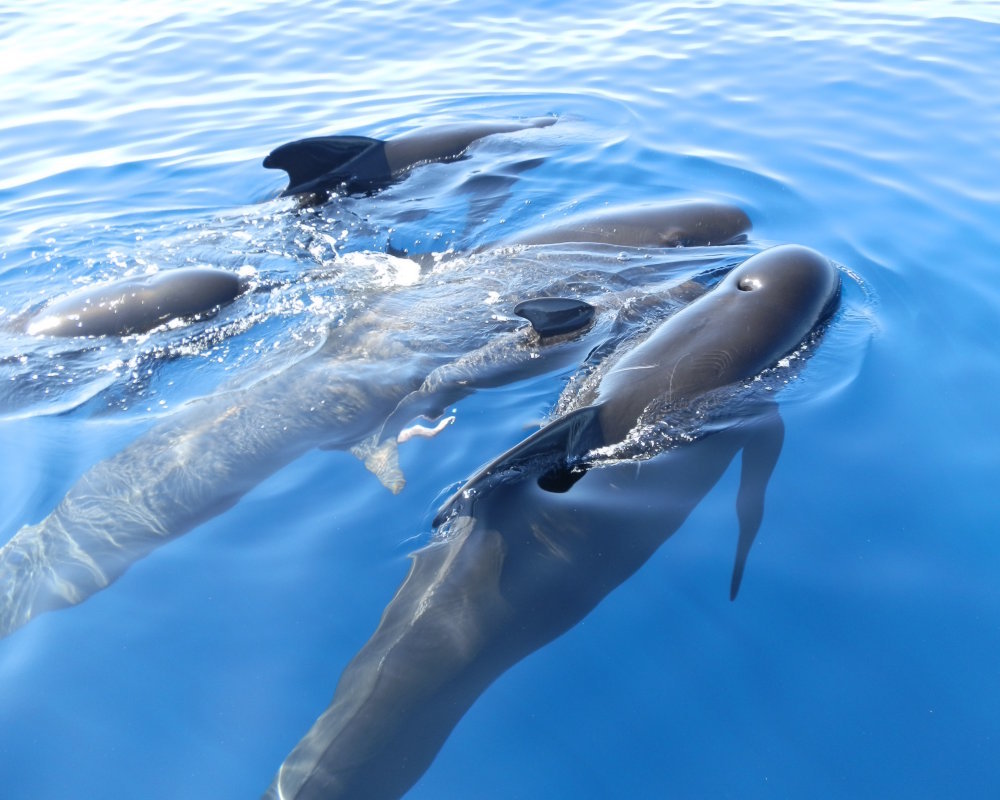
The long-finned pilot whale (Globicephala melas) © Olivier Nebout | Dreamstime.com
It generally measures between 13 and 23 feet in length, with males being larger and heavier than females. Its dorsal fin is low, broad, and slightly curved, while its pectoral fins are long, slender, and pointed, noticeably more developed than those of the short-finned pilot whale, which is one of the main distinguishing features between the two species.
Geographic range
The long-finned pilot whale mainly inhabits cold temperate and subpolar waters and is most commonly found in the North Atlantic, around Iceland, Greenland, the Faroe islands, and the northern coasts of the United Kingdom, but also in some regions of the Southern Hemisphere, particularly around Australia, New Zealand, and Argentina.
Unlike the short-finned pilot whale, it generally avoids warm waters near the equator.
Habitat
An essentially oceanic species, the long-finned pilot whale mainly inhabits deep waters, often offshore or near continental shelves. It usually lives in areas where the seabed drops rapidly to depths of several hundred or even thousands of feet, creating ideal conditions for the presence of its prey. Although it mainly lives in the open ocean, it can sometimes approach coastal areas, especially fjords, bays, or deep coastal waters.
Diet
The long-finned pilot whale feeds mainly on squid, which make up the majority of its diet, but it also consumes various fish species depending on the region where it lives. It often hunts at depth, using its excellent breath-holding abilities to follow prey into the dark layers of the ocean. Its dives can reach several hundred feet, sometimes more, making it a formidable predator of deep waters.
Reproduction
The reproductive cycle of the long-finned pilot whale is relatively slow. Gestation lasts on average between 12 and 16 months and results in the birth of a single calf, which remains close to its mother for a long time. Females generally give birth only once every three to five years, which naturally limits population renewal.
As with other social cetaceans, family bonds are very strong, and young individuals remain integrated into the group for many years, gradually learning hunting and communication behaviors.
Did you know ?
The long-finned pilot whale is also known for its mass strandings, a spectacular phenomenon that scientists still do not fully understand, probably linked to its highly developed gregarious instinct and the strong cohesion of its groups.
The long-finned pilot whale is listed as many other marine species within The IUCN Red List of threatened species. The long-finned pilot whale appears in the IUCN Red List since 2018 within the category Least Concern !
Within the same genus

Within the same family

Atlantic spotted dolphinStenella frontalis
Atlantic white-sided dolphinLeucopleurus acutus
Commerson's dolphinCephalorhynchus commersonii
Indo-Pacific humpback dolphinSousa chinensis
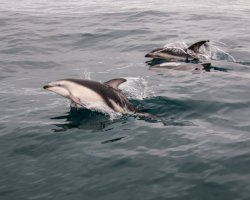
Pacific white-sided dolphinSagmatias obliquidens

Spinner dolphinStenella longirostris
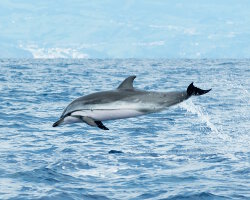
Striped dolphinStenella coeruleoalba
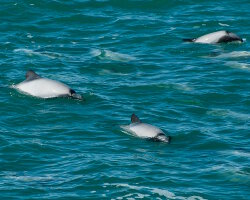
White headed dolphinCephalorhynchus hectori
Discover also
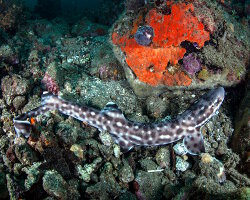
Coral catsharkAtelomycterus marmoratus
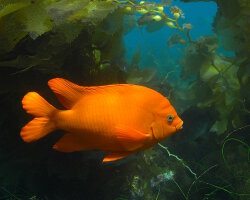
Garibaldi damselfishHypsypops rubicundus

Mexican hogfishBodianus diplotaenia

Ornate ghost pipefishSolenostomus paradoxus
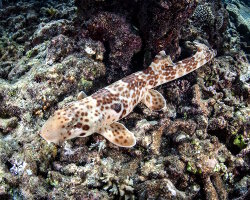
Raja epaulette sharkHemiscyllium freycineti
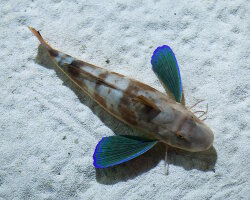
Tub gurnardChelidonichthys lucerna
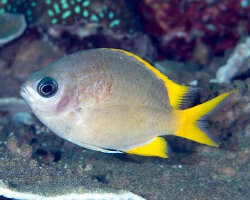
Yellow chromisChromis analis

Yellowmargin triggerfishPseudobalistes flavimarginatus
The marine species in the North Atlantic

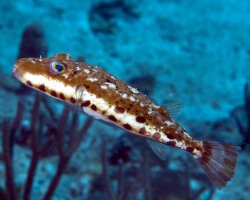
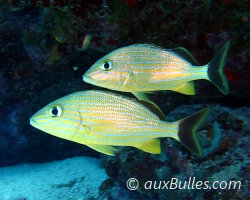
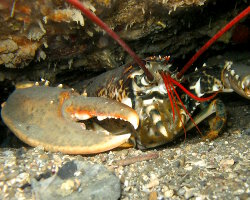
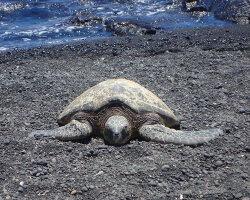
Our latestUpdates
The Guide des poissons de Nouvelle-CalédonieDiscover Guide to the Fishes of New Caledonia by Pierre Laboute and René Grandperrin, an illustrated reference featuring nearly 1,200 species, from rivers and coral reefs to the depths of the ocean.Read more
The neon gobyDiscover the neon goby (Elacatinus oceanops), a small western Atlantic reef fish known for its brilliant blue stripe and its role as a cleaner fish that removes parasites from other fish.Read more

The poison gobyDiscover the poison goby (Gobiodon citrinus), a tiny reef fish with a bright yellow body and distinctive blue markings. It lives among branching Acropora corals in the tropical waters of the Indo-Pacific.Read more
Photo of the Day
Ver plat rose
(Prostheceraeus roseus)
(Prostheceraeus roseus)
 Copyright © 2007-2026 auxBulles.com - All rights reserved. Legal notices.
Photo credits - Our partners