

Sealife guideThe common bottlenose dolphinTursiops truncatus
Last updated on 01/24/2026 at 12:54 AM
The common bottlenose dolphin is probably the most famous dolphin in the world !
Taxonomy
English names
Common bottlenose dolphin
French namesGrand dauphin
Spanish namesDelfín Nariz de Botella
Scientific nameTursiops truncatus (Montagu, 1821)
FamilyDelphinidae
OrderCetacea
ClassMammalia
Description
The common bottlenose dolphin measures on average 6.5 to 13 feet in length and can weigh up to 660 lbs. Its sickle-shaped dorsal fin and streamlined body allow it to swim fast and perform spectacular leaps out of the water. Its dark gray back and lighter belly help it camouflage itself from predators.

The common bottlenose dolphin (Tursiops truncatus)
Geographic range
The common bottlenose dolphin inhabits temperate and tropical waters worldwide, including the Atlantic, Pacific and Indian oceans, as well as some seas such as the Mediterranean sea.
Depending on the population, some individuals remain in the same region year-round, while others migrate seasonally according to water temperature and prey availability.
Habitat
The common bottlenose dolphin lives in a wide variety of marine environments and can be found in shallow coastal waters, deeper offshore areas, bays, estuaries, and along continental shelves. It particularly favors regions rich in fish, where food is abundant.
Common bottlenose dolphins live in groups called schools or pods, ranging from a few individuals to several dozen. They often play together, cooperate while hunting, and care for younger members. This strong social bond is essential for their survival.
Diet
The common bottlenose dolphin mainly feeds on fish, squid and crustaceans. It often hunts in groups by surrounding schools of fish to make capture easier. It also uses echolocation, a natural sonar system, to detect prey even in murky or dark waters.
Reproduction
Female common bottlenose dolphins give birth to a single calf after a gestation period of about 12 months. The calf stays with its mother for several years to learn how to hunt and interact socially. Common bottlenose dolphins can live 40 to 50 years and sometimes even longer.
Did you know ?
The common bottlenose dolphin is known for its remarkable intelligence. It has a highly developed brain and uses a complex system of sounds and whistles to communicate. Each individual can even have a unique signature whistle, similar to a name, which allows other dolphins to recognize it.

The common bottlenose dolphin (Tursiops truncatus) © Gregory "Slobirdr" Smith sous licence Creative Commons
The common bottlenose dolphin is listed as many other marine species within The IUCN Red List of threatened species. The common bottlenose dolphin appears in the IUCN Red List since 2019 within the category Least Concern !
Within the same family

Atlantic spotted dolphinStenella frontalis
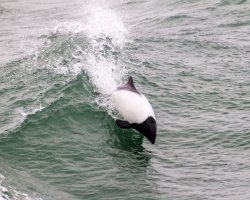
Commerson's dolphinCephalorhynchus commersonii

False killer whalePseudorca crassidens

Indo-Pacific humpback dolphinSousa chinensis

Long-finned pilot whaleGlobicephala melas
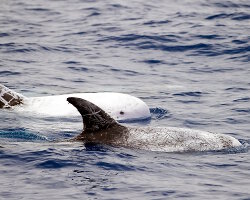
Risso's dolphinGrampus griseus

Short-finned pilot whaleGlobicephala macrorhynchus

White headed dolphinCephalorhynchus hectori
Discover also


Our latestUpdates
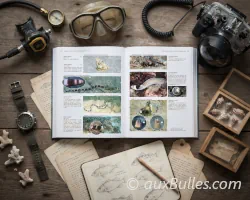
The Guide des poissons de Nouvelle-CalédonieDiscover Guide to the Fishes of New Caledonia by Pierre Laboute and René Grandperrin, an illustrated reference featuring nearly 1,200 species, from rivers and coral reefs to the depths of the ocean.Read more

The neon gobyDiscover the neon goby (Elacatinus oceanops), a small western Atlantic reef fish known for its brilliant blue stripe and its role as a cleaner fish that removes parasites from other fish.Read more

The poison gobyDiscover the poison goby (Gobiodon citrinus), a tiny reef fish with a bright yellow body and distinctive blue markings. It lives among branching Acropora corals in the tropical waters of the Indo-Pacific.Read more
Photo of the Day
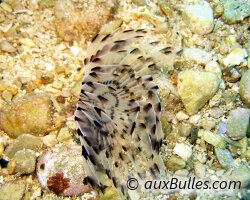
Sabelle paon
(Sabella pavonina)
(Sabella pavonina)
 Copyright © 2007-2026 auxBulles.com - All rights reserved. Legal notices.
Photo credits - Our partners