

Sealife guideThe Anguilliformes orderThe taxonomy of marine species
Explore the taxonomy of the sea vertebrates including the cetaceans like the whales or the dolphins, the sea birds, the fish, the sharks and the sea turtles !

The Muraenidae family includes more than 200 species of moray eels distributed throughout tropical and temperate waters around the world. These elongated, snake-like fish mainly inhabit coral reefs, rocky areas, and coastal seabeds, where they spend the day hidden in crevices before emerging to hunt at night. Carnivorous by nature, moray eels feed primarily on fish, crustaceans, and cephalopods. Despite their intimidating appearance and powerful jaws, they are generally not aggressive toward humans and will usually attack only when they feel threatened.

Banded morayGymnothorax rueppelliae

Banded mud morayGymnothorax chlamydatus

Barred-fin moray eelGymnothorax zonipectis
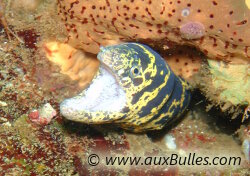
Chain morayEchidna catenata

Fangtooth morayEnchelycore anatina
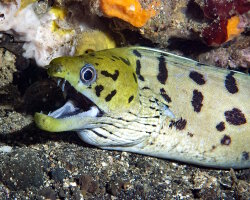
Fimbriated morayGymnothorax fimbriatus

Goldentail morayGymnothorax miliaris
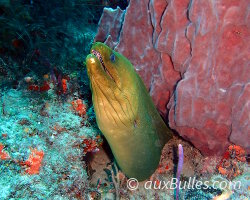
Green moray eelGymnothorax funebris

Grey morayGymnothorax griseus
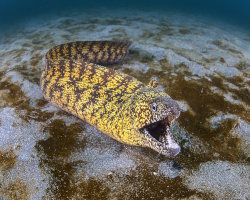
Kidako moray eelGymnothorax kidako

Laced moray eelGymnothorax favagineus

Lipspot morayGymnothorax chilospilus
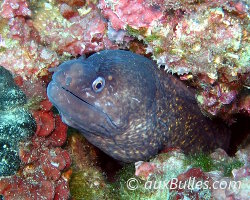
Mediterranean moray eelMuraena helena
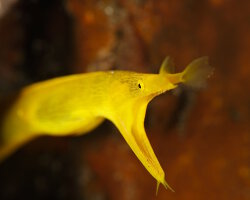
Ribbon eelRhinomuraena quaesita

Snowflake morayEchidna nebulosa
Our latestUpdates
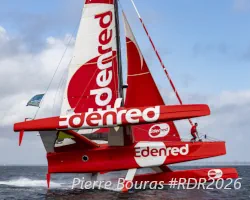
A tough startThe 2026 Route du Rhum gets off to an intense start, with major technical failures, Francis Joyon's capsize, impressive speeds and strategic route choices near the Azores. A look back at the first 48 hours of racing.Read more
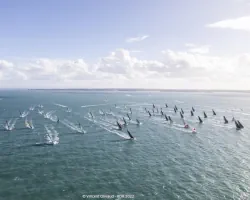
A smooth start, an uncertain AtlanticDiscover the 2026 Route du Rhum start off Saint-Malo, where favorable initial conditions contrast with an uncertain Atlantic crossing shaped by changing winds and weather.Read more

Five questions to understand the startDiscover how the 2026 Route du Rhum start unfolds, including harbor preparations, lock passages, skipper schedules, weather routing rules, and the Virtual Regatta race.Read more
Photo of the Day
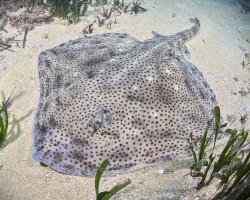
Raie lisse
(Raja brachyura)
(Raja brachyura)
 Copyright © 2007-2026 auxBulles.com - All rights reserved. Legal notices.
Photo credits - Our partners