

Sealife guideBivalves: shellfish wonders of the oceanThe marine mollusks
Last updated on 09/02/2025 at 12:22 AM
The class of bivalves is characterized by a shell composed of two parts, called valves, which are hinged and more or less symmetrical.
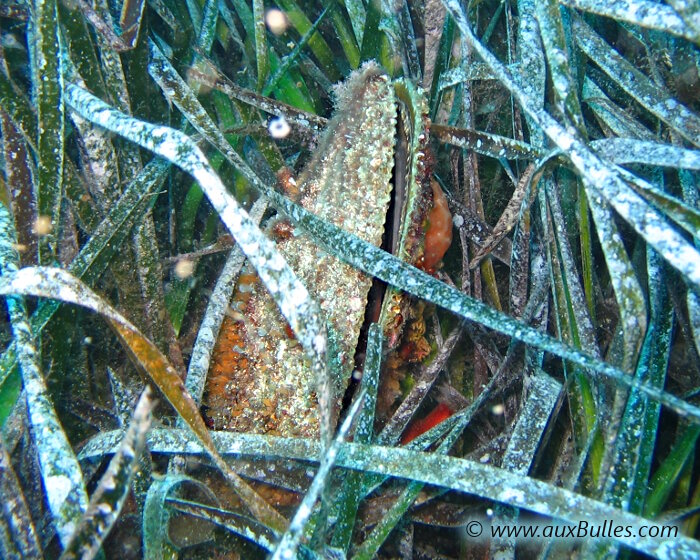
The noble pen shell is a type of bivalve
The most well-known bivalves include oysters, mussels, scallops and clams.
Bivalves have a calcium carbonate shell equipped with strong muscles that can close the two valves tightly in response to external threats.
Bivalves feed by filtering water through their gills. The water current is generated by the action of tiny cilia.
Discover marine bivalves
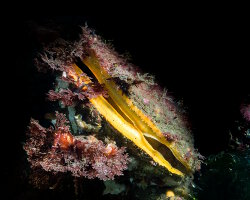
Giant rock scallopCrassadoma gigantea
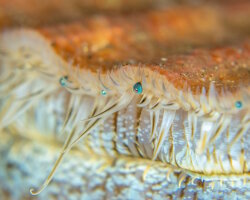
Great Atlantic scallopPecten maximus
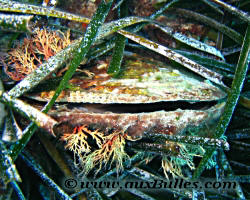
Noble pen shellPinna nobilis
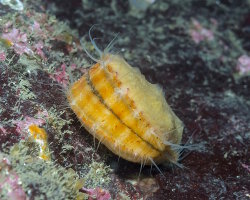
Spiny pink scallopChlamys hastata
Discover marine mollusks

Abe's polycera nudibranchPolycera abei
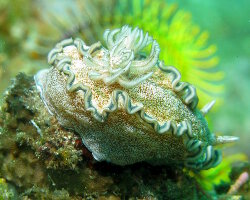
Brown edge glossodoridGlossodoris hikuerensis
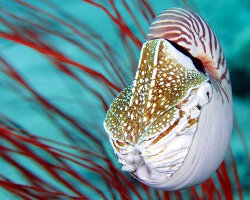
Chambered nautilusNautilus pompilius
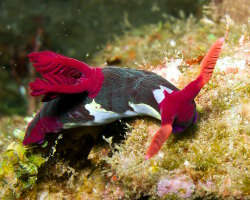
Chamberlain's sea slugNembrotha chamberlaini
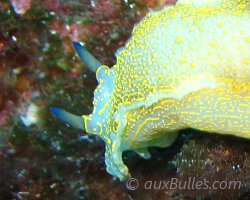
Giant dorisFelimare picta
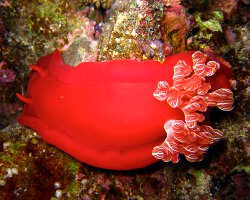
Spanish dancerHexabranchus sanguineus
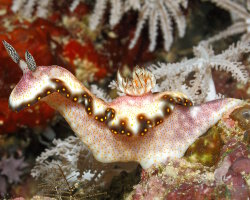
Yellow speckled dorisHypselodoris godeffroyana
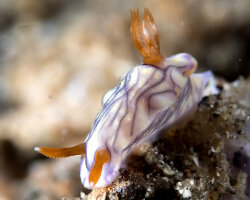
Zephyr dorisHypselodoris zephyra
Our latestUpdates
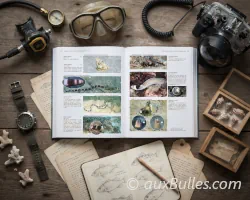
The Guide des poissons de Nouvelle-CalédonieDiscover Guide to the Fishes of New Caledonia by Pierre Laboute and René Grandperrin, an illustrated reference featuring nearly 1,200 species, from rivers and coral reefs to the depths of the ocean.Read more
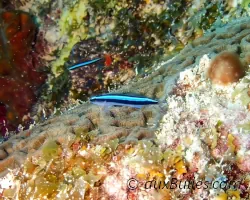
The neon gobyDiscover the neon goby (Elacatinus oceanops), a small western Atlantic reef fish known for its brilliant blue stripe and its role as a cleaner fish that removes parasites from other fish.Read more

The poison gobyDiscover the poison goby (Gobiodon citrinus), a tiny reef fish with a bright yellow body and distinctive blue markings. It lives among branching Acropora corals in the tropical waters of the Indo-Pacific.Read more
Photo of the Day
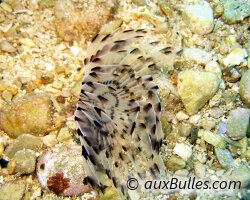
Sabelle paon
(Sabella pavonina)
(Sabella pavonina)
 Copyright © 2007-2026 auxBulles.com - All rights reserved. Legal notices.
Photo credits - Our partners