

Sealife guideThe mediterranean jellyfishCotylorhiza tuberculata
Last updated on 09/18/2024 at 11:15 PM

The mediterranean jellyfish (Cotylorhiza tuberculata)
Taxonomy
English names
Mediterranean jellyfishFried egg jellyfish
French namesMéduse oeuf au plat
Spanish namesMedusa huevo frito
Scientific nameCotylorhiza tuberculata (Macri, 1778)
FamilyCepheidae
OrderRhizostomeae
ClassScyphozoa
Description
The mediterranean jellyfish is called the fried egg jellyfish in french due to its striking resemblance to the dish of the same name ! It is undoubtedly one of the most beautiful jellyfish in the Mediterranean sea.
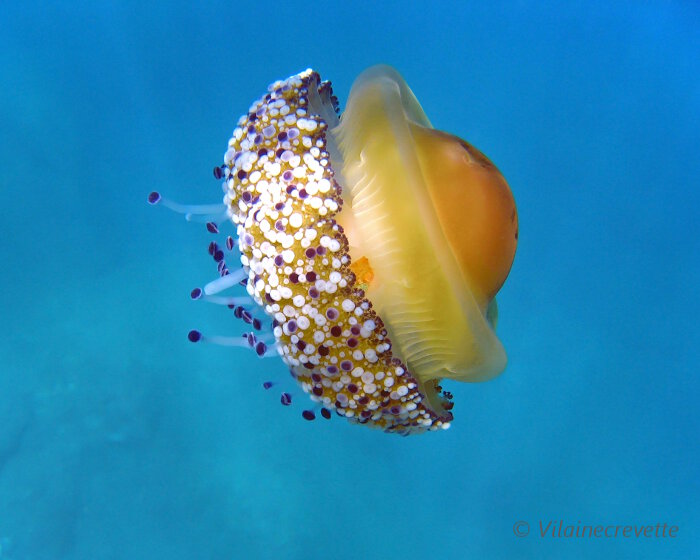
The mediterranean jellyfish gets its french name, fried egg jellyfish, from its appearance which closely resembles the dish of the same name ! © Vilainecrevette | Dreamstime.com
The size of the mediterranean jellyfish's bell is impressive with an egg-yolk yellow center and pale yellow surrounding it. Its tentacles are short with violet tips.
The mediterranean jellyfish is a medium-sized jellyfish, ranging from about 4 to 12 inches in diameter.
Geographic range
The mediterranean jellyfish is a common and endemic species in the Mediterranean sea. It is also commonly found in the Adriatic sea.
Habitat
Like all jellyfish, the mediterranean jellyfish is a pelagic species that drifts with the currents.
Diet
The mediterranean jellyfish feeds on plankton, small crustaceans and fish larvae.
Did you know ?
The mediterranean jellyfish is considered one of the harmless jellyfish species in the Mediterranean sea, but caution is still advised for allergic individuals, as there have been reports of stings.

The mediterranean jellyfish is a common and endemic jellyfish species in the Mediterranean sea © Planctonvideo | Dreamstime.com
The mediterranean jellyfish often shelters small fish among its mildly stinging tentacles, offering them a safe refuge.
Discover also
Acropora cythereacoralAcropora cytherea
Atlantic sea nettleChrysaora quinquecirrha
Bladed fire coralMillepora complanata
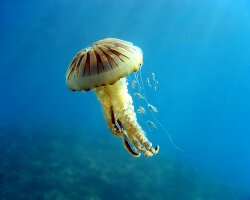
Compass jellyfishChrysaora hysoscella
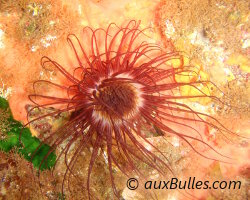
Cylinder anemoneCerianthus membranaceus
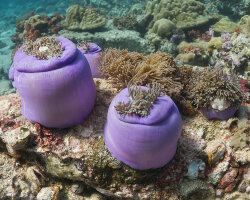
Magnificent sea anemoneRadianthus magnifica
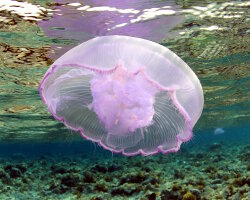
Moon jellyfishAurelia aurita
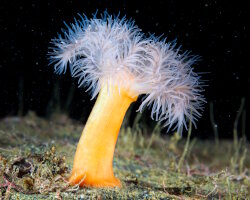
Plumose sea anemoneMetridium senile
The marine species in the Mediterranean Sea

Our latestUpdates
The Guide des poissons de Nouvelle-CalédonieDiscover Guide to the Fishes of New Caledonia by Pierre Laboute and René Grandperrin, an illustrated reference featuring nearly 1,200 species, from rivers and coral reefs to the depths of the ocean.Read more
The neon gobyDiscover the neon goby (Elacatinus oceanops), a small western Atlantic reef fish known for its brilliant blue stripe and its role as a cleaner fish that removes parasites from other fish.Read more

The poison gobyDiscover the poison goby (Gobiodon citrinus), a tiny reef fish with a bright yellow body and distinctive blue markings. It lives among branching Acropora corals in the tropical waters of the Indo-Pacific.Read more
Photo of the Day
Sabelle paon
(Sabella pavonina)
(Sabella pavonina)
 Copyright © 2007-2026 auxBulles.com - All rights reserved. Legal notices.
Photo credits - Our partners