

Sealife guideThe red sea urchinMesocentrotus franciscanus
Last updated on 09/30/2025 at 11:08 PM
Taxonomy
English names
Red sea urchin
French namesOursin rouge
Scientific nameMesocentrotus franciscanus (A. Agassiz, 1863)
FamilyStrongylocentrotidae
OrderCamarodonta
ClassEchinoidea
Description
The red sea urchin is the largest sea urchin species and can reach a diameter of about 7 inches in the largest specimens. Its body is dark red to black in color with large, lighter red spines.
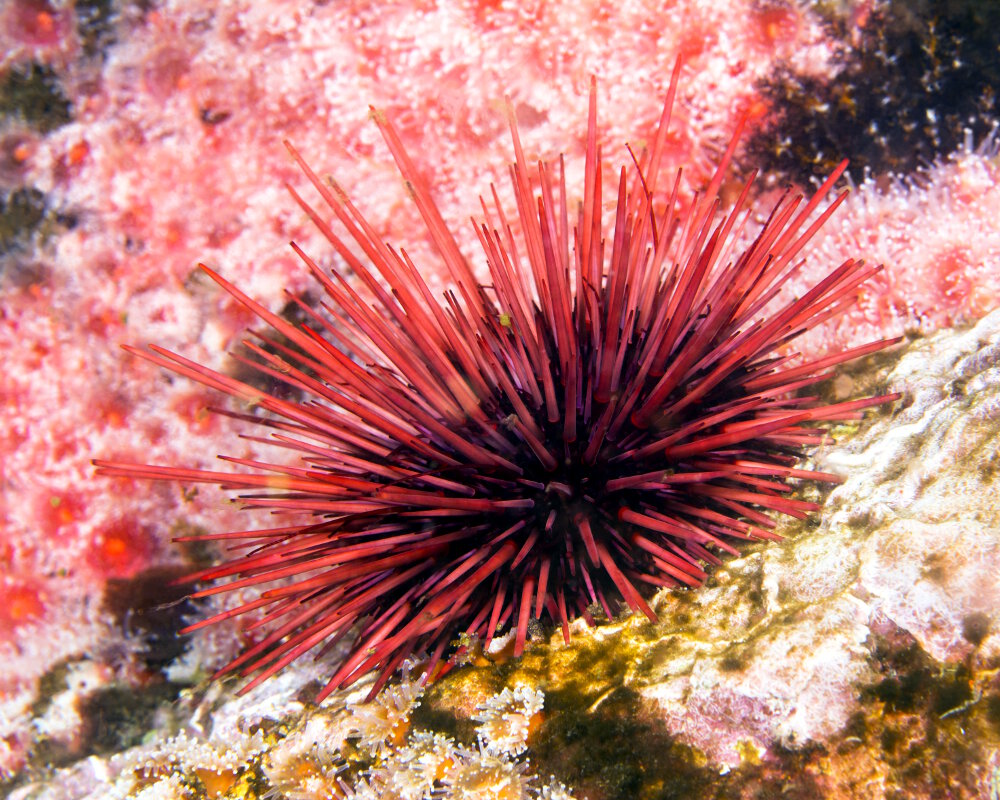
The red sea urchin (Mesocentrotus franciscanus) © Kelpfish | Dreamstime.com
Geographic range
The red sea urchin is found on the eastern side of the Pacific ocean, along the west coast of North America down to the tip of Baja California, Mexico.
Habitat
The red sea urchin mainly lives in the rocky parts of the shoreline, also called the intertidal zone and down to depths of about 525 feet.
Diet
The red sea urchin is an herbivore and feeds mainly on kelp, which is why it is often found in kelp forests.
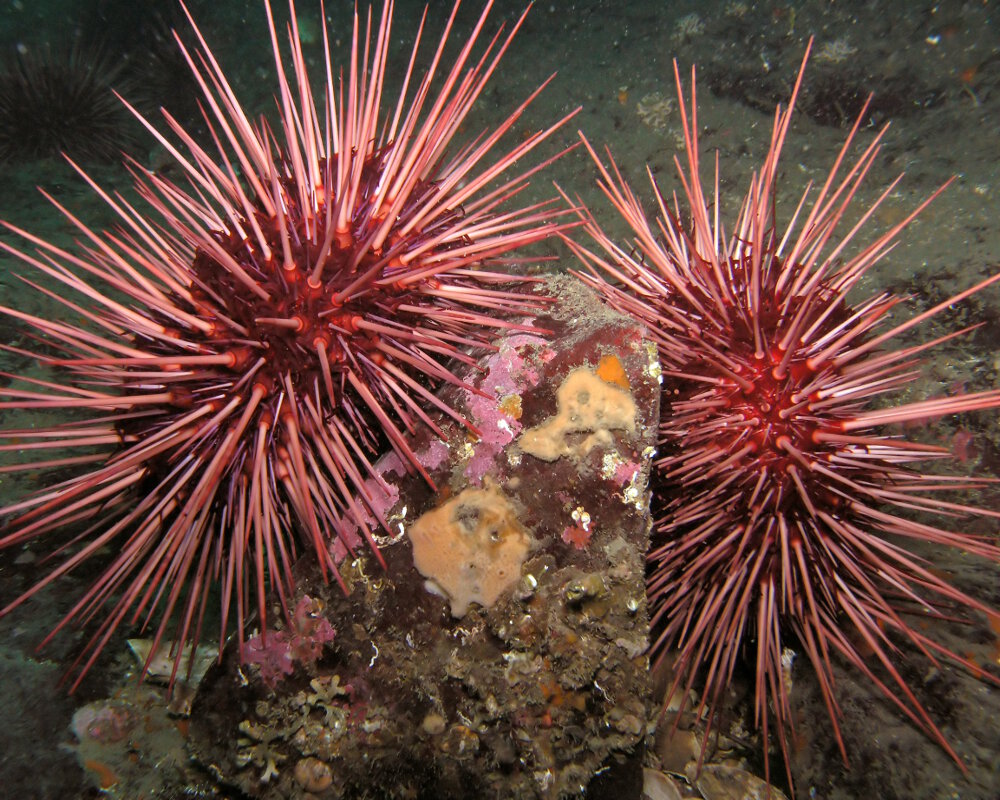
The red sea urchin (Mesocentrotus franciscanus) © Derek Holzapfel | Dreamstime.com
Around San Diego, the main predators of the red sea urchin are the California spiny lobster and the California sheephead, while north of Point Conception the main predator is the sea otter.
Reproduction
After the eggs are released into the seawater and fertilized, larvae hatch and drift freely before settling on the seafloor and developing into young juvenile sea urchins.
Did you know ?
By feeding on giant kelp, the red sea urchin plays an important role in the development of giant kelp forests and in shaping the structure of the entire ecosystem.
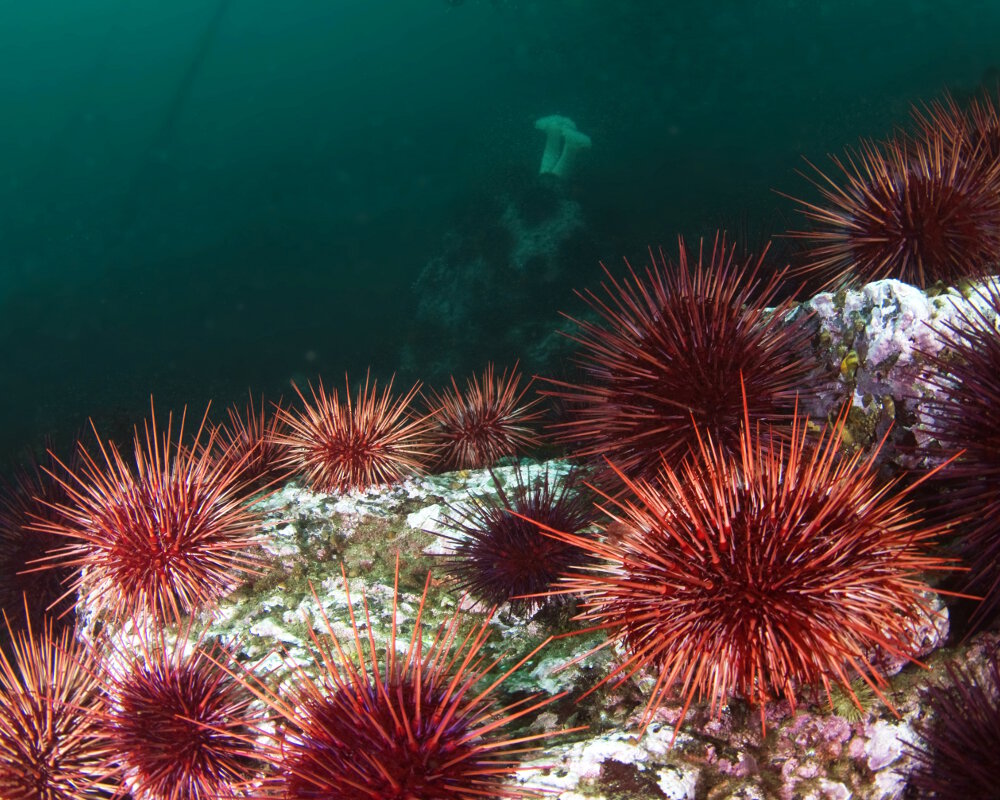
The red sea urchin (Mesocentrotus franciscanus) © Greg Amptman | Dreamstime.com
Discover also


The marine species in the Eastern Pacific

Our latestUpdates
The neon gobyDiscover the neon goby (Elacatinus oceanops), a small western Atlantic reef fish known for its brilliant blue stripe and its role as a cleaner fish that removes parasites from other fish.Read more

The poison gobyDiscover the poison goby (Gobiodon citrinus), a tiny reef fish with a bright yellow body and distinctive blue markings. It lives among branching Acropora corals in the tropical waters of the Indo-Pacific.Read more
The wahooDiscover the wahoo (Acanthocybium solandri), a powerful pelagic predator found in tropical and subtropical oceans. Recognizable by its streamlined body and distinctive blue vertical stripes, it is a fast swimmer that feeds mainly on fish and squid.Read more
Photo of the Day
Fou à pieds rouges
(Sula sula)
(Sula sula)
 Copyright © 2007-2026 auxBulles.com - All rights reserved. Legal notices.
Photo credits - Our partners