

Sealife guideThe leopard blennyExallias brevis
Last updated on 10/29/2025 at 11:52 PM
Taxonomy
English names
Leopard blennyShortbodied blenny
French namesBlennie léopard
Spanish namesBlénido leopardoBlenio leopardo
Scientific nameExallias brevis (Kner, 1868)
FamilyBlenniidae
OrderBlenniiformes
ClassActinopterygii
Description
The leopard blenny typically measures between 3 and 4.5 inches in length, with a maximum size of about 6 inches.
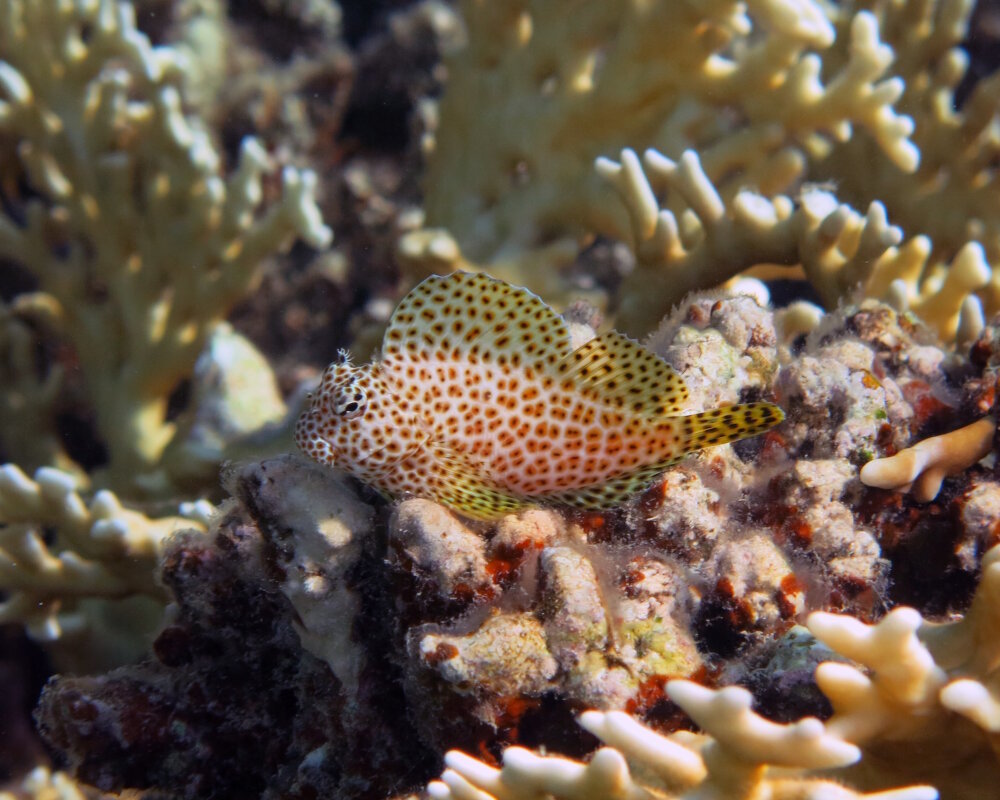
The leopard blenny (Exallias brevis) © Sergey Urvachev | Dreamstime.com
The leopard blenny has a striking and very characteristic coloration. Its body is beige to light brown, entirely covered with irregular brown to dark spots resembling those of a leopard, hence its common name. These patterns may vary slightly depending on the individual or environment, providing excellent camouflage among the corals.
Its fins are often translucent, sometimes marbled, and the head shows dark lines or spots around the eyes. This mimicry allows it to blend into its reef environment while remaining inconspicuous to predators.
Geographic range
The leopard blenny occurs in tropical waters of the Indo-Pacific, from the Red sea and the eastern coasts of Africa to the central Pacific islands, including French Polynesia, Hawaii and southern Japan, as well as along the Great Barrier Reef in Australia.
Habitat
The leopard blenny lives mainly on shallow coral reefs, usually down to about 50 feet.
Diet
The leopard blenny feeds primarily on coralline algae and microalgae, which it grazes on rocks and corals, while occasionally supplementing its diet with small invertebrates such as copepods, mollusk larvae, or planktonic crustaceans. It may also nibble on coral polyps or organic debris on the substrate.
This mixed diet allows it to efficiently adapt to the availability of food on the shallow coral reefs where it lives.
Did you know ?
The leopard blenny is listed as many other marine species within The IUCN Red List of threatened species. The leopard blenny appears in the IUCN Red List since 2014 within the category Least Concern !
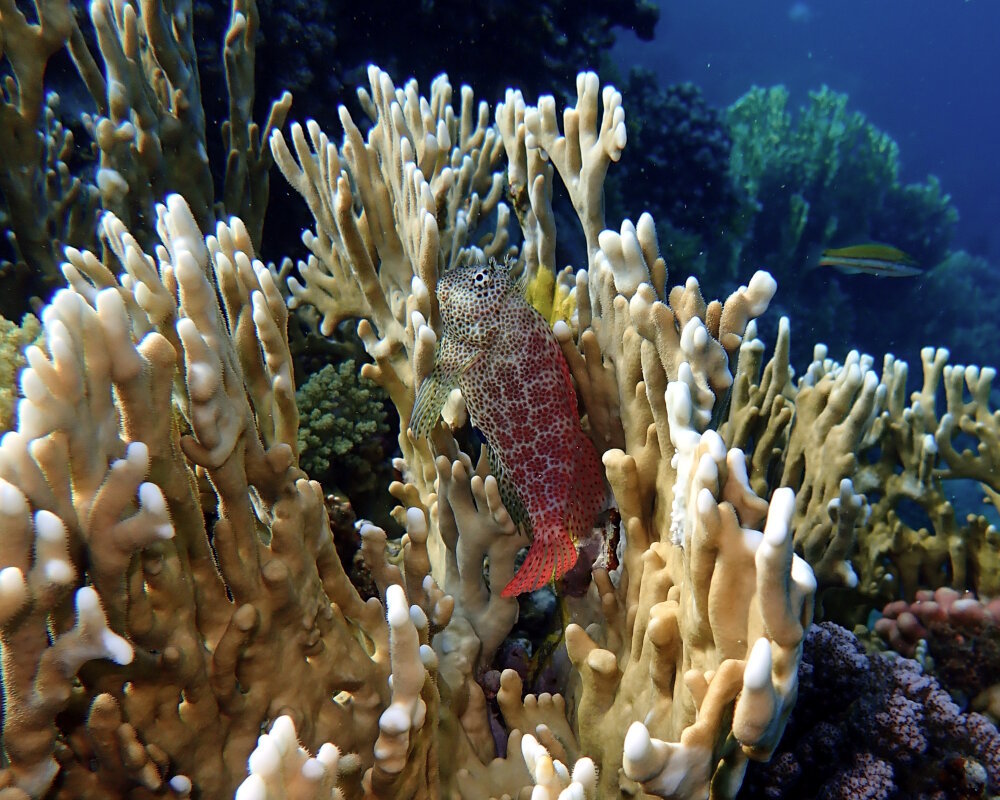
The leopard blenny (Exallias brevis) © Alexey Masliy | Dreamstime.com
Within the same family



Discover also



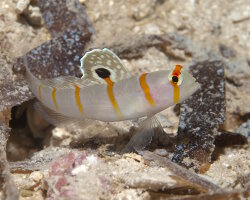
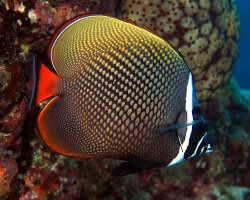

Our latestUpdates
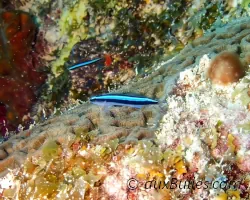
The neon gobyDiscover the neon goby (Elacatinus oceanops), a small western Atlantic reef fish known for its brilliant blue stripe and its role as a cleaner fish that removes parasites from other fish.Read more

The poison gobyDiscover the poison goby (Gobiodon citrinus), a tiny reef fish with a bright yellow body and distinctive blue markings. It lives among branching Acropora corals in the tropical waters of the Indo-Pacific.Read more
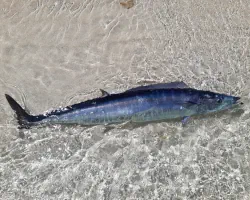
The wahooDiscover the wahoo (Acanthocybium solandri), a powerful pelagic predator found in tropical and subtropical oceans. Recognizable by its streamlined body and distinctive blue vertical stripes, it is a fast swimmer that feeds mainly on fish and squid.Read more
Photo of the Day
Fou à pieds rouges
(Sula sula)
(Sula sula)
 Copyright © 2007-2026 auxBulles.com - All rights reserved. Legal notices.
Photo credits - Our partners