

Sealife guideJellyfish: drifters of the oceanThe marine cnidarians
Last updated on 09/08/2025 at 11:26 PM
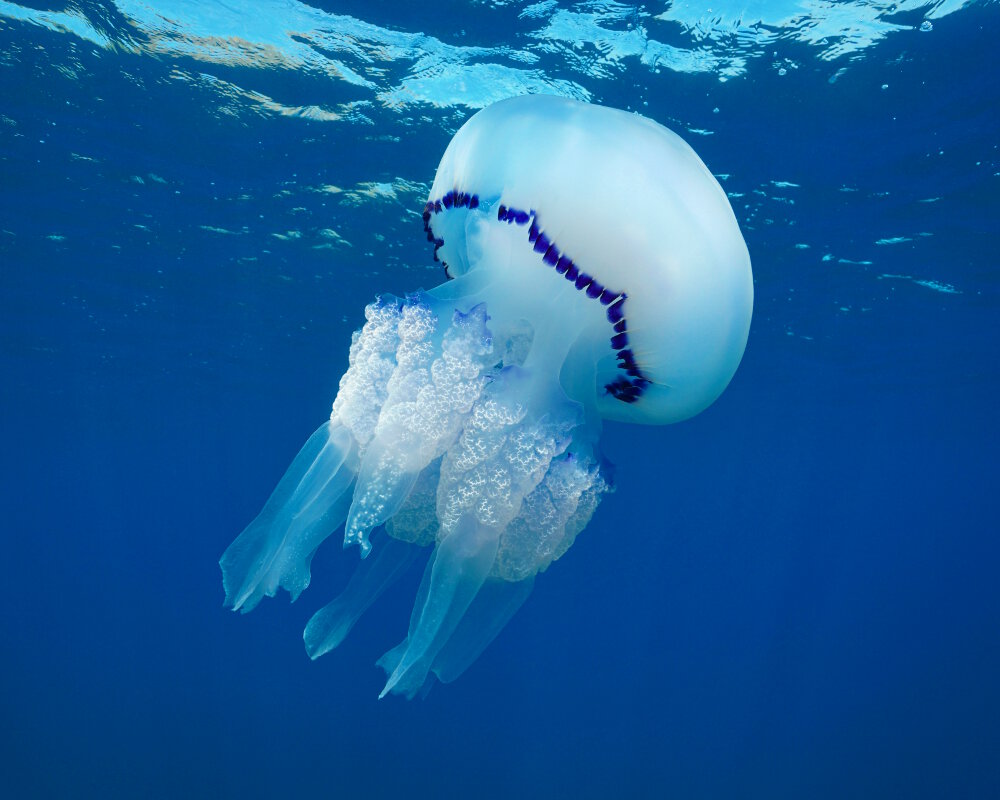
The barrel jellyfish (Rhizostoma pulmo) © Seadam | Dreamstime.com
Taxonomy
- Phylum: Cnidaria
- Class:
- Common name: Scyphozoans
- Scientific name: Scyphozoa
Description
Scyphozoans refer to the class of cnidarians that includes jellyfish. Scyphozoans comprise more than 4,000 species.
The name scyphozoan comes from scyphos meaning cup and zoon meaning animal.
Jellyfish are invertebrates with a gelatinous body consisting of a disc called a bell, with a mouth at its center surrounded by arms called oral arms.
The body of jellyfish is made of mesoglea, a mixture of collagen and water up to 95%, giving them their translucent appearance.
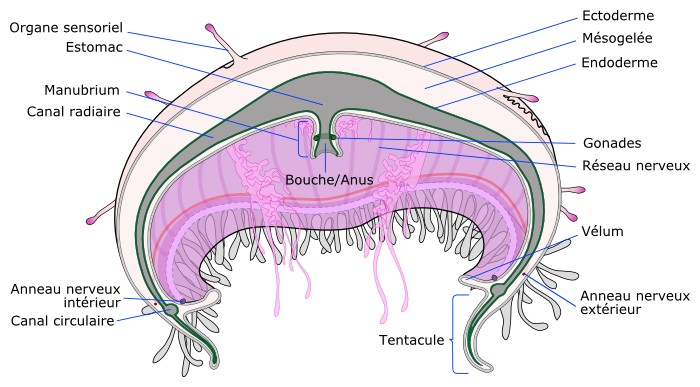
Anatomy of a jellyfish
Jellyfish have fine, long tentacles around the bell equipped with stinging cells.
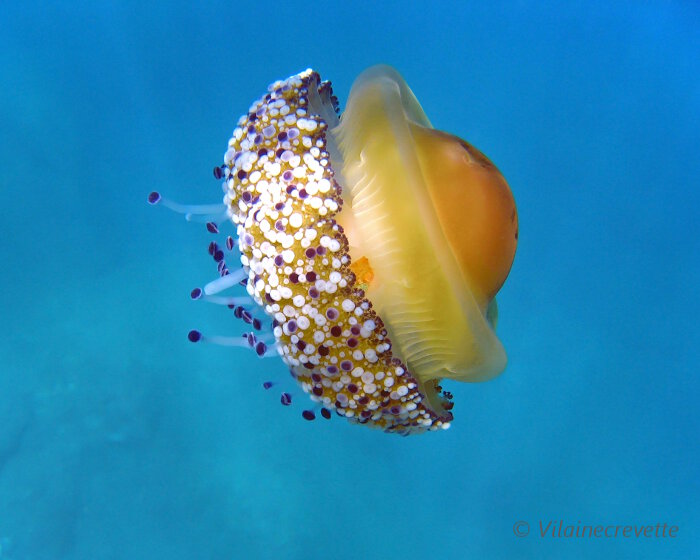
The 'fried egg' jellyfish gets its name from its resemblance to the dish of the same name!
Jellyfish can move by propelling water through contractions of their bodies, but they are carried along by ocean currents.
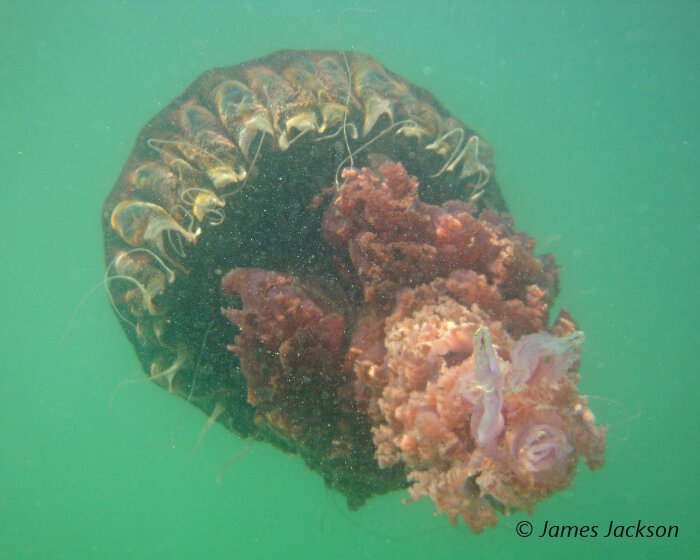
It's hard not to feel 'tiny' in front of this gigantic black jellyfish during its occasional appearances in the coastal waters of southern California.
Jellyfish fish like a trawler, using their stinging tentacles to capture any animals that cross their path.
Jellyfish reproduce by releasing their gametes into the water.
Geographic range
Jellyfish are found in all oceans and at all depths, from the surface where they are most common to the deep sea.
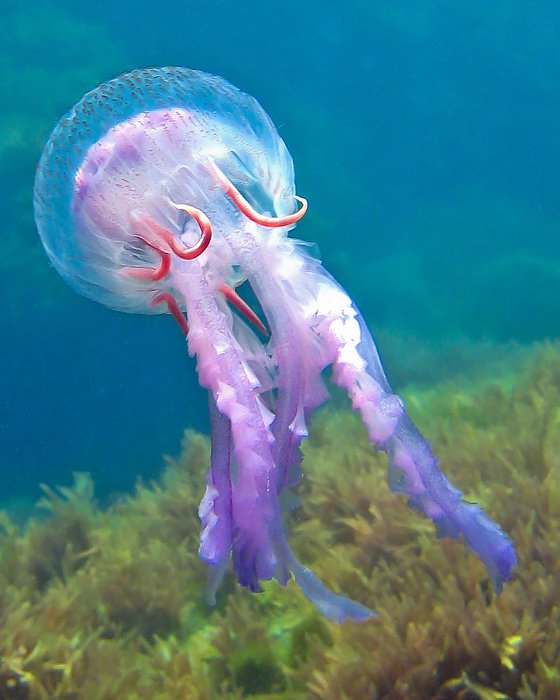
Jellyfish are invertebrates with a gelatinous body consisting of a disc called a bell, with a mouth at its center surrounded by arms.
Did you know ?
Jellyfish bodies are made up of 95% water.
Lion's mane jellyfish, including tentacles, can reach over 230 feet long and 6.5 feet in diameter !
Sea turtles are the main predators of jellyfish.
Discover jellyfish
Atlantic sea nettleChrysaora quinquecirrha
Barrel jellyfishRhizostoma pulmo
Black sea nettleChrysaora achlyos
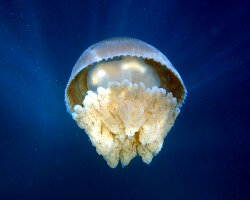
Blue blubber jellyfishCatostylus mosaicus
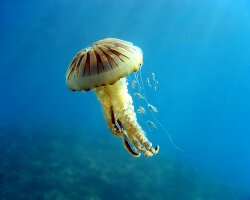
Compass jellyfishChrysaora hysoscella
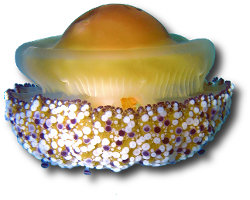
Fried egg jellyfishCotylorhiza tuberculata
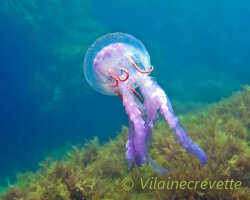
Purple-striped jellyPelagia noctiluca
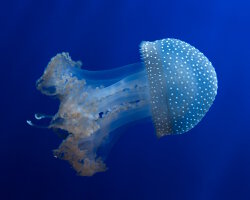
White spotted jellyfishPhyllorhiza punctata
Our latestUpdates
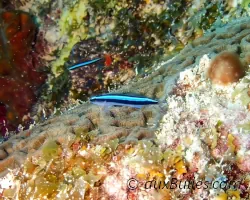
The neon gobyDiscover the neon goby (Elacatinus oceanops), a small western Atlantic reef fish known for its brilliant blue stripe and its role as a cleaner fish that removes parasites from other fish.Read more

The poison gobyDiscover the poison goby (Gobiodon citrinus), a tiny reef fish with a bright yellow body and distinctive blue markings. It lives among branching Acropora corals in the tropical waters of the Indo-Pacific.Read more
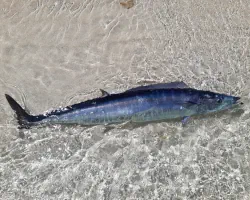
The wahooDiscover the wahoo (Acanthocybium solandri), a powerful pelagic predator found in tropical and subtropical oceans. Recognizable by its streamlined body and distinctive blue vertical stripes, it is a fast swimmer that feeds mainly on fish and squid.Read more
Photo of the Day
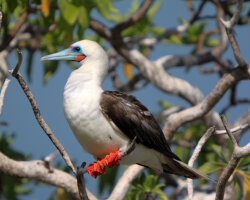
Fou à pieds rouges
(Sula sula)
(Sula sula)
 Copyright © 2007-2026 auxBulles.com - All rights reserved. Legal notices.
Photo credits - Our partners