

Sealife guideThe noble pen shellPinna nobilis
Last updated on 09/02/2025 at 12:22 AM
Taxonomy
English names
Noble pen shellFan mussel
French namesGrande nacre de MéditerranéeJambonneau de merJambonneau hérissé
Scientific namePinna nobilis (Linnée, 1758)
FamilyPinnidae
OrderPterioida
ClassBivalvia
Description
The noble pen shell is a bivalve mollusk that can reach a size of about 3.3 feet. Like all bivalves, it is characterized by a shell composed of two parts, called valves, joined by a hinge. In the case of the noble pen shell, the two valves are symmetrical and shaped like elongated triangles ending in a rounded edge.
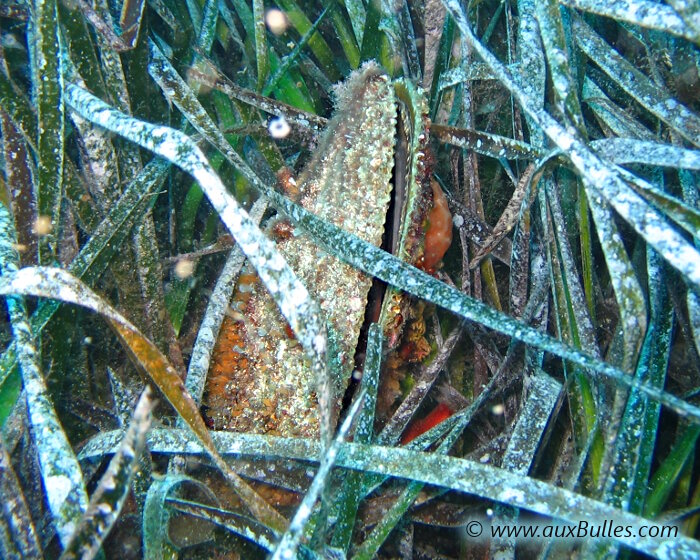
The noble pen shell can reach a size of about 3.3 feet
Geographic range
The noble pen shell is a bivalve endemic to the Mediterranean sea. Just like the seagrass meadows of Posidonia where it makes its home, it can be found from shallow waters down to depths of about 165 feet, as long as there is enough light.
Habitat
The noble pen shell lives on sandy bottoms and mainly in Posidonia seagrass meadows, where it is buried in the sediment up to about one-third of its height or even half in some cases.
Diet
The noble pen shell feeds on living particles (plankton) or dead organic matter suspended in the water, filtering it through its gills. The water current is generated by the movement of tiny cilia.
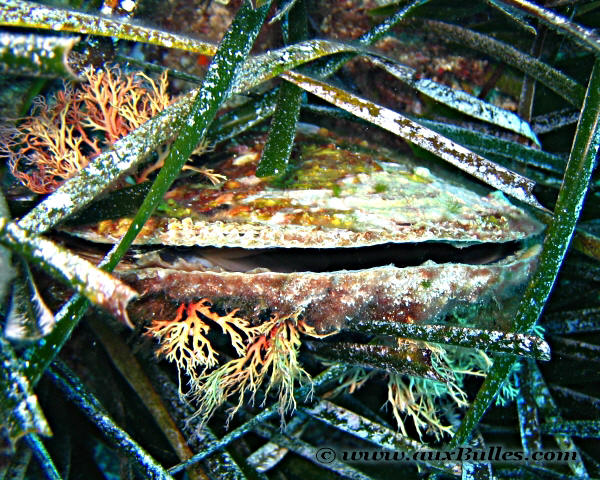
The noble pen shell is found on sandy bottoms, primarily within Posidonia seagrass meadows
Reproduction
The noble pen shell is hermaphroditic and its reproduction occurs through alternating releases of male and female gametes. Fertilization happens in open water, giving rise to larvae that, after a planktonic stage, settle on a surface or anchor in the sediment to develop and transform into a bivalve.
Did you know ?
At lengths of 3.3 feet or more, the noble pen shell is the largest bivalve mollusk in the Mediterranean ! Alongside the giant clam, it is one of the largest bivalve mollusks in the world !
If it falls on the seabed, the noble pen shell can right itself using its foot.
The noble pen shell is a protected species: it appears in the decree of November 26, 1992 (published in the Official Journal No. 15 of January 19, 1993), which lists the protected species of marine fauna.
Nevertheless, the noble pen shell is threatened by the decline of Posidonia seagrass meadows and by careless anchoring of boats !
The noble pen shell is listed as many other marine species within The IUCN Red List of threatened species. The noble pen shell appears in the IUCN Red List since 2019 within the category Critically Endangered !
Tips for observing
Large adult noble pen shells are easy to spot inside Posidonia meadows, but with attention you can also notice smaller specimens. A golden rule when exploring these meadows: maintain perfect buoyancy and take care with your fin movements to avoid knocking over a noble pen shell !
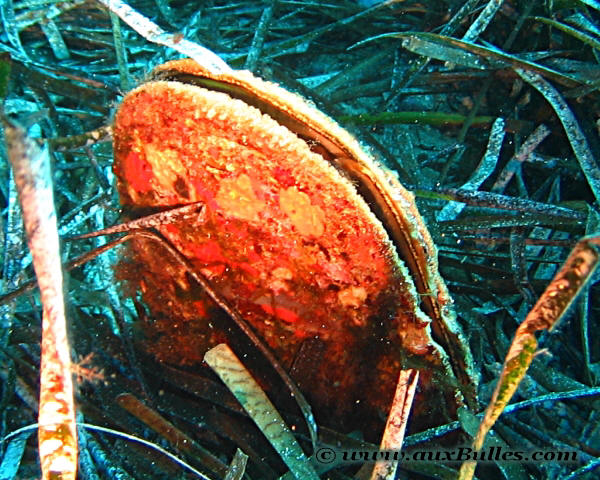
At lengths of 3.3 feet or more, the noble pen shell is the largest bivalve mollusk in the Mediterranean sea
It is sometimes possible to find small crustaceans such as tiny crabs or shrimp inside the shell of the noble pen shell, where they find both food and shelter without disturbing their host.
Discover also
Great Atlantic scallopPecten maximus

Hooded nudibranchMelibe leonina

Lettuce sea slugElysia crispata
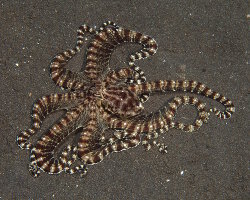
Mimic octopusThaumoctopus mimicus
Pink sea slugFlabellina affinis
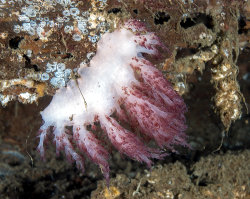
Red dendronotidDendronotus rufus
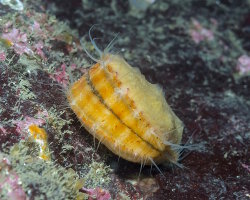
Spiny pink scallopChlamys hastata
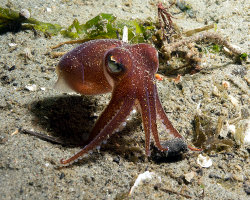
Stubby squidRossia pacifica
The marine species in the Mediterranean Sea
Best scuba diving destinations
Our latestUpdates
The Guide des poissons de Nouvelle-CalédonieDiscover Guide to the Fishes of New Caledonia by Pierre Laboute and René Grandperrin, an illustrated reference featuring nearly 1,200 species, from rivers and coral reefs to the depths of the ocean.Read more
The neon gobyDiscover the neon goby (Elacatinus oceanops), a small western Atlantic reef fish known for its brilliant blue stripe and its role as a cleaner fish that removes parasites from other fish.Read more

The poison gobyDiscover the poison goby (Gobiodon citrinus), a tiny reef fish with a bright yellow body and distinctive blue markings. It lives among branching Acropora corals in the tropical waters of the Indo-Pacific.Read more
Photo of the Day
Ver plat rose
(Prostheceraeus roseus)
(Prostheceraeus roseus)
 Copyright © 2007-2026 auxBulles.com - All rights reserved. Legal notices.
Photo credits - Our partners