

Islands destinationGalapagos islandsPacific ocean
Last updated on 08/24/2026 at 10:41 PM
The Galapagos islands form an archipelago made up of 19 islands, including 5 major islands (Isabela, Fernandina, San Cristobal, Santa Cruz and Santiago), and 42 islets. The Galapagos islands are located in the Pacific ocean, west of the Ecuadorian coast, less than 620 miles offshore.

Tortuga bay is located on Santa Cruz island in the Galápagos islands © Alvaro Sevilla Design sous licence Creative Commons

Tortuga Bay is located on Santa Cruz island in the Galapagos islands © David Adam Kess sous licence Creative Commons
An exceptional biodiversity
The Galapagos islands are world-renowned for the richness and diversity of their flora and fauna and are considered a « living museum and showcase of evolution » unique in the world. The Galapagos islands were designated as a UNESCO World Heritage Site in 1978 and as a UNESCO Biosphere Reserve in 1984.


At the crossroads of several ocean currents, shaped by volcanic activity and isolated from the rest of the world, the Galapagos islands have allowed the development, natural selection, and evolution of many species independently from any external influence.
The Galapagos islands have thus naturally become a sanctuary for many endemic species found exclusively on these islands, such as the giant tortoise, the marine iguana, the Galapagos albatross, and Darwin's finch !
The Galapagos islands, Charles Darwin's natural laboratory
In 1835, the Galapagos islands welcomed Charles Darwin aboard the exploration ship « HMS Beagle ». After returning home, enriched by his observations, he developed his theory of evolution.
In 1964, the Charles Darwin Research Station and Foundation was established on Santa Cruz island. Its mission is to preserve this extraordinary and unique « living treasure » while balancing human activity.
Geographical location
A diver's paradise
Marine biodiversity includes no fewer than 2,900 recorded marine species, one-fifth of which are endemic to the Galapagos islands. Notable species include the marine iguana, the Galapagos sea lion, the Galapagos shark, and the Galapagos penguin, the only penguin species living in warm waters.
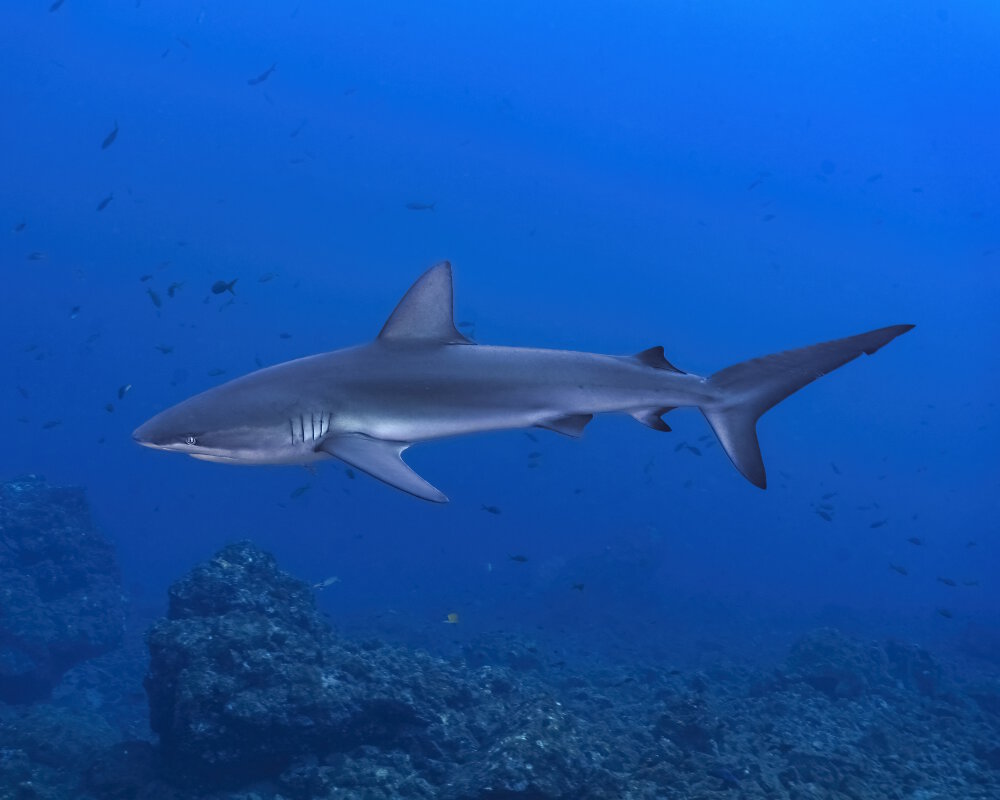
The Galapagos shark (Carcharhinus galapagensis) © Nicolás Sánchez Biezma | Dreamstime.com
Practical information
Visitor numbers and access to sites are strictly limited on each island of the Galapagos archipelago in order to protect wildlife. Only marked trails are authorized so you can enjoy the hospitality of your hosts responsibly !
The marine species in the Galápagos Islands

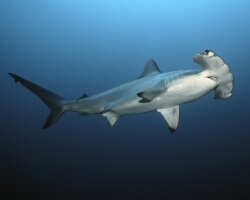
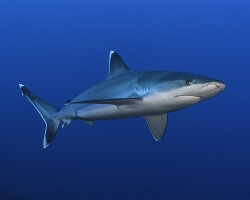
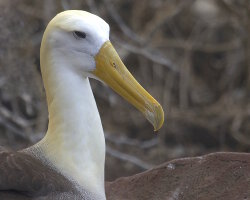
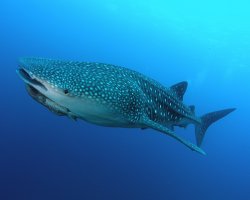
The islands from eastern tropical Pacific ocean
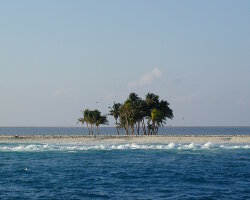
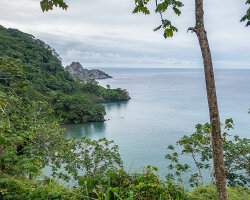
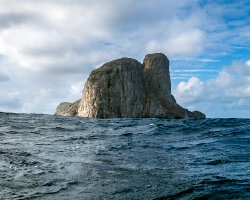
The islands from pacific ocean
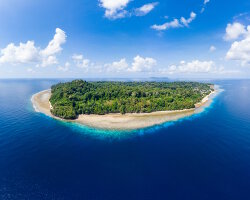
Ai island
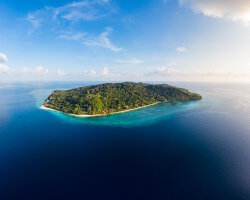
Hatta island

Japan islands
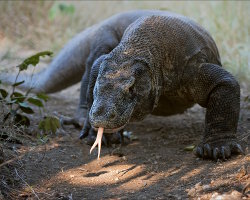
Komodo island

Rurutu island
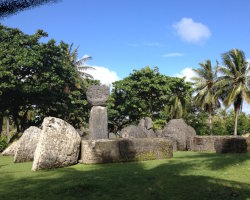
Tinian Island
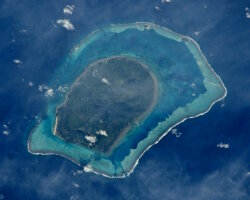
Tubuai island
Yasawa islands
Explore new islands

Our latestUpdates

The Guide des poissons de Nouvelle-CalédonieDiscover Guide to the Fishes of New Caledonia by Pierre Laboute and René Grandperrin, an illustrated reference featuring nearly 1,200 species, from rivers and coral reefs to the depths of the ocean.Read more
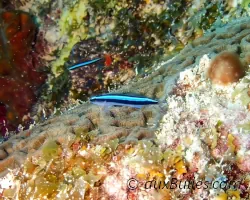
The neon gobyDiscover the neon goby (Elacatinus oceanops), a small western Atlantic reef fish known for its brilliant blue stripe and its role as a cleaner fish that removes parasites from other fish.Read more

The poison gobyDiscover the poison goby (Gobiodon citrinus), a tiny reef fish with a bright yellow body and distinctive blue markings. It lives among branching Acropora corals in the tropical waters of the Indo-Pacific.Read more
Photo of the Day
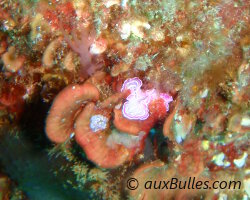
Ver plat rose
(Prostheceraeus roseus)
(Prostheceraeus roseus)
 Copyright © 2007-2026 auxBulles.com - All rights reserved. Legal notices.
Photo credits - Our partners