

Sealife guideThe striped remoraEcheneis naucrates
Last updated on 09/14/2026 at 11:03 PM
The striped remora (Echeneis naucrates) is a fish that is easily recognized by the suction disk located on top of its head. Thanks to this remarkable adaptation, it can temporarily attach itself to large marine animals such as sharks, rays, or sea turtles and hitch a ride while remaining capable of moving freely whenever it chooses.
This association allows it to save energy and take advantage of scraps of food left by its host. The striped remora can nevertheless live independently, particularly in shallow coastal waters and around coral reefs.
Taxonomy
English names
Striped remoraLive sharksucker
French namesRémora rayéRémora commun
Spanish namesRémora rayada
Scientific nameEcheneis naucrates (Linnaeus, 1758)
FamilyEcheneidae
OrderCarangiformes
ClassActinopterygii
Description
The striped remora has an elongated, streamlined body, generally dark brown, crossed by a broad dark stripe bordered by lighter stripes along its sides. Its most distinctive feature is the suction disk on top of its head, formed from a deeply modified dorsal fin. It allows the fish to adhere firmly to the surface of its host without having to swim continuously.
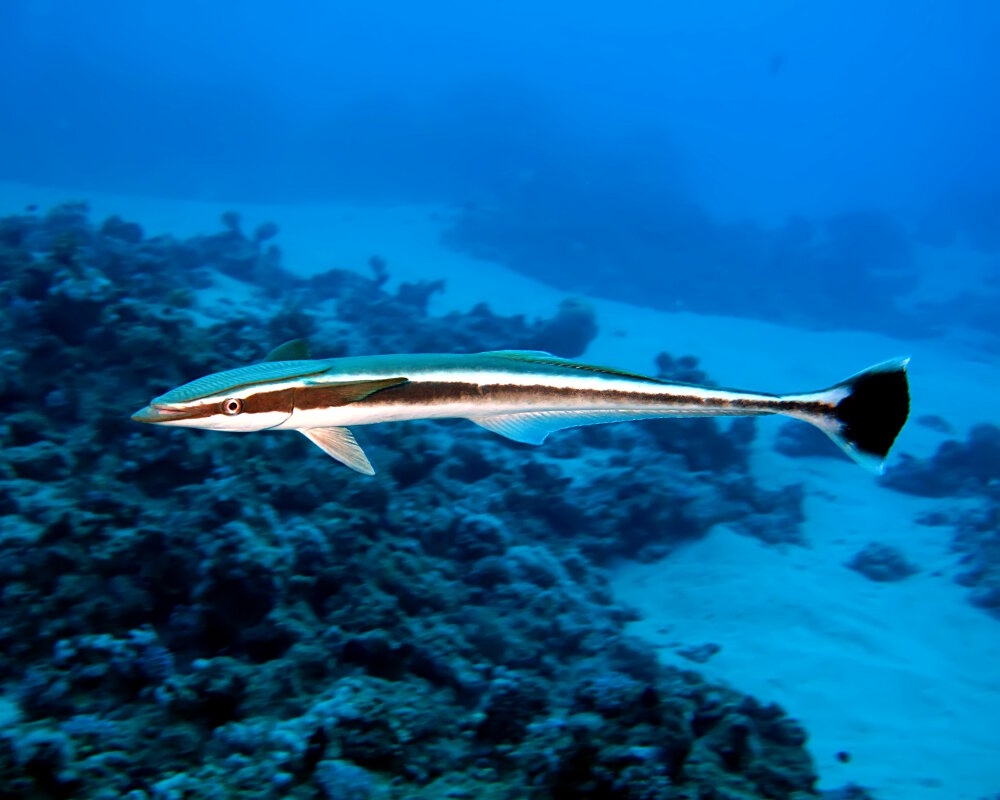
The striped remora (Echeneis naucrates) © Cigdem Sean Cooper | Dreamstime.com
Adult striped remoras typically measure around 20 to 24 inches in length, but the largest specimens can reach up to 3.6 feet.
Geographic range
The striped remora inhabits the warm tropical and subtropical waters of the Atlantic, Indian, and Pacific oceans.
It occurs in the Caribbean, the Gulf of Mexico, around numerous tropical islands in the Indian Ocean, and throughout the western Pacific. It is absent, however, from the Pacific coast of the Americas, which represents one of the main known limits of its distribution.
Habitat
The striped remora primarily inhabits shallow coastal waters, coral reefs, and areas close to shore. It can swim freely above the seafloor or temporarily attach itself to a larger animal, particularly a shark, ray, sea turtle, or large fish. It can be found at depths of up to 279 feet.
When attached to a host, the striped remora takes advantage of its movements to travel long distances without having to expend energy swimming. It can also detach and move independently when searching for food or a new host.
Diet
The striped remora feeds on small marine animals, as well as scraps of food left by its host and parasites living on its body. When accompanying a large fish or a sea turtle, it can therefore indirectly benefit from its meals while also picking up small organisms encountered along the way.
Young individuals can also act as cleaner fish on coral reefs. They notably remove small parasites from the surface of parrotfish. When swimming independently, the striped remora can also capture small fish and other marine animals.
Reproduction
The striped remora has separate sexes and reproduces through external fertilization. The female releases her eggs into the water, where they are then fertilized by the male. The eggs drift with ocean currents until they hatch.
At birth, the young are very different from adults and live freely in the water. Their suction disk gradually develops as they grow. They remain independent for about one year, then begin attaching themselves to host fish when they reach approximately 3 centimeters in length.
Did you know ?
The striped remora is the most common of the eight remora species !
The striped remora can attach itself to many different animals, including sharks, rays, sea turtles, large fish, whales, and dolphins. It can even attach itself to the hulls of boats. This relationship is generally considered commensalism: the remora benefits from transportation and certain resources provided by its host without significantly affecting the host.
The striped remora is listed as many other marine species within The IUCN Red List of threatened species. The striped remora appears in the IUCN Red List since 2015 within the category Least Concern !
Within the same family
Suckerfish
(8 espèces)
(8 espèces)
Discover also
Blubberlip snapper
(Lutjanus rivulatus)
(Lutjanus rivulatus)

Blue-green chromis
(Chromis viridis)
(Chromis viridis)
Double barred rabbitfish
(Siganus virgatus)
(Siganus virgatus)
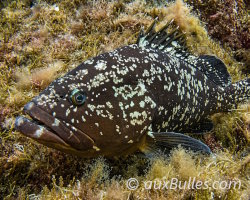
Dusky grouper
(Epinephelus marginatus)
(Epinephelus marginatus)

Flagtail shrimpgoby
(Amblyeleotris yanoi)
(Amblyeleotris yanoi)
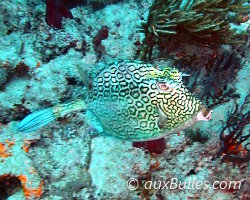
Honeycomb cowfish
(Acanthostracion polygonium)
(Acanthostracion polygonium)
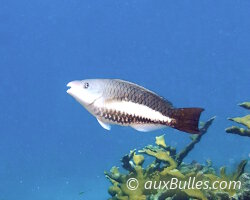
Queen parrotfish
(Scarus vetula)
(Scarus vetula)

Seale's cardinalfish
(Ostorhinchus sealei)
(Ostorhinchus sealei)
Our latestUpdates
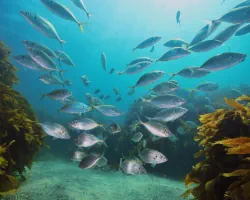
The white trevallyDiscover the white trevally (Pseudocaranx dentex), a silvery fish with a blue-green back that schools near reefs and rocky bottoms.Read more
Morrocoy National ParkDiscover Morrocoy National Park in Venezuela, with white-sand beaches, turquoise waters, coral reefs, mangroves, scenic cayos, and remarkable marine biodiversity.Read more
Milos IslandDiscover Milos Island in the Cyclades, known for its volcanic landscapes, crystal-clear beaches, traditional villages, and the famous Venus de Milo.Read more
Photo of the Day
Gorette à petite bouche
(Haemulon chrysargyreum)
(Haemulon chrysargyreum)
 Copyright © 2007-2026 auxBulles.com - All rights reserved. Legal notices.
Photo credits - Our partners