

Sealife guideSharks and rays: the secret lives of elasmobranchsMarine vertebrates
Last updated on 08/22/2025 at 10:42 PM
Elasmobranchs, such as sharks and rays, are very ancient cartilaginous fish. Their light and flexible skeletons make them highly agile in the water and their senses are remarkably developed: some can detect vibrations or electrical fields from a distance.
These animals play a crucial role in marine ecosystems by regulating prey populations and maintaining the balance of reefs and seagrass beds. Despite their often fearsome reputation, most elasmobranchs pose no danger to humans and are a testament to the richness of marine biodiversity.
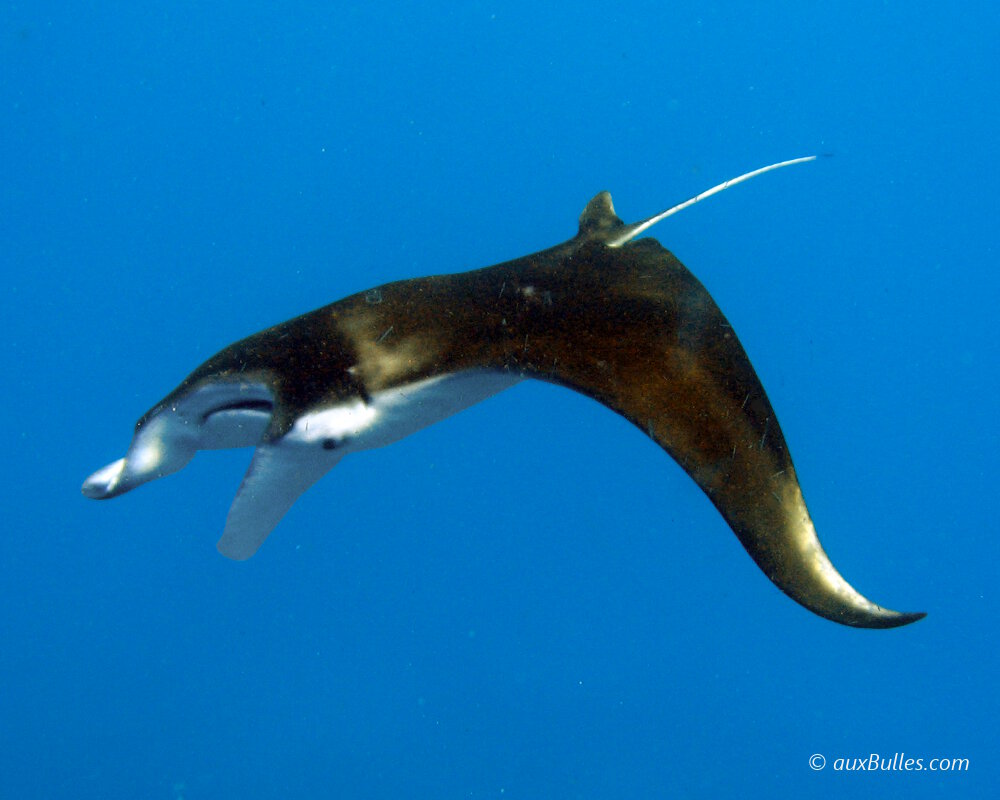
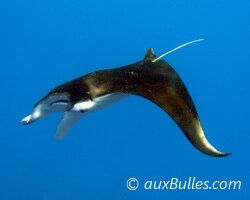
The manta ray (Mobula birostris) is a cartilaginous fish
Elasmobranchs are a subclass of cartilaginous fish, scientifically known as Chondrichthyes and include both pelagic and benthic species. Among them is the largest fish in the world, the whale shark, reaching up to 66 feet in length !
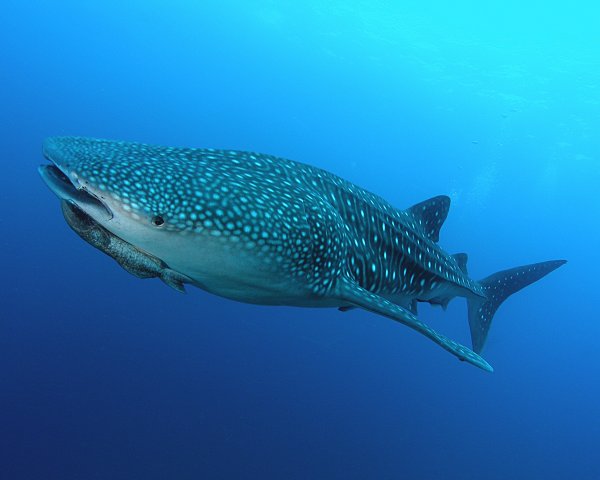
The whale shark is the largest fish at the surface of the globe
Discover sharks and rays


Our latestUpdates

The Guide des poissons de Nouvelle-CalédonieDiscover Guide to the Fishes of New Caledonia by Pierre Laboute and René Grandperrin, an illustrated reference featuring nearly 1,200 species, from rivers and coral reefs to the depths of the ocean.Read more
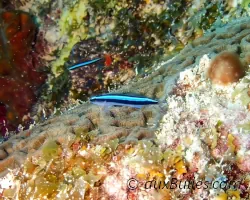
The neon gobyDiscover the neon goby (Elacatinus oceanops), a small western Atlantic reef fish known for its brilliant blue stripe and its role as a cleaner fish that removes parasites from other fish.Read more

The poison gobyDiscover the poison goby (Gobiodon citrinus), a tiny reef fish with a bright yellow body and distinctive blue markings. It lives among branching Acropora corals in the tropical waters of the Indo-Pacific.Read more
Photo of the Day
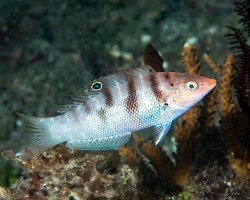
Girelle de Batu
(Coris batuensis)
(Coris batuensis)
 Copyright © 2007-2026 auxBulles.com - All rights reserved. Legal notices.
Photo credits - Our partners