

Sealife guideThe Urotrygonidae familyThe taxonomy of marine species
Explore the taxonomy of the sea vertebrates including the cetaceans like the whales or the dolphins, the sea birds, the fish, the sharks and the sea turtles !
The order Myliobatiformes includes a wide group of rays that are mainly benthic and pelagic, encompassing stingrays, eagle rays, and manta rays. Found in all of the world’s oceans, from shallow coastal waters to open seas, they are characterized by their flattened, disc-shaped bodies and enlarged pectoral fins that form broad “wings” in some species. Many have slender tails equipped with one or more venomous stingers used for defense, although some species such as manta rays lack them. They inhabit a wide range of environments, from sandy and muddy seabeds to open pelagic zones, and display diverse lifestyles ranging from discreet bottom-dwelling behavior to active swimming in open water. Their diet is equally varied, ranging from benthic invertebrates and small fish to, in some species, plankton filtered from the water column.
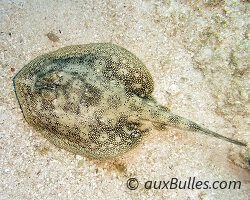
The Urotrygonidae family includes small stingrays primarily found in the tropical coastal waters of the eastern Pacific Ocean, particularly along the coasts of the Americas. These rays are characterized by their generally small size, rounded to slightly oval disc-shaped bodies, and slender tails equipped with a venomous stinger. They inhabit sandy or muddy bottoms in shallow waters, where they partially bury themselves to camouflage and capture prey. Opportunistic carnivores, they mainly feed on small benthic invertebrates such as crustaceans, marine worms, and mollusks. Their discreet behavior and coastal habitat sometimes make them difficult to observe in the wild.
Our latestUpdates
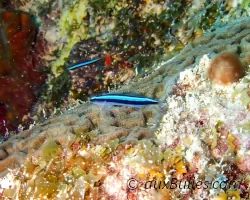
The neon gobyDiscover the neon goby (Elacatinus oceanops), a small western Atlantic reef fish known for its brilliant blue stripe and its role as a cleaner fish that removes parasites from other fish.Read more

The poison gobyDiscover the poison goby (Gobiodon citrinus), a tiny reef fish with a bright yellow body and distinctive blue markings. It lives among branching Acropora corals in the tropical waters of the Indo-Pacific.Read more
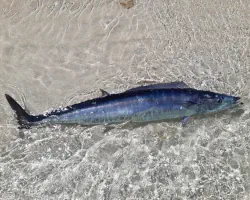
The wahooDiscover the wahoo (Acanthocybium solandri), a powerful pelagic predator found in tropical and subtropical oceans. Recognizable by its streamlined body and distinctive blue vertical stripes, it is a fast swimmer that feeds mainly on fish and squid.Read more
Photo of the Day
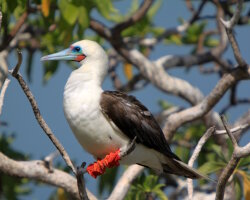
Fou à pieds rouges
(Sula sula)
(Sula sula)
 Copyright © 2007-2026 auxBulles.com - All rights reserved. Legal notices.
Photo credits - Our partners