

Sealife guideThe emperor angelfishPomacanthus imperator
Last updated on 03/03/2026 at 10:00 PM
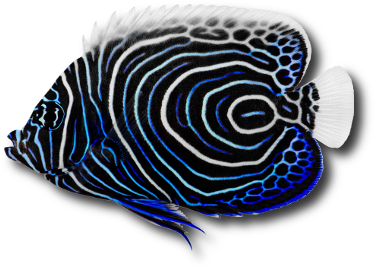
At the juvenile stage, the emperor angelfish has a completely different appearance © Johannesk | Dreamstime.com
Taxonomy
English names
Emperor angelfish
French namesPoisson ange empereur
Spanish namesPez angel emperador
Scientific namePomacanthus imperator (Bloch, 1787)
FamilyPomacanthidae
OrderAcanthuriformes
ClassActinopterygii
Description
The emperor angelfish can reach about 16 inches in length as an adult. Its body is oval and strongly laterally compressed, with long dorsal and anal fins that extend its elegant silhouette.
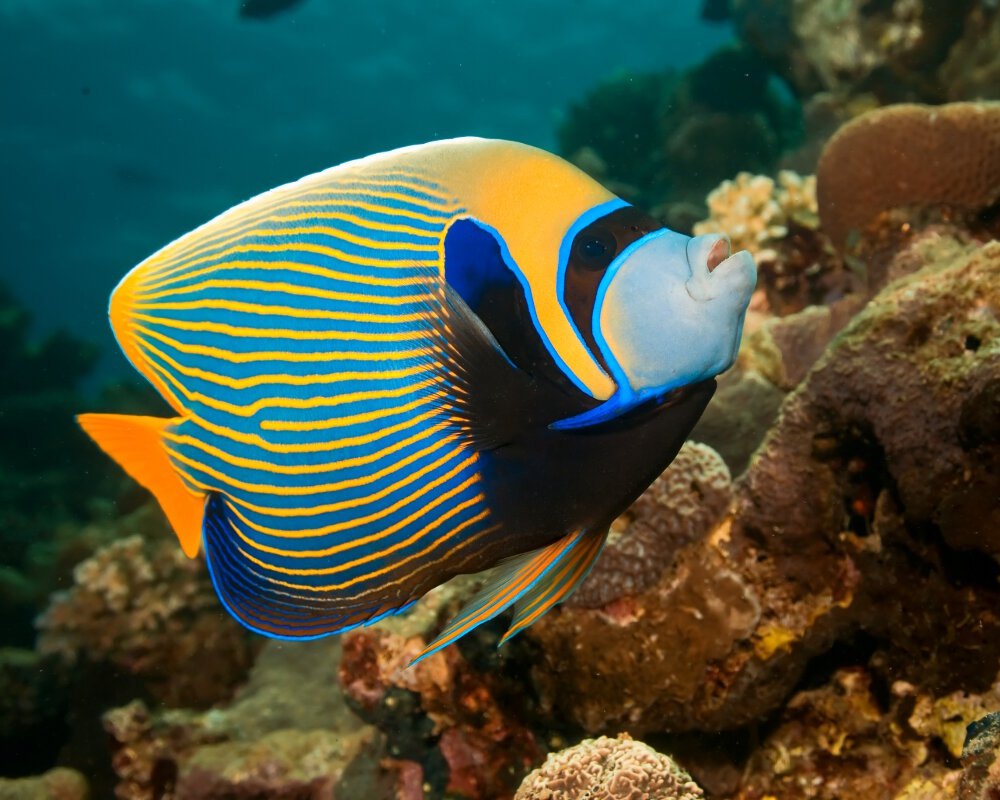
As an adult, the emperor angelfish displays a majestic coloration with horizontal yellow-orange and blue stripes © Stephankerkhofs | Dreamstime.com
The adult displays a majestic coloration with horizontal yellow-orange and blue stripes running across its body, while its black facial mask is highlighted with bright blue and its tail is yellow-orange.
At the juvenile stage, however, the emperor angelfish has a completely different appearance: its body is dark blue adorned with white and light blue concentric circles. This gradual transformation with age is called ontogenetic metamorphosis.
Geographic range
The emperor angelfish inhabits the tropical waters of the Indo-Pacific and is found notably in the Red sea, the Indian ocean, Indonesia, the Philippines, Papua New Guinea, Japan, and as far as the Great Barrier Reef in Australia.
Its wide distribution is explained by the dispersal of its larvae carried by ocean currents.
Habitat
The emperor angelfish primarily inhabits coral reefs, from shallow lagoons down to about 330 feet in depth, while juveniles prefer sheltered areas such as caves, overhangs, and reef crevices where they find protection from predators.
Adults generally live alone or in pairs within a well-defined territory.
Diet
The emperor angelfish feeds mainly on marine sponges, which make up the bulk of its diet. It also consumes tunicates, algae, and various small invertebrates.
This specialized diet plays an important ecological role: by regulating certain sponge populations, it helps maintain the balance of the coral reef ecosystem.
Reproduction
Like many angelfish, the emperor angelfish is oviparous. Reproduction usually takes place at dusk: the male and female rise into the water column to simultaneously release their gametes.
The fertilized eggs then drift in the open sea with ocean currents. The larvae live for a time in the plankton before returning to the reef to begin their metamorphosis into the juvenile stage.
Did you know ?
The emperor angelfish is listed as many other marine species within The IUCN Red List of threatened species. The emperor angelfish appears in the IUCN Red List since 2010 within the category Least Concern !
Within the same genus



Within the same family



Discover also


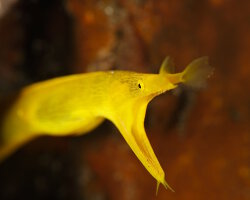
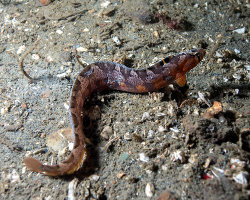

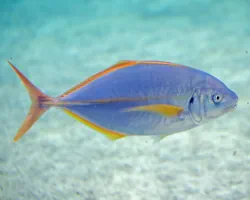
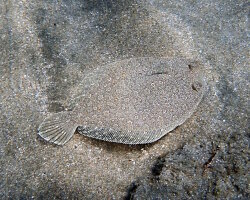
The marine species in the Indo-Pacific

Our latestUpdates
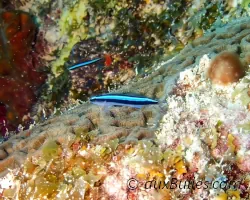
The neon gobyDiscover the neon goby (Elacatinus oceanops), a small western Atlantic reef fish known for its brilliant blue stripe and its role as a cleaner fish that removes parasites from other fish.Read more

The poison gobyDiscover the poison goby (Gobiodon citrinus), a tiny reef fish with a bright yellow body and distinctive blue markings. It lives among branching Acropora corals in the tropical waters of the Indo-Pacific.Read more
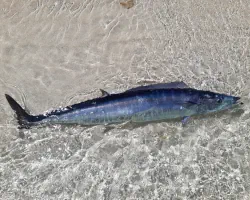
The wahooDiscover the wahoo (Acanthocybium solandri), a powerful pelagic predator found in tropical and subtropical oceans. Recognizable by its streamlined body and distinctive blue vertical stripes, it is a fast swimmer that feeds mainly on fish and squid.Read more
Photo of the Day
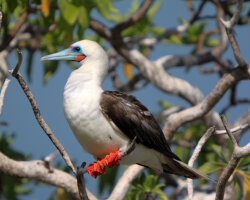
Fou à pieds rouges
(Sula sula)
(Sula sula)
 Copyright © 2007-2026 auxBulles.com - All rights reserved. Legal notices.
Photo credits - Our partners