

Sealife guideThe forkbeardPhycis phycis
Last updated on 10/28/2026 at 11:15 PM
Taxonomy
English names
Forkbeard
French namesMostelle brune
Spanish namesBrótola de roca
Scientific namePhycis phycis (Linnaeus, 1766)
FamilyPhycidae
OrderGadiformes
ClassActinopterygii
Description
The forkbeard averages 10 inches in length, reaching a maximum length of 25.6 inches. It has an elongated, brown body and is characterized by a barbel on the underside of its mouth and pelvic fins shaped like an inverted Y.

The forkbeard (Phycis phycis) is characterized by the presence of a barbel
The forkbeard has 2 dorsal fins, the first of which is very short. It also has an anal fin.
Geographic range
The forkbeard is found in the Mediterranean Sea and the northeastern Atlantic Ocean, from northern Portugal to Morocco and Cape Verde, as well as around the Canary Islands, the Azores, and Madeira.
In the Mediterranean, it is notably found around Port-Cros Island.
Habitat
The forkbeard inhabits rocky bottoms and areas where rocks meet sandy or muddy seabeds. During the day, it shelters in rocky crevices and is often found beneath the hulls of shipwrecks. It becomes more active at dusk.
The forkbeard is found at depths ranging from 33 to 197 feet.
Diet
The forkbeard feeds on small fish and various invertebrates, including crustaceans and marine worms. It mainly hunts at night, when it leaves its shelter.
Reproduction
The forkbeard's breeding season generally extends from January to May. After hatching, the larvae drift among plankton with ocean currents before gradually settling into their habitat.
Did you know ?
The forkbeard is listed as many other marine species within The IUCN Red List of threatened species. The forkbeard appears in the IUCN Red List since 2015 within the category Least Concern !
Tips for observing
Motionless just inches above the seabed in the darkness, the forkbeard is easy to observe. To find one, look in its preferred hiding places, such as shaded areas beneath rocky overhangs or under the hulls of shipwrecks resting on the sand.

The forkbeard (Phycis phycis) lives tucked away in rocky crevices
It is also easy to identify by the barbel beneath its chin and its distinctive inverted Y-shaped pelvic fins.
Discover also

Halimeda ghost pipefishSolenostomus halimeda
Japanese surgeonfishAcanthurus japonicus

Old gloryKoumansetta rainfordi

PorkfishAnisotremus virginicus
Queen parrotfishScarus vetula

Spotted scorpionfishScorpaena plumieri
Tiger snake eelMyrichthys maculosus

Yellowfin tunaThunnus albacares
The marine species in the Mediterranean Sea



Our latestUpdates

Miami, in the footsteps of Vice City and GTA VIDiscover Miami, the real-life inspiration behind GTA Vice City and GTA VI. Explore South Beach, Ocean Drive, Brickell, Wynwood, the Florida Keys, and the Everglades, from iconic landmarks and vibrant neighborhoods to tropical landscapes.Read more
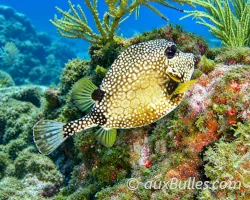
The smooth trunkfishDiscover the smooth trunkfish (Rhinesomus triqueter), a reef-dwelling fish from the tropical western Atlantic. Its angular body, protected by a bony carapace, features a dark coloration with white spots and distinctive honeycomb patterns.Read more

A tense finish in the CaribbeanA look back at the 2026 Route du Rhum finish: Tom Laperche wins the Ultim class as the leading boats arrive and close battles continue across the other fleets.Read more
Photo of the Day

Hippocampe à long museau
(Hippocampus reidi)
(Hippocampus reidi)
 Copyright © 2007-2026 auxBulles.com - All rights reserved. Legal notices.
Photo credits - Our partners