

Sealife guideThe neon gobyElacatinus oceanops
Last updated on 10/20/2026 at 12:24 AM
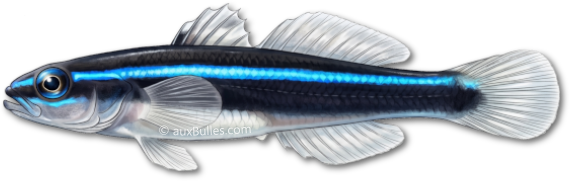
The neon goby (Elacatinus oceanops)
The neon goby (Elacatinus oceanops) is a small marine fish, recognizable by its dark blue stripe that contrasts with its light-colored body. Despite its modest size, it plays an important role in reef ecosystems by removing parasites from other fish.
Popular in marine aquariums, this fish inhabits the waters of the western Atlantic, particularly the Gulf of Mexico and off the coast of Florida. It lives on coral reefs, where it establishes cleaning stations visited by much larger fish seeking to have their parasites removed.
Taxonomy
English names
Neon goby
French namesGobie néon
Scientific nameElacatinus oceanops (Jordan, 1904)
FamilyGobiidae
OrderGobiiformes
ClassActinopterygii
Description
The neon goby has an elongated body and a relatively flattened head, with large eyes and a small mouth. Its light-colored body is crossed by a dark blue stripe that extends from the head to the caudal fin. This contrasting blue stripe makes it easy to identify among reef fish.

The neon goby (Elacatinus oceanops)
The neon goby is a small fish, typically measuring just a few inches in length, although the largest individuals can reach about 2 inches.
Geographic range
The neon goby inhabits the subtropical waters of the western Atlantic, from southern Florida and the Gulf of Mexico to Belize. Its range includes the Florida Keys, the Texas coast, and the coastline of the Yucatán Peninsula.
Habitat
The neon goby mainly inhabits coral reefs, where it stays near coral heads, rocky outcrops, or the surfaces of large sponges. It generally lives at depths of 3 to 131 feet, in areas where it can find shelter and establish cleaning stations.
Adults may live in pairs near a shelter that serves as their territory and cleaning station, where larger fish come to have parasites removed from their skin, fins, mouths, or gills.
Diet
The neon goby feeds primarily on small parasites that it picks off other fish. It targets organisms found on the skin and fins, as well as inside the mouths and on the gills of its clients. This feeding strategy provides the goby with food while helping clean the fish that visit its cleaning station.
Groupers and other larger fish may approach the goby to benefit from its services. Both partners benefit from this relationship: the goby finds food, while its clients have some of their parasites removed.
Reproduction
The neon goby forms monogamous pairs. During spawning, the female deposits her adhesive eggs in a shelter, such as a small cavity or crevice in the reef, where they remain attached as they develop.
The male then guards the eggs and fans them with his fins, helping oxygenate them until they hatch. The larvae initially live in the plankton before settling on the reef.
Did you know ?
Despite its small size, the neon goby can clean fish much larger than itself, including groupers. It removes parasites even from inside their mouths and from their gills. This cooperation illustrates the remarkable relationships that develop between species on coral reefs.
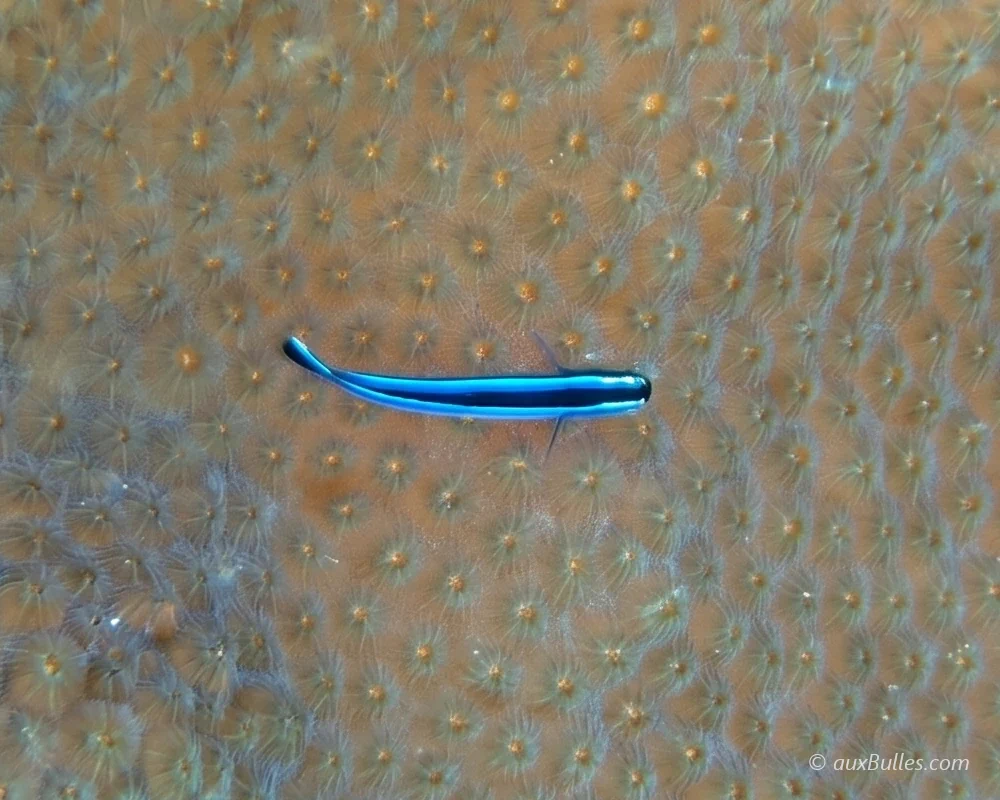
A neon goby (Elacatinus oceanops) resting on the surface of a coral in the Florida Keys
Within the same genus

Within the same family
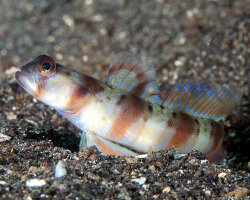
Arcfin shrimpgobyAmblyeleotris arcupinna

Filament-finned prawn-gobyStonogobiops nematodes
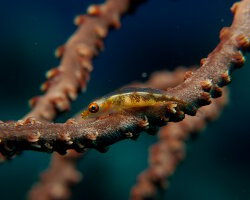
Gorgonian gobyBryaninops amplus

Hector's gobyKoumansetta hectori

Old gloryKoumansetta rainfordi

Orange-striped gobyAmblygobius decussatus

Pallid gobyCoryphopterus eidolon

Poison gobyGobiodon citrinus
Discover also

Banded angelfishApolemichthys arcuatus
Black scorpionfishScorpaena porcus

Blueface angelfishPomacanthus xanthometopon
Bump-head sunfishMola alexandrini

ForkbeardPhycis phycis

Picasso triggerfishRhinecanthus aculeatus

Teardrop butterflyfishChaetodon unimaculatus

Western barhead damselfishNeoglyphidodon thoracotaeniatus
Our latestUpdates
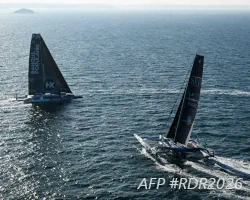
Major movesThe 2026 Route du Rhum enters a decisive phase as Tom Laperche extends his lead in the Ultim class, Armel Le Cléac'h capsizes, and Class40 skippers prepare to face a powerful weather front.Read more
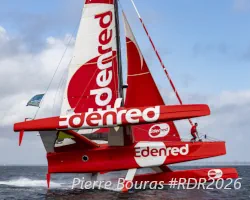
A tough startThe 2026 Route du Rhum gets off to an intense start, with major technical failures, Francis Joyon's capsize, impressive speeds and strategic route choices near the Azores. A look back at the first 48 hours of racing.Read more

A smooth start, an uncertain AtlanticDiscover the 2026 Route du Rhum start off Saint-Malo, where favorable initial conditions contrast with an uncertain Atlantic crossing shaped by changing winds and weather.Read more
Photo of the Day

Méduse pélagique
(Pelagia noctiluca)
(Pelagia noctiluca)
 Copyright © 2007-2026 auxBulles.com - All rights reserved. Legal notices.
Photo credits - Our partners