

Sealife guideThe bat sea starPatiria miniata
Last updated on 08/12/2026 at 10:34 PM
Taxonomy
English names
Bat sea starSea batBroad-disc star
French namesEtoile de mer chauve-souris
Scientific namePatiria miniata (Brandt, 1835)
FamilyAsterinidae
OrderValvatida
ClassAsteroidea
Description
The bat sea star is a sea star recognizable by its short, triangular arms connected by a membrane, giving it a silhouette reminiscent of a bat's wings.

The bat sea star (Patiria miniata) © Ethan Daniels | Dreamstime.com
The bat sea star generally has five arms, but their number can vary from four to nine. Its coloration is particularly variable: it can be red, orange, yellow, brown, green, or purple, with either a uniform color or a more mottled appearance.
As an adult, the bat sea star generally measures several inches in diameter and can reach up to 8 inches.
Geographic range
The bat sea star is found in the waters of the northeastern Pacific Ocean, along the western coast of North America, from Alaska to the Gulf of California, particularly along the coasts of British Columbia, Washington State, Oregon, and California.
The bat sea star is a common sea star species in the coastal waters of California and the Canadian province of British Columbia.
Habitat
The bat sea star lives on coastal seafloors, from the intertidal zone down to several hundred feet deep. It inhabits a variety of seafloor types, including rocky areas, gravel and sandy bottoms, as well as areas where shell fragments accumulate.
It is mainly associated with rocky coastlines and kelp forests, but prefers relatively sheltered areas away from places exposed to particularly strong wave action.
Diet
The bat sea star is a scavenger and opportunistic predator. It feeds on a wide variety of organisms and organic matter found on the seafloor, including both living and dead animals and plants.
It therefore plays an important role in cleaning the seafloor by consuming, among other things, animal remains and dead organisms.
Reproduction
The bat sea star reproduces sexually, with separate male and female individuals. Males release their sperm and females their eggs into seawater, where external fertilization takes place. The eggs then develop into planktonic larvae that spend some time in the water column before undergoing metamorphosis and becoming young sea stars.
Discover also

Biscuit sea starPeltaster placenta
Red cushion sea starOreaster reticulatus
Red Sea fire sea urchinAsthenosoma marisrubri
Red starfishEchinaster sepositus
Slate pencil urchinHeterocentrotus mamillatus
Stony sea urchinParacentrotus lividus
Sunflower sea starPycnopodia helianthoides
Violet sea urchinSphaerechinus granularis
The marine species in the Northeastern Pacific


Our latestUpdates
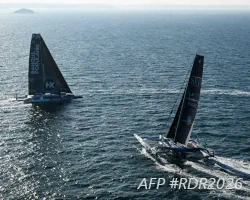
Major movesThe 2026 Route du Rhum enters a decisive phase as Tom Laperche extends his lead in the Ultim class, Armel Le Cléac'h capsizes, and Class40 skippers prepare to face a powerful weather front.Read more
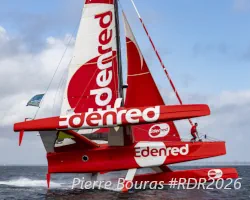
A tough startThe 2026 Route du Rhum gets off to an intense start, with major technical failures, Francis Joyon's capsize, impressive speeds and strategic route choices near the Azores. A look back at the first 48 hours of racing.Read more

A smooth start, an uncertain AtlanticDiscover the 2026 Route du Rhum start off Saint-Malo, where favorable initial conditions contrast with an uncertain Atlantic crossing shaped by changing winds and weather.Read more
Photo of the Day

Méduse pélagique
(Pelagia noctiluca)
(Pelagia noctiluca)
 Copyright © 2007-2026 auxBulles.com - All rights reserved. Legal notices.
Photo credits - Our partners