

Sealife guideThe ochre sea starPisaster ochraceus
Last updated on 08/10/2026 at 10:24 PM
Taxonomy
English names
Ochre sea starOchre starfishPurple sea star
French namesEtoile de mer ocreétoile de mer pourpre
Scientific namePisaster ochraceus (Brandt, 1835)
FamilyAsteriidae
OrderForcipulatida
ClassAsteroidea
Description
The ochre sea star is a large sea star recognizable by its robust body, generally formed by five thick arms that gradually widen from the central disc. Its coloration is highly variable and may be ochre, orange, reddish, brownish or purplish, sometimes with several shades on the same individual.

The ochre sea star (Pisaster ochraceus) © Wirestock | Dreamstime.com
Its upper surface is covered with small calcareous spines that give it a rough texture, while its underside bears numerous tube feet, or podia, which allow it to move and, above all, to grip rocks firmly and manipulate its prey.
As in other sea stars, its mouth is located at the center of the underside, and its body has a remarkable ability to regenerate.
Geographic range
The ochre sea star inhabits the temperate and cold waters of the northeastern Pacific ocean, along the western coast of North America, from Alaska, including the coast of British Columbia, to Baja California in Mexico. The ochre sea star is common along the coasts of California, British Columbia, Washington State, Oregon and the Pacific coast of Mexico.
Habitat
The ochre sea star lives mainly on rocky shores exposed to waves, particularly in the intertidal zone where sea level rises and falls with the tides. It can temporarily remain out of the water when the tide recedes and withstand harsh conditions such as drying, temperature fluctuations and exposure to sunlight.
It is also found below the surface, down to depths of several dozen meters. At low tide, it may take shelter in damp cracks or crevices before resuming its activity as the tide comes back in.
Diet
The ochre sea star feeds mainly on mollusks. Mussels are an important part of its diet, but this sea star also consumes limpets, chitons, barnacles and other marine invertebrates.
Thanks to its powerful tube feet, it can exert enough force to gradually pull apart the valves of a mussel. When prey is too large to be swallowed whole, it can evert its stomach, pushing it out through its mouth, to begin digesting the prey directly outside its body before absorbing the liquefied tissues. This feeding strategy allows it to exploit prey that are much larger than the opening of its mouth.
Reproduction
Reproduction in the ochre sea star is primarily sexual, and individuals generally have separate sexes. The gonads are located in the arms and gradually develop before the breeding season. Gonad maturation follows a seasonal cycle, with substantial growth during winter and a peak reached in late spring, when adults release their gametes into the water.
Fertilization is external and produces larvae that initially live in the water column. During their development, they pass through a larval stage before settling on the substrate and gradually metamorphosing into young five-armed sea stars.
Within the same family
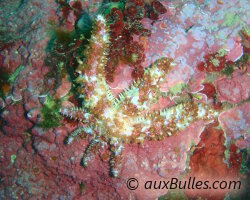
Blue spiny starfishCoscinasterias tenuispina
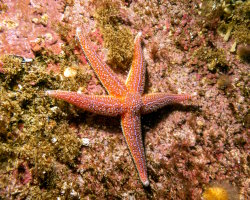
Common starfishAsterias rubens
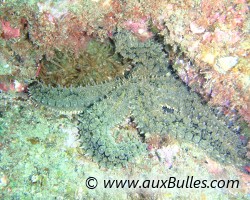
Spiny starfishMarthasterias glacialis
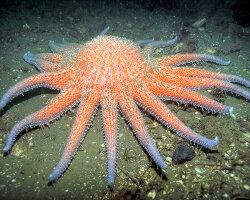
Sunflower sea starPycnopodia helianthoides
Discover also
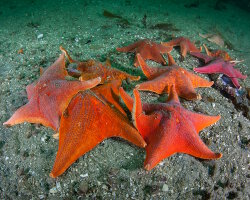
Bat sea starPatiria miniata

Biscuit sea starPeltaster placenta
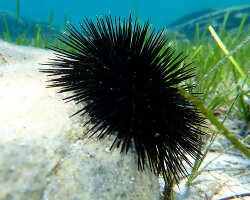
Black sea urchinArbacia lixula
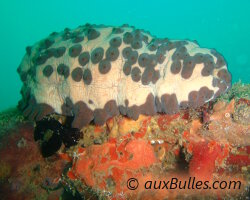
Chocolate chip sea cucumberIsostichopus badionotus
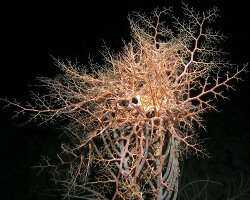
Giant basket starAstrophyton muricatum
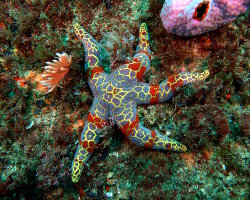
Mosaic sea starPlectaster decanus
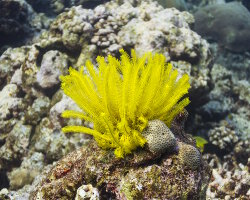
Schelgel's feather starComaster schlegelii
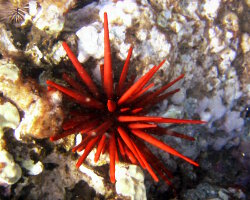
Slate pencil urchinHeterocentrotus mamillatus
The marine species in the Northeastern Pacific
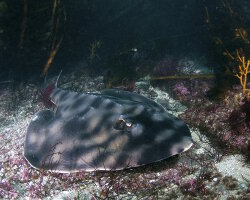


Our latestUpdates

Major movesThe 2026 Route du Rhum enters a decisive phase as Tom Laperche extends his lead in the Ultim class, Armel Le Cléac'h capsizes, and Class40 skippers prepare to face a powerful weather front.Read more

A tough startThe 2026 Route du Rhum gets off to an intense start, with major technical failures, Francis Joyon's capsize, impressive speeds and strategic route choices near the Azores. A look back at the first 48 hours of racing.Read more

A smooth start, an uncertain AtlanticDiscover the 2026 Route du Rhum start off Saint-Malo, where favorable initial conditions contrast with an uncertain Atlantic crossing shaped by changing winds and weather.Read more
Photo of the Day

Méduse pélagique
(Pelagia noctiluca)
(Pelagia noctiluca)
 Copyright © 2007-2026 auxBulles.com - All rights reserved. Legal notices.
Photo credits - Our partners