

Sealife guideThe common starfishAsterias rubens
Last updated on 08/10/2026 at 10:24 PM
Taxonomy
English names
Common starfishCommon sea star
French namesEtoile de mer communeAstérie boréale commune
Spanish namesEstrella de mar
Scientific nameAsterias rubens (Linnaeus, 1758)
FamilyAsteriidae
OrderForcipulatida
ClassAsteroidea
Description
The common sea star is a sea star characteristic of European coasts. Its body consists of a central disc from which five robust arms generally extend. These arms can reach around 12 inches in length, giving the animal a span of more than 20 inches in large individuals.
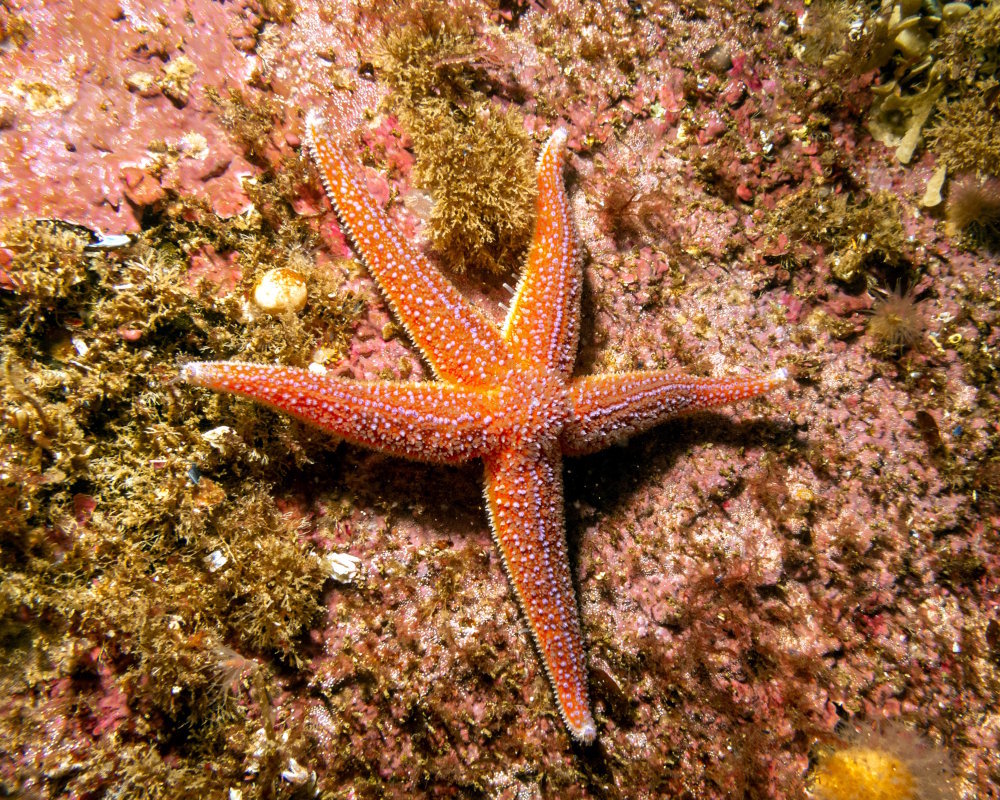
A close-up of a common sea star (Asterias rubens) in the Weather islands, in Sweden's Skagerrak sea © Sjoholm Dan | Dreamstime.com
Its coloration is variable and can range from orange-yellow to reddish brown, with shades of purplish red also occurring. Its upper surface is covered with small calcareous spines, while its underside bears numerous tube feet arranged along the arms. These small appendages allow it to move, grip the substrate firmly and manipulate its prey.
At the tip of each arm is also a small light-sensitive structure that allows it to perceive changes in light intensity.
Geographic range
The common sea star inhabits the temperate to cold waters of the North Atlantic ocean. It occurs along the coasts of Europe, from Arctic regions and the White Sea to the Strait of Gibraltar, as well as along the northwestern coast of Africa as far south as Senegal.
It is particularly common in the northeastern Atlantic, especially around the British Isles, in the North sea and along the French coast.
Habitat
The common sea star lives on the seafloor, from nearshore waters to depths of several hundred feet. It can inhabit a wide variety of substrates, including rocky bottoms, sandy or muddy seabeds and areas where mussel beds develop.
It is particularly well adapted to coastal environments affected by tidal movements and can be observed in the intertidal zone when the tide recedes. Its numerous tube feet allow it to remain firmly attached to the seafloor, even when currents or waves become strong.
Diet
The common sea star is a carnivorous predator that feeds mainly on animals living on the seafloor. Mussels and other bivalves make up an important part of its diet, but it can also capture gastropods, small crustaceans and other invertebrates.
To open a mussel, it uses its arms and tube feet to gradually pull the two shell valves apart. Once a small opening has been created, it can evert its stomach through its mouth and insert it inside the shell. Digestive enzymes then begin breaking down the prey's tissues before the nutrients are absorbed. This feeding method allows it to consume animals much larger than its small mouth might suggest.
Reproduction
The common sea star primarily reproduces sexually through external fertilization. Males and females release their sperm and eggs directly into the seawater, where fertilization takes place. The fertilized eggs develop into tiny larvae that temporarily live in the water column. These larvae gradually develop before undergoing metamorphosis and taking on the characteristic shape of a young sea star.
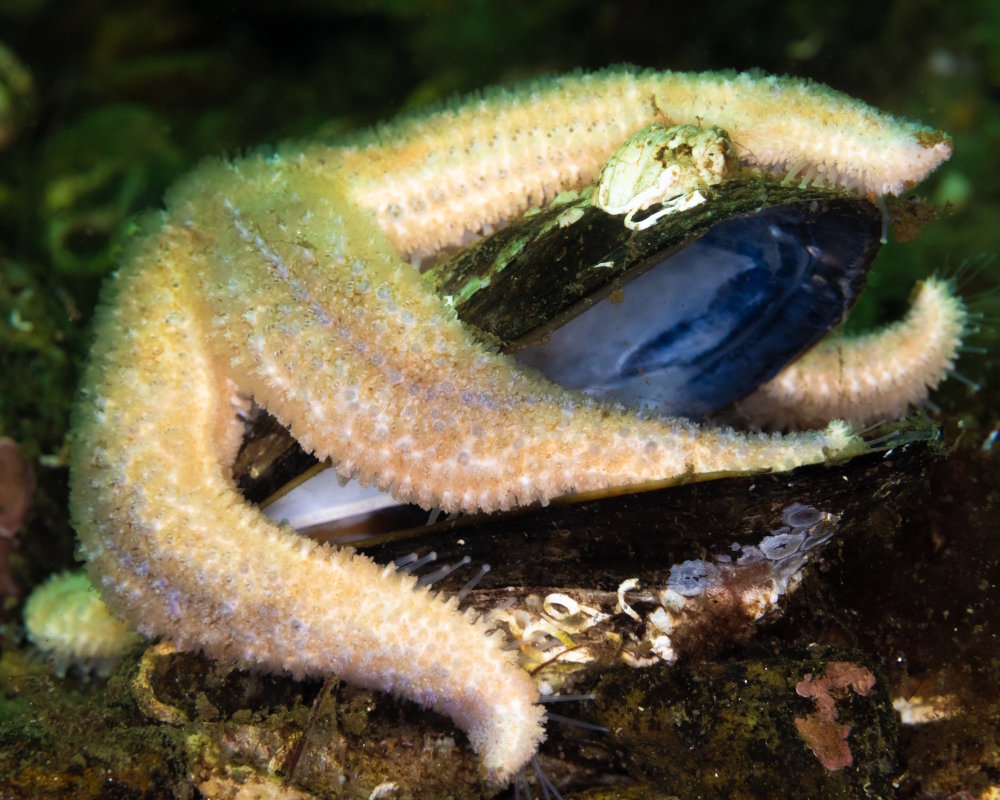
A common sea star (Asterias rubens) after feeding on a northern horse mussel in Loch Long, off the west coast of Scotland © Jeremy Brown | Dreamstime.com
The common sea star also has remarkable regenerative abilities and can regrow several arms after they have been lost.
Within the same family
Blue spiny starfishCoscinasterias tenuispina
Ochre sea starPisaster ochraceus
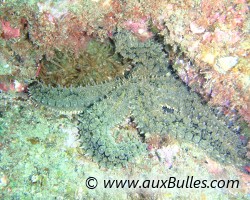
Spiny starfishMarthasterias glacialis
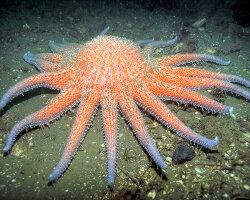
Sunflower sea starPycnopodia helianthoides
Discover also
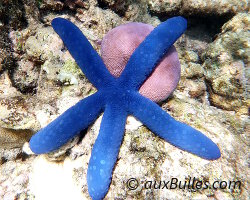
Blue sea starLinckia laevigata
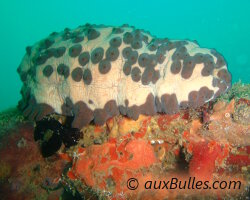
Chocolate chip sea cucumberIsostichopus badionotus
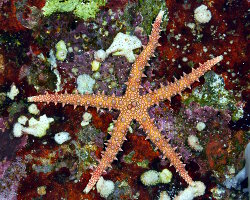
Egyptian sea starGomophia egyptiaca
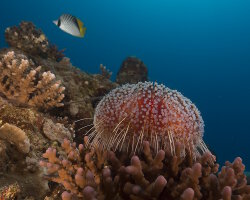
Red Sea fire sea urchinAsthenosoma marisrubri
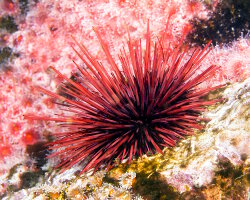
Red sea urchinMesocentrotus franciscanus
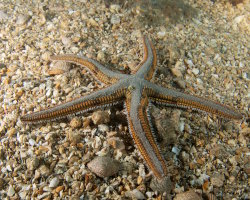
Royal sea starAstropecten articulatus
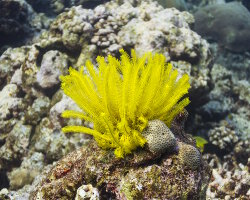
Schelgel's feather starComaster schlegelii
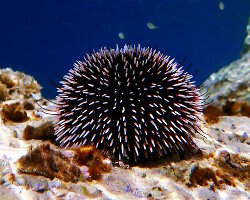
Violet sea urchinSphaerechinus granularis
The marine species in the North Atlantic


Our latestUpdates
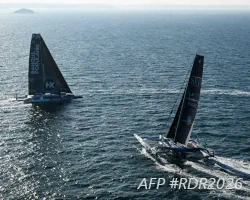
Major movesThe 2026 Route du Rhum enters a decisive phase as Tom Laperche extends his lead in the Ultim class, Armel Le Cléac'h capsizes, and Class40 skippers prepare to face a powerful weather front.Read more

A tough startThe 2026 Route du Rhum gets off to an intense start, with major technical failures, Francis Joyon's capsize, impressive speeds and strategic route choices near the Azores. A look back at the first 48 hours of racing.Read more

A smooth start, an uncertain AtlanticDiscover the 2026 Route du Rhum start off Saint-Malo, where favorable initial conditions contrast with an uncertain Atlantic crossing shaped by changing winds and weather.Read more
Photo of the Day

Méduse pélagique
(Pelagia noctiluca)
(Pelagia noctiluca)
 Copyright © 2007-2026 auxBulles.com - All rights reserved. Legal notices.
Photo credits - Our partners