

Sealife guideThe horned sea starProtoreaster nodosus
Last updated on 08/11/2026 at 10:23 PM
Taxonomy
English names
Horned sea star
French namesEtoile de mer à cornes
Scientific nameProtoreaster nodosus (Linnaeus, 1758)
FamilyOreasteridae
OrderValvatida
ClassAsteroidea
Description
The horned sea star is a large tropical sea star that can reach about 12 inches in diameter. Its thick body has five short, relatively broad arms extending from a well-developed central disc.
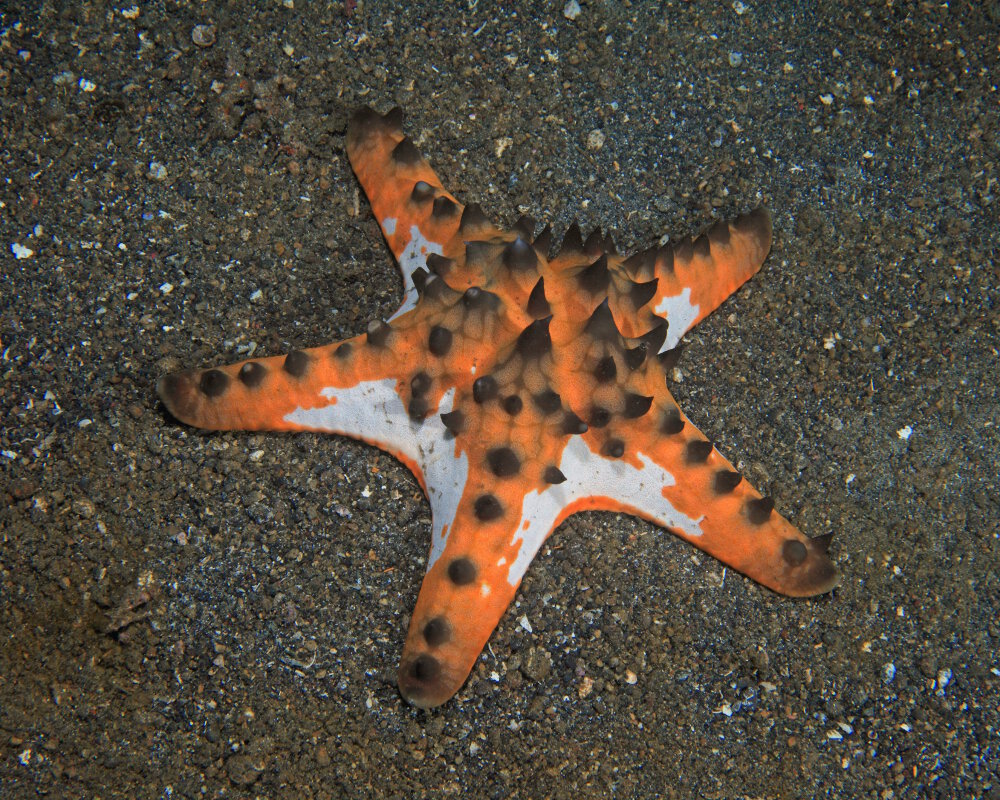
The horned sea star (Protoreaster nodosus) © Aquanaut4 | Dreamstime.com
The horned sea star is characterized by numerous large knob- or horn-shaped tubercles on its upper surface. These structures are generally darker than the rest of the body, giving it a distinctive silhouette and providing the inspiration for its common name.
Its body coloration ranges from beige to grayish brown, while the knobs may be darker in color. The underside is lighter and bears the tube feet that allow it to move across the seafloor.
Geographic range
The horned sea star is found in tropical waters throughout the Indo-Pacific, from the Seychelles in the Indian Ocean to Australia and Japan, including Southeast Asia and the islands of the western Pacific.
It is particularly common in tropical regions of the western Pacific, including the Philippines and Palau.
Habitat
The horned sea star mainly inhabits shallow sandy bottoms and seagrass beds. It is particularly common on sandy expanses where marine seagrasses grow, especially in lagoons and on reef flats.
Juveniles inhabit shallow sandy areas rich in marine vegetation, while adults can be found at greater depths, reaching around 100 feet in some regions.
Diet
The horned sea star feeds mainly on the thin layer of algae and microorganisms covering the seafloor, as well as organic matter present on the surface of the sediment. It also consumes living or decomposing parts of seagrasses and filamentous green algae.
To feed, it can evert its stomach, bringing it outside its body to digest food directly on the seafloor.
Reproduction
The horned sea star reproduces sexually. Males and females release their gametes into the seawater, where fertilization takes place. A study in the Philippines showed that the breeding season occurs mainly between March and May, when the gonads become more developed.
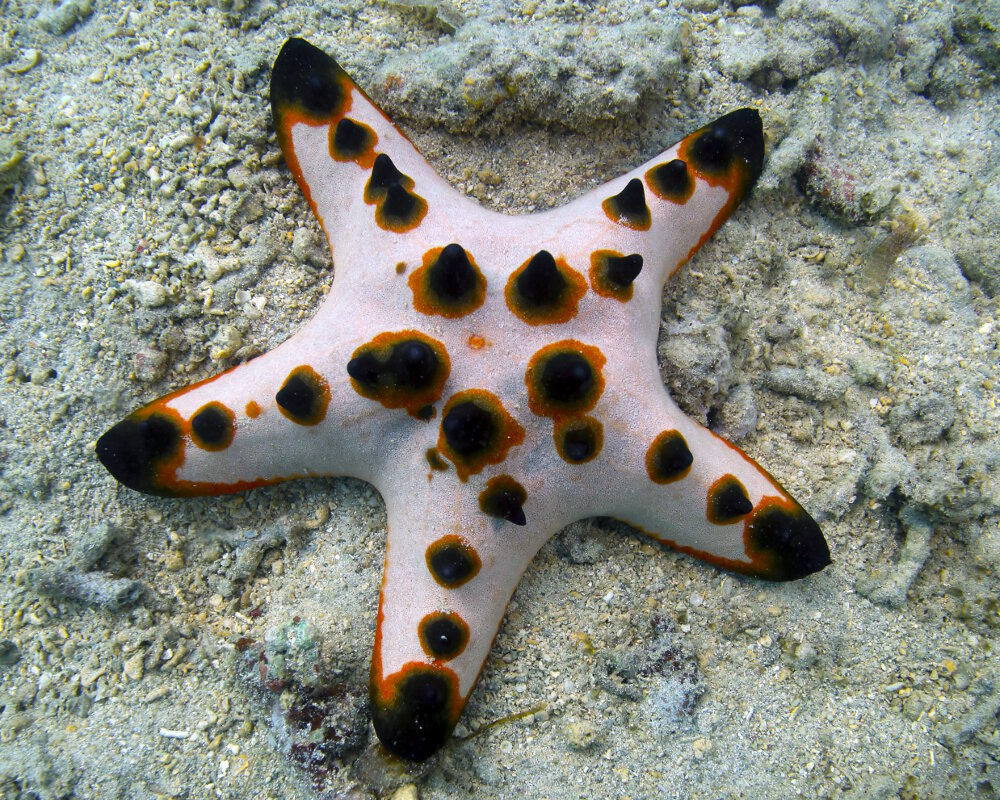
The horned sea star (Protoreaster nodosus) © Paul Kennedy | Dreamstime.com
After fertilization, the eggs develop into larvae that live in the plankton before gradually transforming into young sea stars living on the seafloor.
Within the same genus
Within the same family
Chocolate chip sea starNidorellia armata

Cushion starfishCulcita novaeguineae
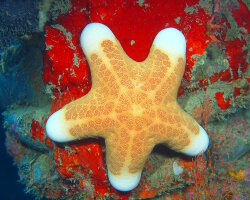
Granular sea starChoriaster granulatus

Multicolored knobbed starfishPentaceraster mammillatus
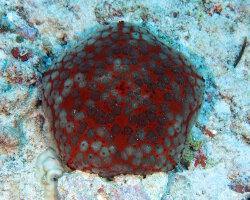
Pin cushion sea starCulcita schmideliana
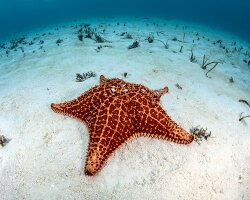
Red cushion sea starOreaster reticulatus
Discover also
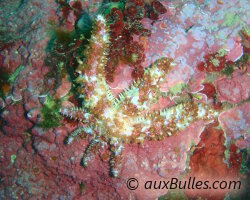
Blue spiny starfishCoscinasterias tenuispina
Common heart urchinEchinocardium cordatum
Common starfishAsterias rubens
Egyptian sea starGomophia egyptiaca

Heart urchinMaretia planulata
Necklace sea starFromia monilis
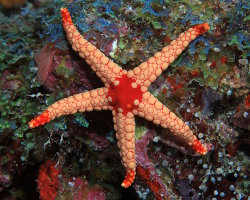
Noduled sea starFromia nodosa
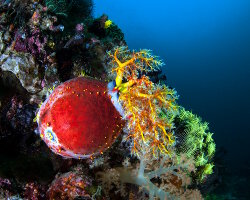
Sea ApplePseudocolochirus violaceus
The marine species in the Indo-Pacific



Our latestUpdates

Major movesThe 2026 Route du Rhum enters a decisive phase as Tom Laperche extends his lead in the Ultim class, Armel Le Cléac'h capsizes, and Class40 skippers prepare to face a powerful weather front.Read more

A tough startThe 2026 Route du Rhum gets off to an intense start, with major technical failures, Francis Joyon's capsize, impressive speeds and strategic route choices near the Azores. A look back at the first 48 hours of racing.Read more

A smooth start, an uncertain AtlanticDiscover the 2026 Route du Rhum start off Saint-Malo, where favorable initial conditions contrast with an uncertain Atlantic crossing shaped by changing winds and weather.Read more
Photo of the Day

Méduse pélagique
(Pelagia noctiluca)
(Pelagia noctiluca)
 Copyright © 2007-2026 auxBulles.com - All rights reserved. Legal notices.
Photo credits - Our partners