

Sealife guideThe Indian sea starFromia indica
Last updated on 08/11/2026 at 10:23 PM
Taxonomy
English names
Indian sea star
French namesEtoile de mer indienne
Scientific nameFromia indica (Perrier, 1869)
FamilyGoniasteridae
OrderValvatida
ClassAsteroidea
Description
The Indian sea star is one of the most elegant sea stars found on tropical reefs. Its flattened body consists of a pentagonal central disc surrounded by five triangular arms that taper to slightly rounded tips. Its coloration is generally orange-red, crossed by a fine network of dark lines that form a mosaic-like pattern.
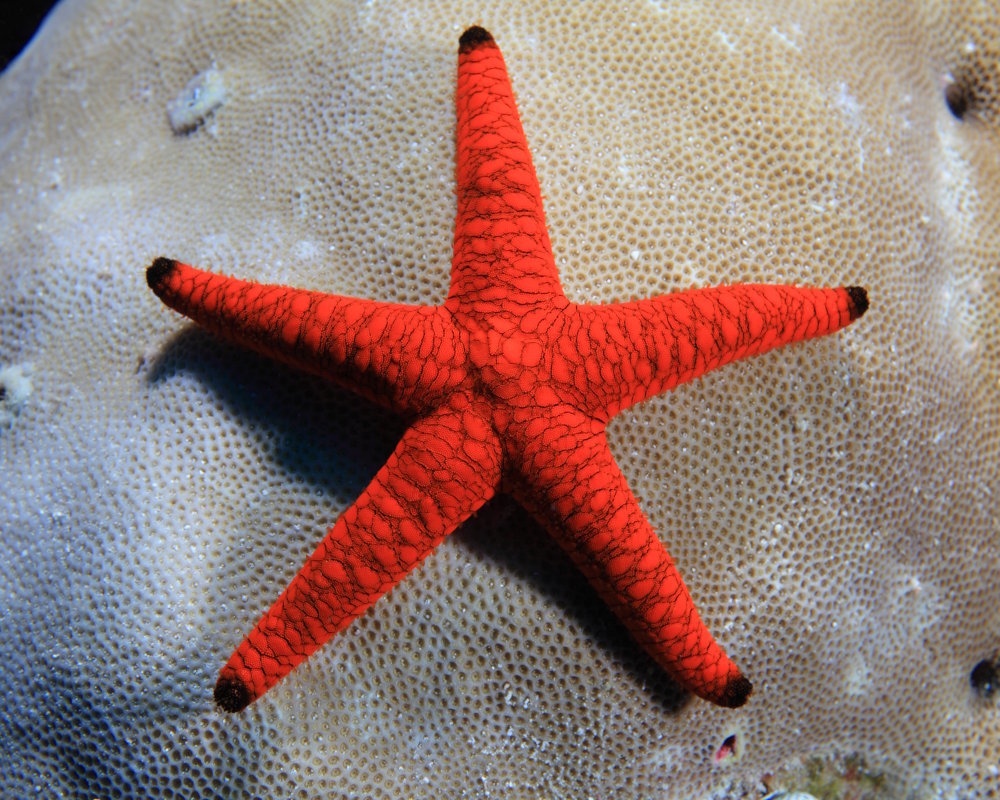
An Indian sea star (Fromia indica) resting on a coral reef © Aquanaut4 | Dreamstime.com
In many individuals, the tips of the arms are darker, while the underside is lighter and bears numerous tube feet used for locomotion and feeding. Adults most often measure between 3 and 4 inches in diameter, although some specimens can reach up to about 6 inches.
Geographic range
The Indian sea star is found in the tropical waters of the western Indo-Pacific, from the Andaman islands and Sri Lanka to Fiji, including the Maldives, Indonesia, the Philippines, New Caledonia and Palau. It is also found south of Japan and on Australia's Great Barrier Reef.
Habitat
The Indian sea star mainly inhabits lagoons, reef flats and the outer slopes of coral reefs. It occurs on a variety of substrates, including sand, coral rubble and rocks covered with encrusting algae.
The Indian sea star is most often found from the surface to depths of around 66 feet, where it moves slowly in search of food while remaining closely associated with coral reef ecosystems.
Diet
The Indian sea star is an opportunistic omnivore that feeds mainly on resources available on the reef surface. It consumes organic detritus, microalgae and small benthic invertebrates living on rocks and corals.
Like many sea stars, it can also evert its stomach and digest certain organisms outside its body before absorbing the nutrients, an efficient feeding strategy common among sea stars.
Reproduction
Like most sea stars, the Indian sea star primarily reproduces sexually. Males and females simultaneously release their gametes into the water, where fertilization takes place. The eggs then develop into planktonic larvae that drift for several weeks before settling on the seafloor and metamorphosing into young five-armed sea stars.
The species also has a remarkable ability to regenerate, allowing it to regrow an arm lost as a result of injury or a predator attack.
Within the same genus
Within the same family

Discover also
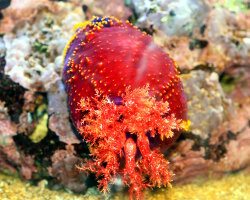
Australian sea applePseudocolochirus axiologus

Cushion starfishCulcita novaeguineae
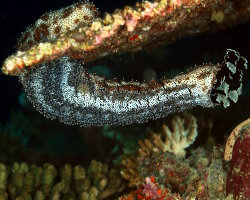
Graeffe's sea cucumberPearsonothuria graeffei
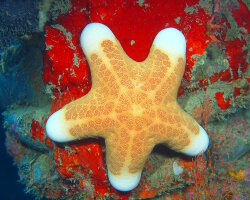
Granular sea starChoriaster granulatus
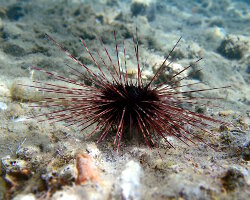
Hatpin sea urchinCentrostephanus longispinus

Heart urchinMaretia planulata
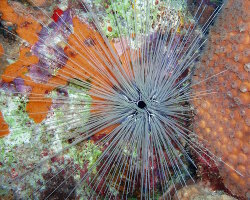
Long-spined sea urchinDiadema antillarum
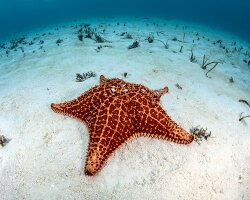
Red cushion sea starOreaster reticulatus
The marine species in the western Indo-Pacific




Our latestUpdates
Major movesThe 2026 Route du Rhum enters a decisive phase as Tom Laperche extends his lead in the Ultim class, Armel Le Cléac'h capsizes, and Class40 skippers prepare to face a powerful weather front.Read more

A tough startThe 2026 Route du Rhum gets off to an intense start, with major technical failures, Francis Joyon's capsize, impressive speeds and strategic route choices near the Azores. A look back at the first 48 hours of racing.Read more

A smooth start, an uncertain AtlanticDiscover the 2026 Route du Rhum start off Saint-Malo, where favorable initial conditions contrast with an uncertain Atlantic crossing shaped by changing winds and weather.Read more
Photo of the Day

Méduse pélagique
(Pelagia noctiluca)
(Pelagia noctiluca)
 Copyright © 2007-2026 auxBulles.com - All rights reserved. Legal notices.
Photo credits - Our partners