

Sealife guideThe biscuit sea starPeltaster placenta
Last updated on 08/12/2026 at 10:34 PM
Taxonomy
English names
Biscuit sea star
French namesEtoile de mer biscuit
Spanish namesEstrella disco
Scientific namePeltaster placenta (Müller & Troschel, 1842)
FamilyGoniasteridae
OrderValvatida
ClassAsteroidea
Description
The biscuit sea star is easily recognizable by its thick body and almost pentagonal shape. Its five arms are very short and barely defined, giving the animal a compact silhouette reminiscent of a biscuit.
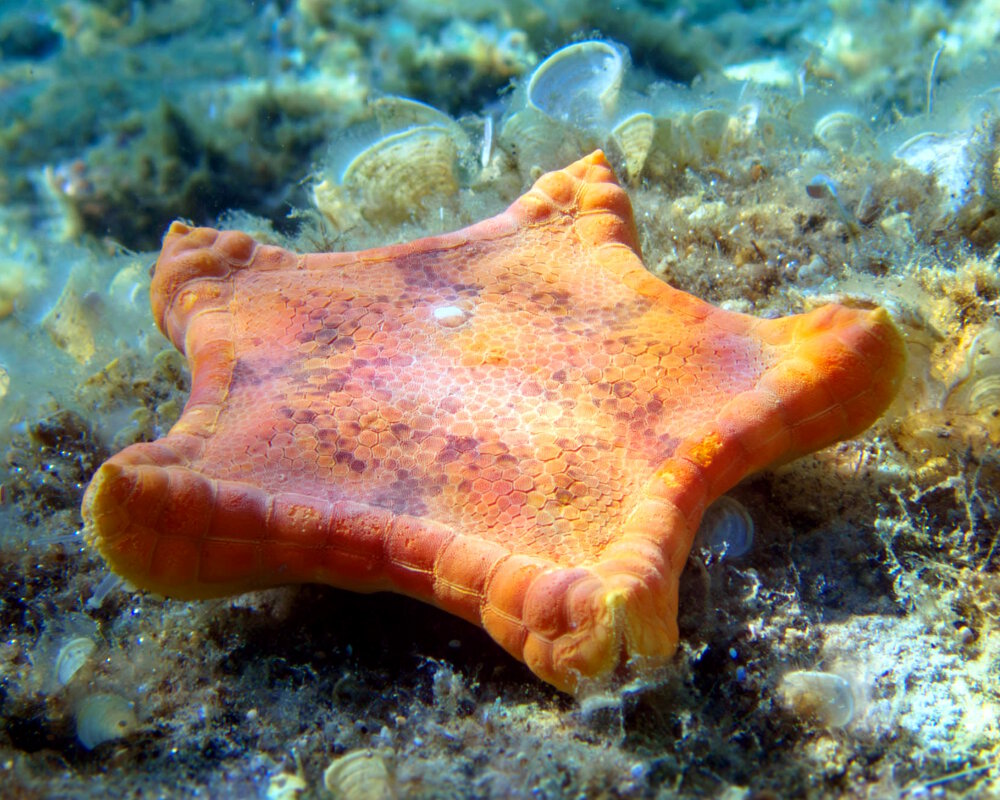
The biscuit sea star (Peltaster placenta) © Voislav Kolevski | Dreamstime.com
Its upper surface is made up of large, clearly visible calcareous plates, much more prominent than those of many other sea stars. These plates also form a broad rim around the entire body. Its coloration is generally orange-red, but it can also be brown or yellowish, while its underside is lighter.
The biscuit sea star averages about 4 inches in diameter, but the largest specimens can reach up to 8 inches in diameter.
Geographic range
The biscuit sea star is found mainly in the temperate to subtropical waters of the eastern Atlantic Ocean and the Mediterranean Sea. It occurs notably in the Bay of Biscay, along the western coast of Africa as far south as Senegal, as well as in various parts of the Mediterranean, particularly the Adriatic and Tyrrhenian seas.
It has also been reported in the Red Sea, where it reached the region through the Suez Canal.
Habitat
The biscuit sea star primarily inhabits soft seafloors made up of sand, mud, or gravel, generally at depths where seagrass beds no longer grow. It can also live on rocky bottoms and steep reef slopes.
The biscuit sea star is generally found from a few dozen to about 330 feet deep, but it can also occur at greater depths, reaching several hundred feet and even as deep as about 3,280 feet.
Diet
The biscuit sea star is a predator that can feed on black corals. It has notably been observed consuming the living tissues of the black coral (Parantipathes larix) in the Mediterranean.
Reproduction
The reproduction of the biscuit sea star is still poorly understood. Like other sea stars, it presumably reproduces sexually, with males and females releasing their gametes into the water, where fertilization takes place. The eggs then develop into planktonic larvae that undergo metamorphosis before becoming young sea stars.
Within the same family
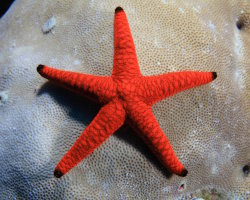
Indian sea starFromia indica
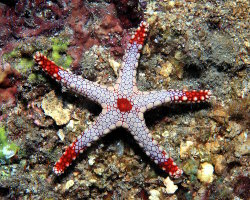
Necklace sea starFromia monilis
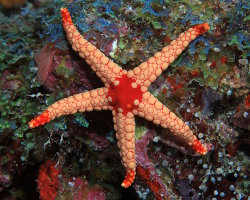
Noduled sea starFromia nodosa
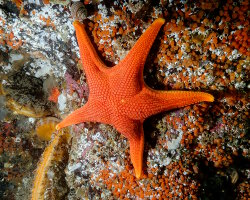
Vermillion sea starMediaster aequalis
Discover also
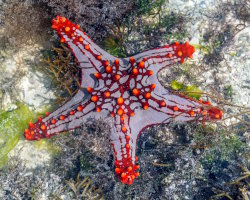
African red-knobbed sea starProtoreaster lincki
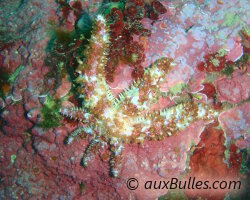
Blue spiny starfishCoscinasterias tenuispina
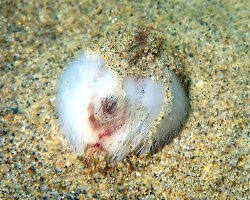
Common heart urchinEchinocardium cordatum

Heavy starfishThromidia catalai

Multicolored knobbed starfishPentaceraster mammillatus
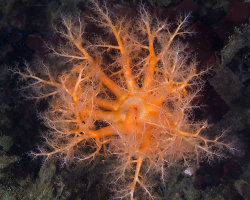
Orange sea cucumberCucumaria miniata
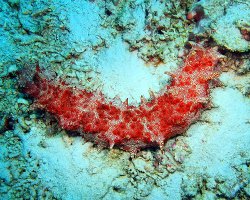
Red striped sea cucumberThelenota rubralineata
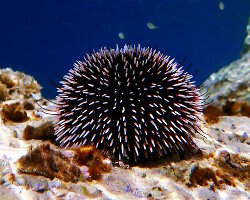
Violet sea urchinSphaerechinus granularis
Our latestUpdates

Major movesThe 2026 Route du Rhum enters a decisive phase as Tom Laperche extends his lead in the Ultim class, Armel Le Cléac'h capsizes, and Class40 skippers prepare to face a powerful weather front.Read more

A tough startThe 2026 Route du Rhum gets off to an intense start, with major technical failures, Francis Joyon's capsize, impressive speeds and strategic route choices near the Azores. A look back at the first 48 hours of racing.Read more

A smooth start, an uncertain AtlanticDiscover the 2026 Route du Rhum start off Saint-Malo, where favorable initial conditions contrast with an uncertain Atlantic crossing shaped by changing winds and weather.Read more
Photo of the Day

Méduse pélagique
(Pelagia noctiluca)
(Pelagia noctiluca)
 Copyright © 2007-2026 auxBulles.com - All rights reserved. Legal notices.
Photo credits - Our partners