

Sealife guideThe orangespotted trevallyFlavocaranx bajad
Last updated on 10/09/2026 at 10:48 PM
The orangespotted trevally (Flavocaranx bajad, formerly Carangoides bajad) is a fish recognizable by the numerous small orange spots scattered across its sides. It inhabits tropical waters of the western Indo-Pacific, where it is found mainly around coral reefs and in lagoons.
Taxonomy
English names
Orangespotted trevallyOrangespotted jack
French namesCarangue lentigineCarangue BajadCarangue à points orange
Spanish namesJurel lentejuela
Scientific nameFlavocaranx bajad (Fabricius, 1775)
FamilyCarangidae
OrderCarangiformes
ClassActinopterygii
Description
The orangespotted trevally has an elongated, streamlined body that is laterally compressed, with a more arched back than belly. Its coloration ranges from coppery to bronze on the back, yellowish along the sides, and silvery on the belly. Numerous orange or yellowish-orange spots cover its sides.
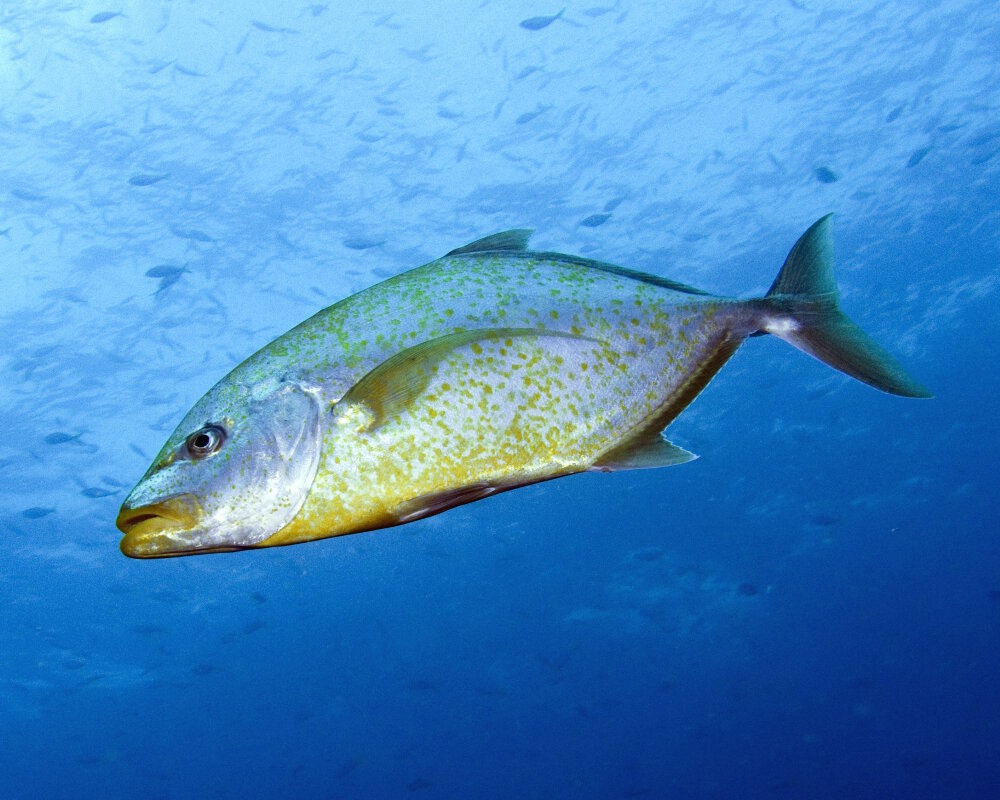
Numerous orange or yellowish-orange spots cover the sides of the orangespotted trevally (Flavocaranx bajad) © Diverstef | Dreamstime.com
orangespotted trevally typically average around 16.5 inches in length, but the largest individuals can reach up to 21.7 inches.
Geographic range
The orangespotted trevally inhabits tropical waters of the western Indo-Pacific, from the Red Sea and the Gulf of Aden to the Persian Gulf and the Gulf of Oman. Its range extends east to Indonesia, including the Raja Ampat, Togean, and Banggai Islands, the Gulf of Thailand, the Philippines, and Okinawa in southern Japan.
Habitat
The orangespotted trevally is found mainly around coral reefs, particularly coastal reef slopes and the edges of large coral formations in lagoons. It has been observed at depths of 6.5 to 230 feet. Adults may gather in schools, while juveniles tend to live alone in sheltered coastal bays.
Diet
The orangespotted trevally is a predatory fish that hunts its prey near coastlines and coral reefs.
Reproduction
The reproductive biology of the orangespotted trevally remains poorly documented.
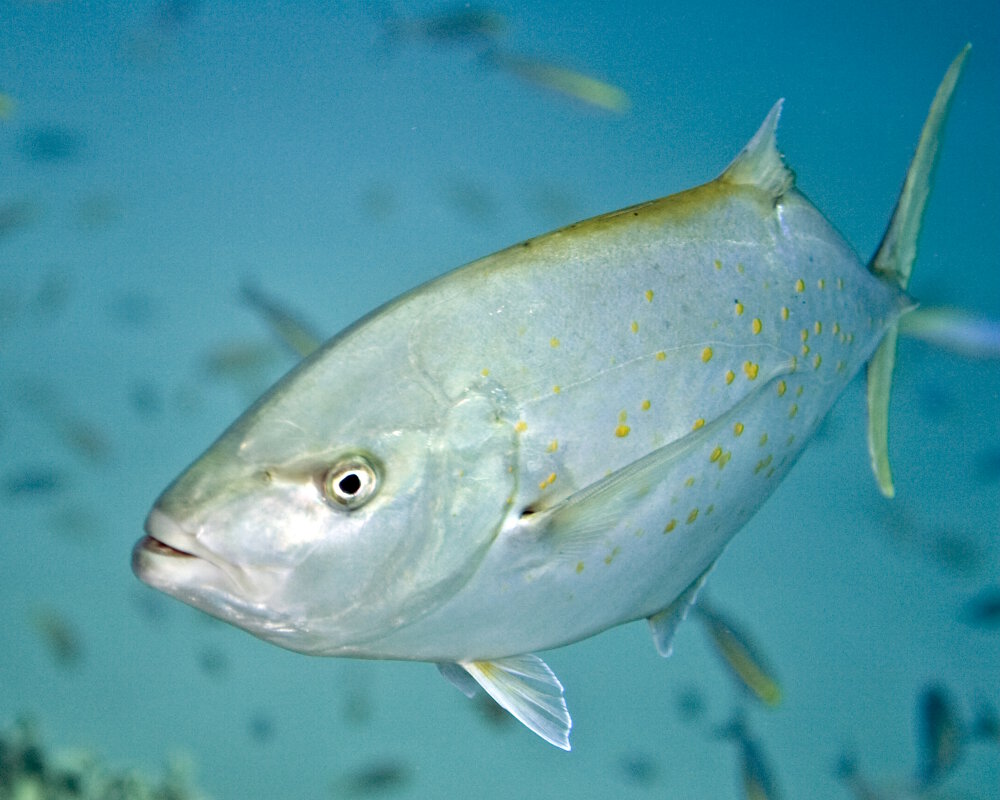
The orangespotted trevally (Flavocaranx bajad) © Stephankerkhofs | Dreamstime.com
Within the same family

African PompanoAlectis ciliaris
Bar jackCaranx ruber
Bigeye trevallyCaranx sexfasciatus
Greater amberjackSeriola dumerili

Indian threadfishAlectis indica

Rainbow runnerElagatis bipinnulata
Snubnose pompanoTrachinotus blochii
Yellowspotted trevallyTurrum fulvoguttatum
Discover also

Banded mud morayGymnothorax chlamydatus
Blue chromisAzurina cyanea
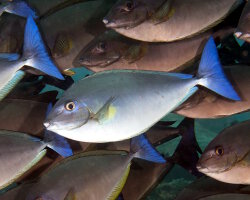
Bluetail unicornfishNaso caeruleacauda

Fivefinger razorfishIniistius pentadactylus

Map pufferArothron mappa

Moontail bullseyePriacanthus hamrur

Pearly razorfishXyrichtys novacula

Twinspot gobySignigobius biocellatus
The marine species in the western Indo-Pacific




Our latestUpdates

Major movesThe 2026 Route du Rhum enters a decisive phase as Tom Laperche extends his lead in the Ultim class, Armel Le Cléac'h capsizes, and Class40 skippers prepare to face a powerful weather front.Read more

A tough startThe 2026 Route du Rhum gets off to an intense start, with major technical failures, Francis Joyon's capsize, impressive speeds and strategic route choices near the Azores. A look back at the first 48 hours of racing.Read more

A smooth start, an uncertain AtlanticDiscover the 2026 Route du Rhum start off Saint-Malo, where favorable initial conditions contrast with an uncertain Atlantic crossing shaped by changing winds and weather.Read more
Photo of the Day

Méduse pélagique
(Pelagia noctiluca)
(Pelagia noctiluca)
 Copyright © 2007-2026 auxBulles.com - All rights reserved. Legal notices.
Photo credits - Our partners