

Sealife guideThe giant trevallyCaranx ignobilis
Last updated on 10/09/2026 at 10:48 PM
The giant trevally (Caranx ignobilis) is a large predatory fish found in the tropical Indo-Pacific, impressive for its size and power. It is particularly sought after by sportfishing enthusiasts.
Taxonomy
English names
Giant trevally
French namesCarangue à grosse têteCarangue têtue
Spanish namesJurel gigante
Scientific nameCaranx ignobilis (Forsskål, 1775)
FamilyCarangidae
OrderCarangiformes
ClassActinopterygii
Description
The giant trevally has a robust, streamlined body that is laterally compressed and adapted for fast swimming. Its massive head, wide mouth, and powerful jaws give it an imposing appearance. Adults generally have a silvery gray to blackish back, while their sides and belly are lighter. Their fins are often gray to black, but may take on a yellowish hue in individuals living in turbid coastal waters.

A school of Giant trevally (Caranx ignobilis) swimming in tight formation © Orlandin | Dreamstime.com
Giant trevally typically average around 3.3 feet in length, but the largest individuals can reach up to 5.6 feet.
Geographic range
Giant trevally inhabit tropical waters throughout the Indo-Pacific, from the Red Sea and the eastern coast of Africa to the Hawaiian Islands and the Marquesas Islands. They are found around Mayotte, Réunion, Mauritius, the Maldives, Guam, and French Polynesia, among other locations.
Their range extends north to southern Japan and the Ogasawara Islands, and south to northern Australia.
Giant trevally primarily inhabit lagoons and coral reefs, particularly along reef slopes facing the open ocean. They have been observed at depths of 33 to 623 feet, but also frequent shallow coastal waters.
Adults also swim over sandy and rocky bottoms. Juveniles may inhabit estuaries, where they find favorable conditions for growth and development.
Diet
Giant trevally are carnivorous predators that feed mainly on fish and crustaceans, including crabs and spiny lobsters, which they hunt primarily at night. With their wide mouths and powerful jaws, they capture a variety of prey in waters near reefs and over sandy and rocky bottoms.
Reproduction
Giant trevally spawn in areas that include shallow reefs exposed to the open ocean and offshore seamounts. They reach sexual maturity at around 2 feet in length, although this size may vary between populations and sexes. Breeding seasons also vary by region.
Did you know ?
Although giant trevally are eaten, they can pose a risk of ciguatera poisoning, a foodborne illness caused by marine toxins that accumulate along the food chain. Large predatory individuals are particularly likely to accumulate these toxins. Their consumption therefore requires caution in regions where ciguatera is present.
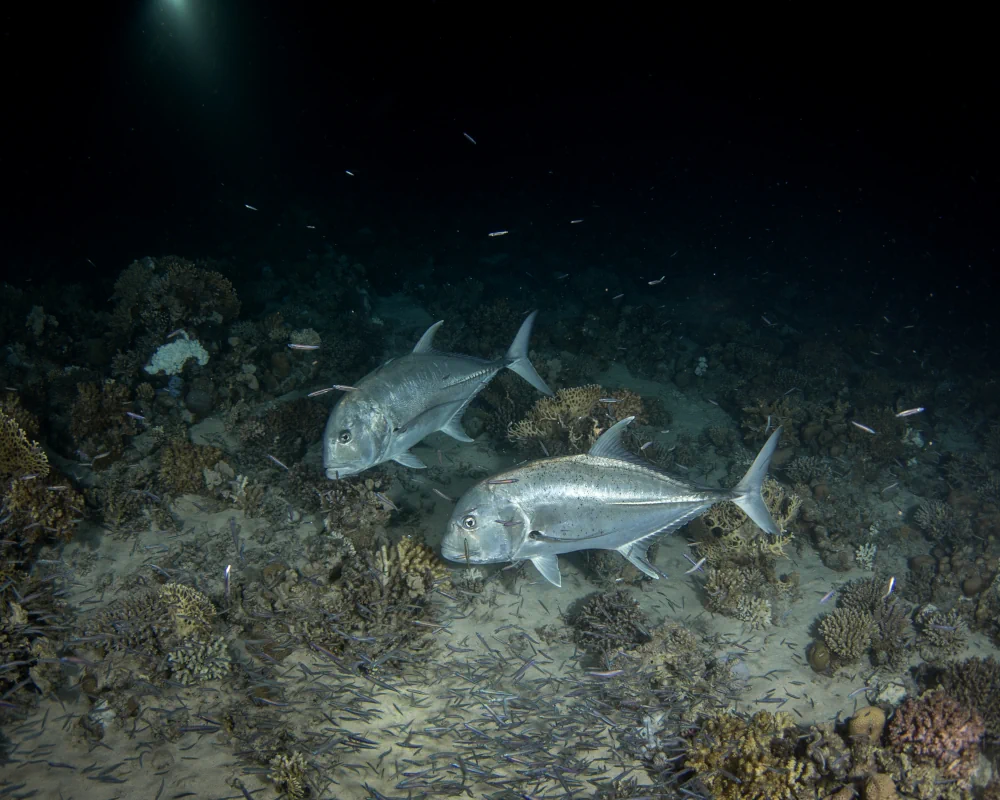
Two Giant trevally (Caranx ignobilis) foraging at night in the Red Sea © Martin Prochazka | Dreamstime.com
The giant trevally is listed as many other marine species within The IUCN Red List of threatened species. The giant trevally appears in the IUCN Red List since 2016 within the category Least Concern !
Within the same genus
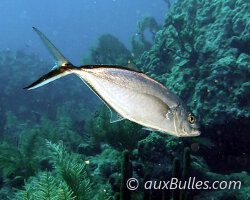
Bar jackCaranx ruber
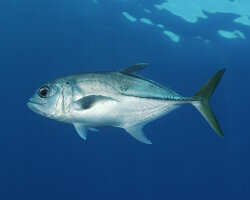
Bigeye trevallyCaranx sexfasciatus
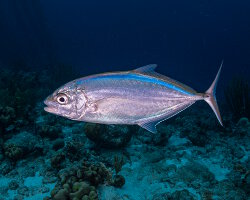
Blue runnerCaranx crysos

Bluefin trevallyCaranx melampygus
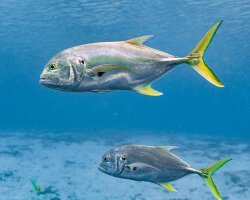
Crevalle jackCaranx hippos
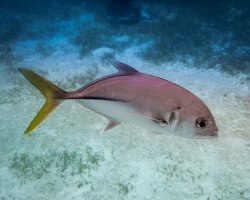
Horse-eye jackCaranx latus
Within the same family

African PompanoAlectis ciliaris

Black tail permit fishTrachinotus falcatus

Indian threadfishAlectis indica

LeerfishLichia amia
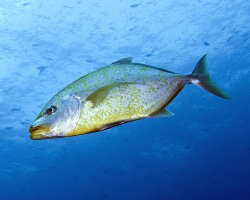
Orangespotted trevallyFlavocaranx bajad
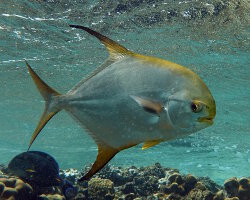
Snubnose pompanoTrachinotus blochii
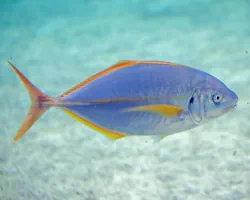
White trevallyPseudocaranx dentex
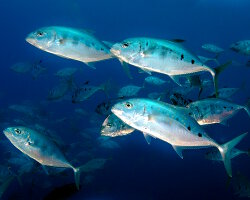
Yellowspotted trevallyTurrum fulvoguttatum
Discover also

Giant grouperEpinephelus lanceolatus
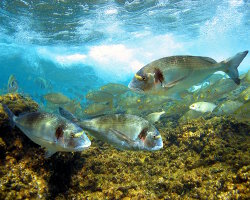
Gilthead seabreamSparus aurata

Orange striped triggerfishBalistapus undulatus
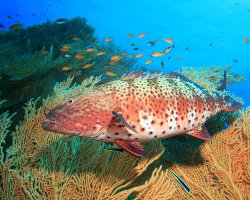
Roving coral grouperPlectropomus pessuliferus
Saddleback gunnelPholis ornata

Saddled butterflyfishChaetodon ephippium
Target shrimp gobyCryptocentrus strigilliceps
White seabreamDiplodus sargus
The marine species in the Indo-Pacific

Our latestUpdates
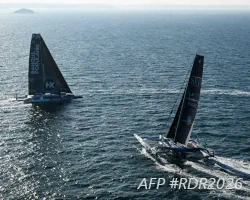
Major movesThe 2026 Route du Rhum enters a decisive phase as Tom Laperche extends his lead in the Ultim class, Armel Le Cléac'h capsizes, and Class40 skippers prepare to face a powerful weather front.Read more
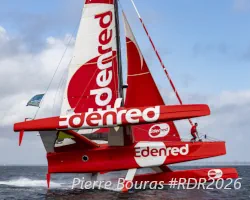
A tough startThe 2026 Route du Rhum gets off to an intense start, with major technical failures, Francis Joyon's capsize, impressive speeds and strategic route choices near the Azores. A look back at the first 48 hours of racing.Read more
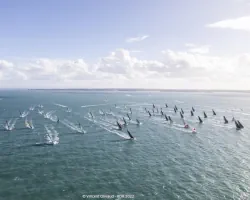
A smooth start, an uncertain AtlanticDiscover the 2026 Route du Rhum start off Saint-Malo, where favorable initial conditions contrast with an uncertain Atlantic crossing shaped by changing winds and weather.Read more
Photo of the Day

Méduse pélagique
(Pelagia noctiluca)
(Pelagia noctiluca)
 Copyright © 2007-2026 auxBulles.com - All rights reserved. Legal notices.
Photo credits - Our partners