

Sealife guideThe blue runnerCaranx crysos
Last updated on 01/26/2026 at 11:55 PM
Taxonomy
English names
Blue runner
French namesCarangue coubali
Spanish namesCojinúa negra
Scientific nameCaranx crysos (Mitchill, 1815)
FamilyCarangidae
OrderCarangiformes
ClassActinopterygii
Description
The blue runner has an elongated, slightly compressed body with characteristic olive to dark blue highlights on the upper back and silvery gray flanks. It has a black spot, more or less visible, near the upper edge of the gill cover.

The blue runner has a silvery gray body with characteristic olive to dark blue highlights on its back © Jeremy Brown | Dreamstime.com
Blue runners typically reach an average length of 16 inches, while some individuals can grow up to 27.5 inches long.
Juveniles often display seven dark vertical bars along their flanks.
Geographic range
Blue runners inhabit the tropical and temperate waters of the Atlantic ocean, from the coasts of Canada in the north to Brazil in the south, including the Gulf of Mexico and Caribbean islands in the western Atlantic, as well as along the west African coasts from Senegal to Angola in the eastern Atlantic, and also the Mediterranean sea.
Habitat
The blue runner is a pelagic and schooling species, often seen in dense schools near the coast as well as in deeper waters, sometimes forming large groups of several thousand individuals.
Diet
The blue runner is a carnivorous and opportunistic species, feeding mainly on smaller fish, crustaceans such as shrimp and crabs, and other invertebrates.
Reproduction
Spawning occurs offshore throughout the year, with a peak in summer in certain regions like the Gulf of Mexico. During reproduction, females release their eggs into open water, which drift with the currents before hatching. The floating larvae then gradually migrate toward coastal areas as they grow.
Did you know ?
The blue runner is listed as many other marine species within The IUCN Red List of threatened species. The blue runner appears in the IUCN Red List since 2010 within the category Least Concern !
Within the same genus
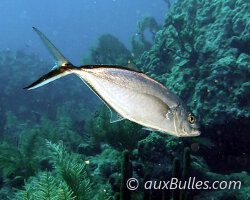
Bar jackCaranx ruber
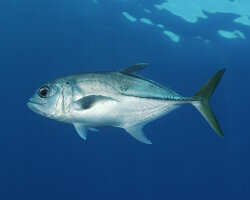
Bigeye trevallyCaranx sexfasciatus

Bluefin trevallyCaranx melampygus
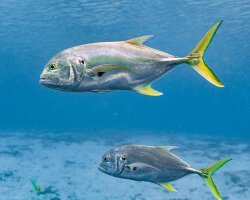
Crevalle jackCaranx hippos
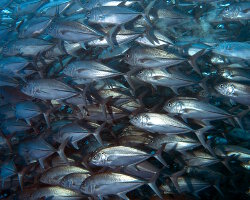
Giant trevallyCaranx ignobilis
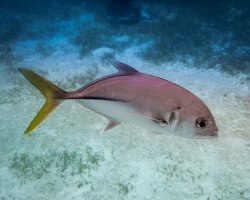
Horse-eye jackCaranx latus
Within the same family

African PompanoAlectis ciliaris

Black tail permit fishTrachinotus falcatus
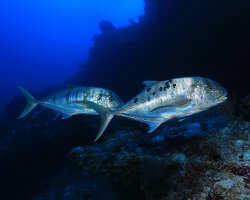
Golden trevallyGnathanodon speciosus

Indian threadfishAlectis indica

LeerfishLichia amia
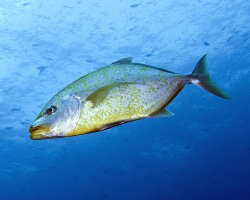
Orangespotted trevallyFlavocaranx bajad
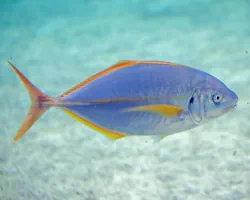
White trevallyPseudocaranx dentex
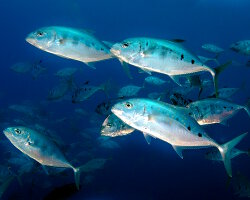
Yellowspotted trevallyTurrum fulvoguttatum
Discover also


Our latestUpdates

Major movesThe 2026 Route du Rhum enters a decisive phase as Tom Laperche extends his lead in the Ultim class, Armel Le Cléac'h capsizes, and Class40 skippers prepare to face a powerful weather front.Read more

A tough startThe 2026 Route du Rhum gets off to an intense start, with major technical failures, Francis Joyon's capsize, impressive speeds and strategic route choices near the Azores. A look back at the first 48 hours of racing.Read more

A smooth start, an uncertain AtlanticDiscover the 2026 Route du Rhum start off Saint-Malo, where favorable initial conditions contrast with an uncertain Atlantic crossing shaped by changing winds and weather.Read more
Photo of the Day

Méduse pélagique
(Pelagia noctiluca)
(Pelagia noctiluca)
 Copyright © 2007-2026 auxBulles.com - All rights reserved. Legal notices.
Photo credits - Our partners