

Sealife guideThe copperband butterflyfishChelmon rostratus
Last updated on 10/16/2026 at 12:25 AM

Le poisson papillon à bandes cuivrées (Chelmon rostratus) © Johannesk | Dreamstime.com
Taxonomy
English names
Copperband butterflyfish
French namesPoisson papillon à bandes cuivrées
Scientific nameChelmon rostratus (Linnaeus, 1758)
FamilyChaetodontidae
OrderAcanthuriformes
ClassActinopterygii
Description
The copperband butterflyfish is characterized by its broad, vertical orange bands with coppery hues and black edges, which cross its silvery-white body. The first band runs through its eye, while the last features a large black spot on its upper half that acts as a false eye to confuse potential predators.

The copperband butterflyfish (Chelmon rostratus) © Lukas Blazek | Dreamstime.com
The copperband butterflyfish also has a distinctive, very long and slender snout.
Geographic range
The copperband butterflyfish is found in tropical waters of the western Indo-Pacific, from the Andaman Sea and the Andaman Islands to the Ryukyu Islands in southern Japan. It is also found in the Philippines, Indonesia, and the waters of northern Australia, particularly around the Great Barrier Reef.
Habitat
The copperband butterflyfish mainly inhabits coral reefs and rocky coastlines, but it can also be found in estuaries, from the surface down to depths of around 65 feet.
Diet
The copperband butterflyfish feeds mainly on small invertebrates, which it extracts from the tiniest crevices in corals with its specially adapted snout.
Reproduction
The copperband butterflyfish is an egg-laying fish with separate sexes. Adults generally form monogamous pairs to reproduce. The eggs are released and fertilized in the water, then develop in open water without parental care.
Within the same family

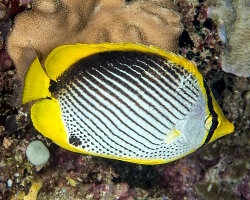


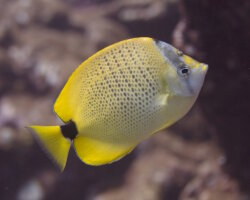


Discover also


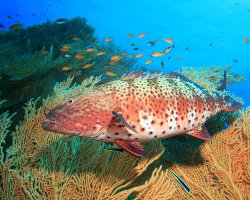
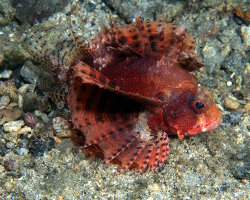
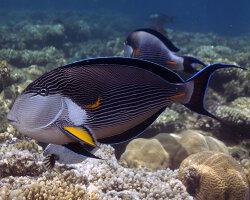

The marine species in the western Indo-Pacific


Our latestUpdates
The neon gobyDiscover the neon goby (Elacatinus oceanops), a small western Atlantic reef fish known for its brilliant blue stripe and its role as a cleaner fish that removes parasites from other fish.Read more

The poison gobyDiscover the poison goby (Gobiodon citrinus), a tiny reef fish with a bright yellow body and distinctive blue markings. It lives among branching Acropora corals in the tropical waters of the Indo-Pacific.Read more
The wahooDiscover the wahoo (Acanthocybium solandri), a powerful pelagic predator found in tropical and subtropical oceans. Recognizable by its streamlined body and distinctive blue vertical stripes, it is a fast swimmer that feeds mainly on fish and squid.Read more
Photo of the Day
Fou à pieds rouges
(Sula sula)
(Sula sula)
 Copyright © 2007-2026 auxBulles.com - All rights reserved. Legal notices.
Photo credits - Our partners