

Sealife guideThe eightband butterflyfishChaetodon octofasciatus
Last updated on 10/08/2026 at 11:47 PM
The eightband butterflyfish (Chaetodon octofasciatus) is a small reef fish easily recognized by its light-colored body marked with black bands. It lives in tropical waters of the Indo-Pacific, always close to coral reefs.
This butterflyfish is closely associated with the corals it feeds on almost exclusively. Adults are generally observed in pairs in sheltered lagoons and on reefs near the coast, while juveniles often live among colonies of corals of the genus Acropora, which provide them with both food and shelter.
Taxonomy
English names
Eightband butterflyfish
French namesPoisson-papillon à huit bandes
Spanish namesPez mariposa de ocho franjas
Scientific nameChaetodon octofasciatus (Bloch, 1787)
FamilyChaetodontidae
OrderAcanthuriformes
ClassActinopterygii
Description
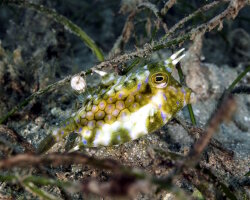
The eightband butterflyfish has a short, deep, strongly laterally compressed body, characteristic of butterflyfish. Its light-colored, white to yellowish coloration is crossed by eight vertical black bands that run across the head and sides. The first passes through the eye, while the others are distributed across the body and extend to the tips of the dorsal and anal fins. A dark band also marks the snout.

The eightband butterflyfish (Chaetodon octofasciatus) © Rickard Zerpe sous licence Creative Commons
The eightband butterflyfish is a small species that reaches a maximum length of 4.7 inches.
Geographic range
The eightband butterflyfish inhabits tropical waters of the Indo-Pacific, ranging from Southeast Asia and the Philippines to Papua New Guinea, the Great Barrier Reef, the Solomon Islands, and Palau, and northward to the coast of China.
In the Indian Ocean, it is found in the Maldives, Seychelles, India, and Sri Lanka.
Habitat
The eightband butterflyfish mainly inhabits coral reefs, sheltered lagoons, and coastal areas rich in corals, generally between 10 and 66 feet deep. It remains close to coral colonies, which provide both its habitat and its main source of food.
Adults are generally observed in pairs, while juveniles may gather among Acropora colonies, which provide them with shelter and a source of food.
Diet
The eightband butterflyfish has a highly specialized diet. It feeds almost exclusively on coral polyps, which it picks directly from colonies with its small, specially adapted mouth.
This dependence on corals explains its close association with coral reefs. It moves among coral colonies in search of the polyps on which it feeds.
Reproduction
The eightband butterflyfish is an oviparous species: the female releases her eggs into the open water, where they are fertilized. Adults reproduce in pairs, a behavior observed in several butterflyfish species of the genus Chaetodon.
Did you know ?
Because coral polyps make up most of its diet, the eightband butterflyfish is particularly dependent on the health of coral reefs.
Within the same genus
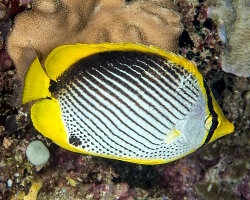
Blackback butterflyfishChaetodon melannotus

Eastern triangle butterflyfishChaetodon baronessa
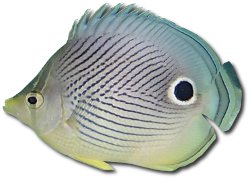
Foureye butterflyfishChaetodon capistratus
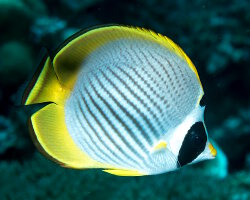
Panda butterflyfishChaetodon adiergastos

Peppered butterflyfishChaetodon guttatissimus

Saddled butterflyfishChaetodon ephippium

Teardrop butterflyfishChaetodon unimaculatus

Threadfin butterflyfishChaetodon auriga
Within the same family

Copperband butterflyfishChelmon rostratus

Horned bannerfishHeniochus varius

Longnose butterflyfishForcipiger flavissimus

Orange banded butterflyfishCoradion chrysozonus

Pyramid butterflyfishHemitaurichthys polylepis

Singular bannerfishHeniochus singularius

Two eyed butterflyfishCoradion melanopus
Discover also

Banded mud morayGymnothorax chlamydatus
Bicolor angelfishCentropyge bicolor

Black tail permit fishTrachinotus falcatus

Mexican hogfishBodianus diplotaenia

Orangeband surgeonfishAcanthurus olivaceus

Philippines wrassePseudocoris bleekeri
Ribboned sweetlipsPlectorhinchus polytaenia
Suckerfish8 espèces
The marine species in the Indo-Pacific




Our latestUpdates
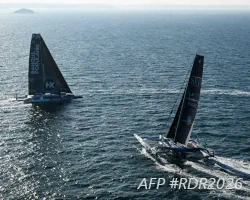
Major movesThe 2026 Route du Rhum enters a decisive phase as Tom Laperche extends his lead in the Ultim class, Armel Le Cléac'h capsizes, and Class40 skippers prepare to face a powerful weather front.Read more
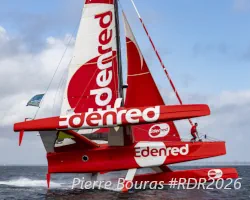
A tough startThe 2026 Route du Rhum gets off to an intense start, with major technical failures, Francis Joyon's capsize, impressive speeds and strategic route choices near the Azores. A look back at the first 48 hours of racing.Read more
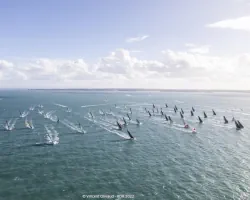
A smooth start, an uncertain AtlanticDiscover the 2026 Route du Rhum start off Saint-Malo, where favorable initial conditions contrast with an uncertain Atlantic crossing shaped by changing winds and weather.Read more
Photo of the Day

Méduse pélagique
(Pelagia noctiluca)
(Pelagia noctiluca)
 Copyright © 2007-2026 auxBulles.com - All rights reserved. Legal notices.
Photo credits - Our partners