

Sealife guideThe large toothed cardinalfishCheilodipterus macrodon
Last updated on 09/23/2026 at 12:45 AM
The large toothed cardinalfish (Cheilodipterus macrodon) is a cardinalfish recognizable by its large canine-like teeth and broad, dark brown longitudinal stripes. It inhabits Indo-Pacific reefs, where it stays close to caves and overhangs.
Mainly active at dusk and at night, it lives alone when young and then in pairs as an adult. It often stays in open water above the reef, ready to retreat into its shelter at the first sign of danger.
Taxonomy
English names
Large toothed cardinalfishTiger cardinalfish
French namesApogon à grandes dents
Spanish namesPez cardenal de grandes dientes
Scientific nameCheilodipterus macrodon (Lacepède, 1802)
FamilyApogonidae
OrderApogoniformes
ClassActinopterygii
Description
The large toothed cardinalfish has an elongated body that is laterally compressed, with a light gray coloration crossed by eight broad, reddish-brown longitudinal stripes. Its jaws bear large teeth resembling small canines, which are particularly noticeable in adults. The largest individuals can reach about 9.8 inches in length.
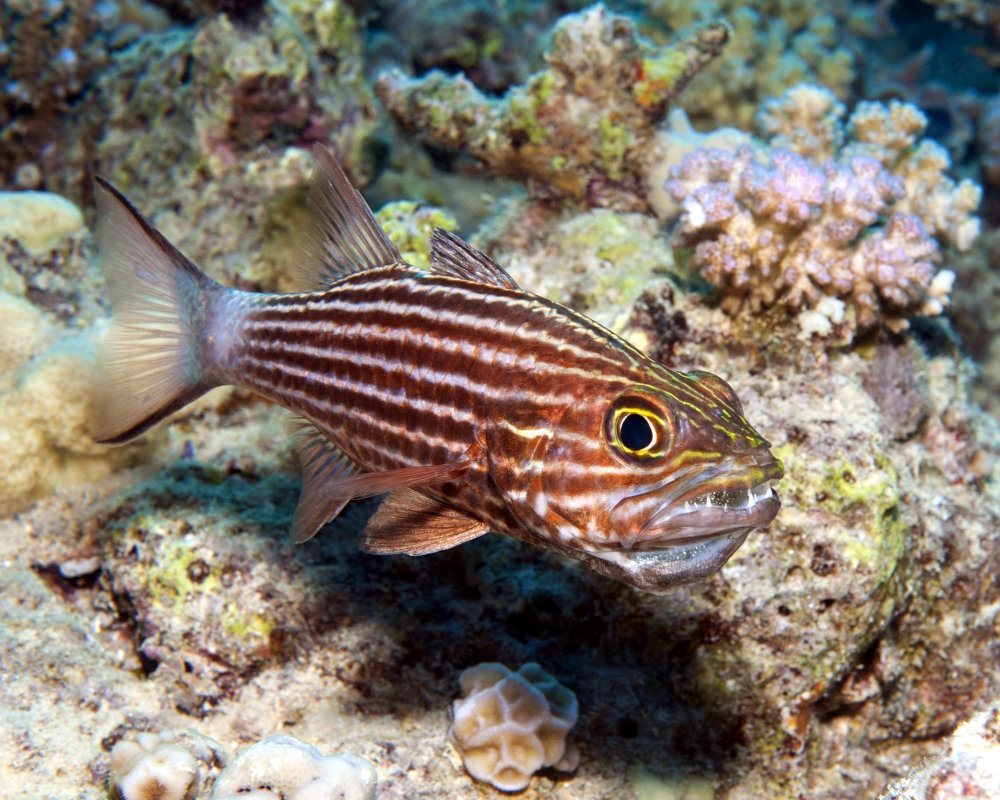
A male large toothed cardinalfish (Cheilodipterus macrodon) with fertilized eggs in its mouth and its large teeth clearly visible © Paul Vinten | Dreamstime.com
The base of the caudal fin is whitish, with darker edges. The other fins are generally translucent. Juveniles have a large black spot on the caudal peduncle, which gradually becomes diffuse with age and fades in adults.
Geographic range
The large toothed cardinalfish inhabits tropical waters of the Indo-Pacific, from the Red Sea and the coasts of East Africa to the Pitcairn Islands in the Pacific. Its range extends north to the Ryukyu Islands in southern Japan and south to Lord Howe Island and Rapa.
Habitat
The large toothed cardinalfish lives mainly on coral reefs, in lagoons, and near reef slopes. It seeks out caves, cavities, and rocky areas that provide shelter. It is generally found from a few meters down to about 98 feet, and sometimes as deep as 131 feet.
It generally stays above the reef and remains close to its shelter. Adults most often live in pairs or in small groups made up of several pairs, while juveniles tend to be solitary or live in small groups.
Diet
The large toothed cardinalfish mainly feeds on small fish. Its large teeth allow it to easily capture prey among the reef.
It mainly hunts as the light fades and may leave its shelter to search for food. Its diet differs from that of many small cardinalfish, which mainly feed on small crustaceans and other invertebrates.
Reproduction
During reproduction, the male and female form a pair. After spawning, the male collects the fertilized eggs in his mouth and incubates them until they hatch, then releases the larvae into the surrounding water, where they continue their development.
Did you know ?
The large toothed cardinalfish generally lives in pairs and remains faithful to the same area of the reef without defending a specific territory. Several pairs can therefore share the same area.
Within the same genus
Within the same family





Discover also

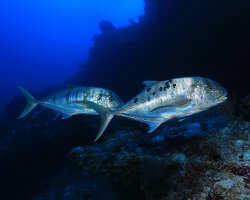

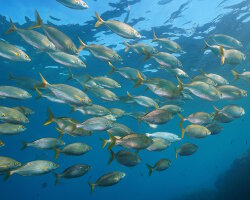


The marine species in the Indo-Pacific


Our latestUpdates
The neon gobyDiscover the neon goby (Elacatinus oceanops), a small western Atlantic reef fish known for its brilliant blue stripe and its role as a cleaner fish that removes parasites from other fish.Read more

The poison gobyDiscover the poison goby (Gobiodon citrinus), a tiny reef fish with a bright yellow body and distinctive blue markings. It lives among branching Acropora corals in the tropical waters of the Indo-Pacific.Read more
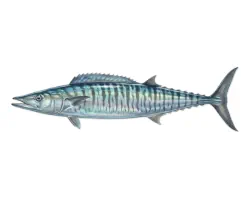
The wahooDiscover the wahoo (Acanthocybium solandri), a powerful pelagic predator found in tropical and subtropical oceans. Recognizable by its streamlined body and distinctive blue vertical stripes, it is a fast swimmer that feeds mainly on fish and squid.Read more
Photo of the Day
Fou à pieds rouges
(Sula sula)
(Sula sula)
 Copyright © 2007-2026 auxBulles.com - All rights reserved. Legal notices.
Photo credits - Our partners