

Sealife guideThe common snookCentropomus undecimalis
Last updated on 09/01/2026 at 10:09 PM

The common snook (Centropomus undecimalis)
Taxonomy
English names
Common snookSnook
French namesBrochet de merCrossie blanc
Scientific nameCentropomus undecimalis (Bloch, 1792)
FamilyCentropomidae
OrderPerciformes
ClassActinopterygii
Description
The common snook is a large fish, with the largest specimens reaching up to 4.3 feet in length.

With its protruding lower jaw, the common snook does not look particularly friendly © Phillip Lowe | Dreamstime.com
The common snook has a long, slender body and a streamlined head. With its protruding lower jaw, it certainly does not look very friendly !
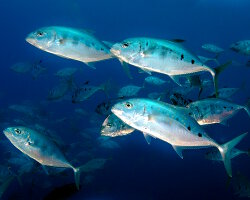
The common snook has a silvery-gray body with a distinctive black lateral line running from head to tail. A touch of yellow can be seen on all of its fins.
Geographic range
The common snook is widely distributed along the western coast of the Atlantic Ocean and throughout the Gulf of Mexico. It is particularly abundant in the tropical waters around Florida, especially the Florida Keys.
Habitat
The common snook can be found in a wide variety of habitats, including mangroves, coral reefs, and seagrass beds. It typically inhabits shallow waters.
The common snook is usually solitary or found in small groups of just a few individuals.
Diet
The common snook feeds mainly on smaller fish and crustaceans such as shrimp and crabs. It is preyed upon by dolphins, seabirds, and larger fish.

The common snook has a long, slender body and a streamlined head

The common snook has a silvery-gray body with a distinctive black lateral line running from head to tail
Reproduction
The common snook is a protandrous hermaphroditic fish: it is male when young and changes sex to become female as it grows. As a result, most young common snook are males, while the largest individuals are females.
Did you know ?
The common snook is a popular sport fish, prized by anglers for its fighting spirit and its culinary qualities.
The common snook is listed as many other marine species within The IUCN Red List of threatened species. The common snook appears in the IUCN Red List since 2019 within the category Least Concern !
Tips for observing
The common snook is difficult to approach, so you have to make the most of its brief appearances.

A school of common snook © Peter Leahy | Dreamstime.com
Discover also
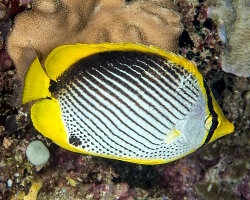
Blackback butterflyfishChaetodon melannotus

Blackspot razorfishIniistius dea

Blue-green chromisChromis viridis
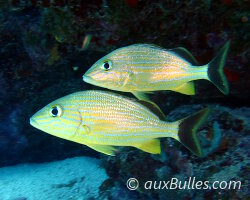
Blue striped gruntHaemulon sciurus

Camouflage grouperEpinephelus polyphekadion
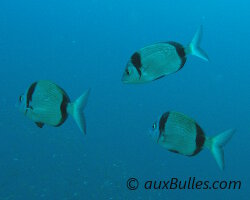
Common two-banded seabreamDiplodus vulgaris

Fangtooth morayEnchelycore anatina

Goldbelly damselfishPomacentrus auriventris
The marine species in the Red Sea


Our latestUpdates
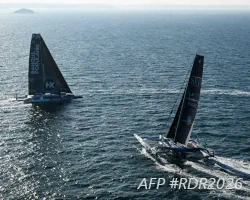
Major movesThe 2026 Route du Rhum enters a decisive phase as Tom Laperche extends his lead in the Ultim class, Armel Le Cléac'h capsizes, and Class40 skippers prepare to face a powerful weather front.Read more

A tough startThe 2026 Route du Rhum gets off to an intense start, with major technical failures, Francis Joyon's capsize, impressive speeds and strategic route choices near the Azores. A look back at the first 48 hours of racing.Read more

A smooth start, an uncertain AtlanticDiscover the 2026 Route du Rhum start off Saint-Malo, where favorable initial conditions contrast with an uncertain Atlantic crossing shaped by changing winds and weather.Read more
Photo of the Day

Méduse pélagique
(Pelagia noctiluca)
(Pelagia noctiluca)
 Copyright © 2007-2026 auxBulles.com - All rights reserved. Legal notices.
Photo credits - Our partners