

Sealife guideThe picarelSpicara smaris
Last updated on 10/14/2026 at 12:35 AM
The picarel (Spicara smaris) is a small fish found in Mediterranean coastal waters, recognizable by its slender, silvery body and the nearly rectangular black spot on its sides. Its coloration varies with age, sex, and season, with males displaying particularly noticeable blue and yellow markings during the breeding season.
Picarels often live in schools above seagrass beds and sandy bottoms. During the breeding season, males dig small nests in the sand to lay and protect the eggs. This behavior can lead to large gatherings on the seabed.
Taxonomy
English names
Picarel
French namesPicarelJarret
Spanish namesCaramel
Scientific nameSpicara smaris (Linnaeus, 1758)
FamilySparidae
OrderPerciformes
ClassActinopterygii
Description
The picarel has an elongated, spindle-shaped body that is slightly compressed from side to side. Its back may be bluish gray, yellowish gray, or brownish, while its sides and belly are silvery. A distinctive, nearly rectangular black spot is usually visible on each side, below the lateral line and near the pectoral fin. Darker vertical bands may also appear, particularly at night. Its coloration varies with age, sex, and season: during the breeding season, males develop blue and yellow lines and spots on their heads and sides.
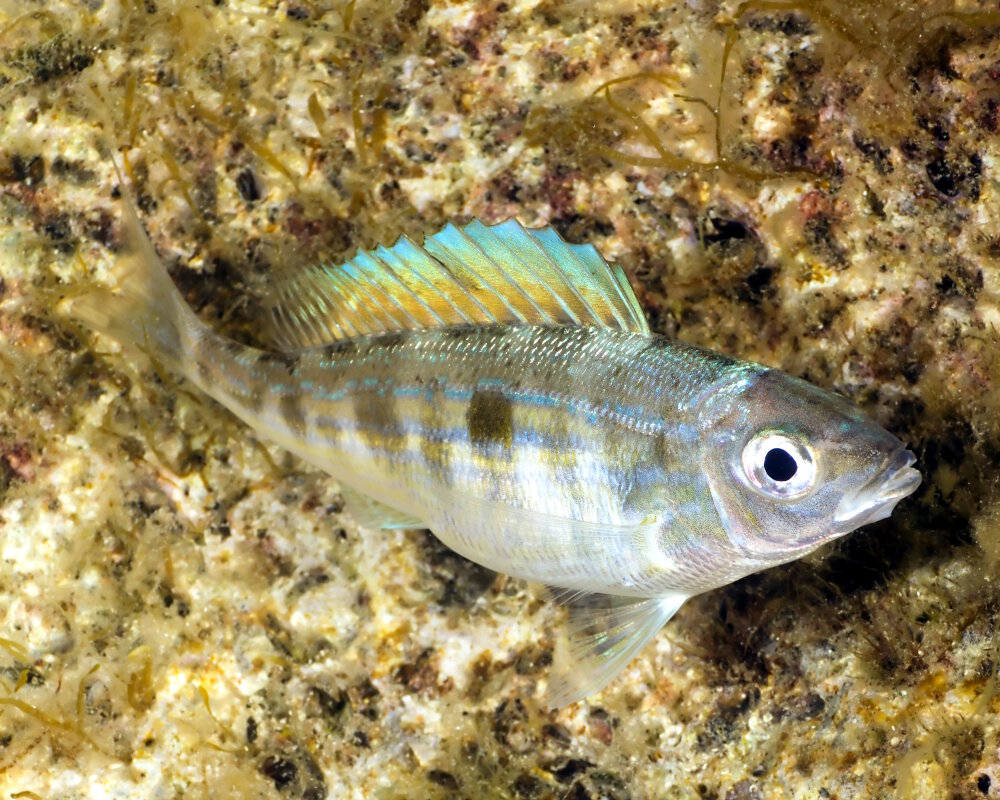
The picarel (Spicara smaris) © Serg_dibrova | Dreamstime.com
Picarels generally measure between 3 and 8 inches in length. Females are smaller, reaching about 6 inches, while males can grow to around 8 inches and, more rarely, 10 inches.
Geographic range
Picarels are found mainly in the coastal waters of the Mediterranean Sea, but they also occur in the Black Sea and the southern Sea of Azov.
In the eastern Atlantic, they are found from the coasts of Portugal to Morocco, including around the Canary Islands and Madeira.
Habitat
Picarels inhabit coastal waters, where they frequent Posidonia seagrass beds, sandy or muddy bottoms, and occasionally rocky areas. They are generally found at depths of 49 to 558 feet, but can also occur in deeper waters.
During the day, they often swim in schools above the seabed. At night, individuals disperse and may remain motionless near the substrate, adopting more subdued coloration. They also tend to move closer to shore during the warmer months and retreat to more offshore waters as temperatures drop in the fall.
Diet
Picarels feed on zooplankton and small invertebrates living on the seabed, including mollusks, crustaceans, and marine worms. They find food both in the water column and near the seabed.
Reproduction
The picarel is a protogynous hermaphrodite: during its lifetime, it can first function as a female and later change into a male. Females generally reach sexual maturity at around 2 years of age, while sex change occurs at around 3 years. During the breeding season, males develop brighter coloration, with blue lines and spots.
Breeding takes place mainly in late winter and spring, generally from February to May. A second breeding period, from July to September, is sometimes observed in the Black Sea. Males dig bowl-shaped nests in sandy bottoms, often along the edges of seagrass beds. After spawning and fertilization, they guard the eggs, fan them with their fins, and drive away intruders until the eggs hatch.
Did you know ?
In 2021, researchers observed 15 large picarel breeding colonies off Corsica, and their findings were published in 2024. Together, the colonies covered more than 331 acres in the study area, with thousands of nests arranged side by side. Each nest was guarded by a male, temporarily transforming the seabed into vast breeding grounds.
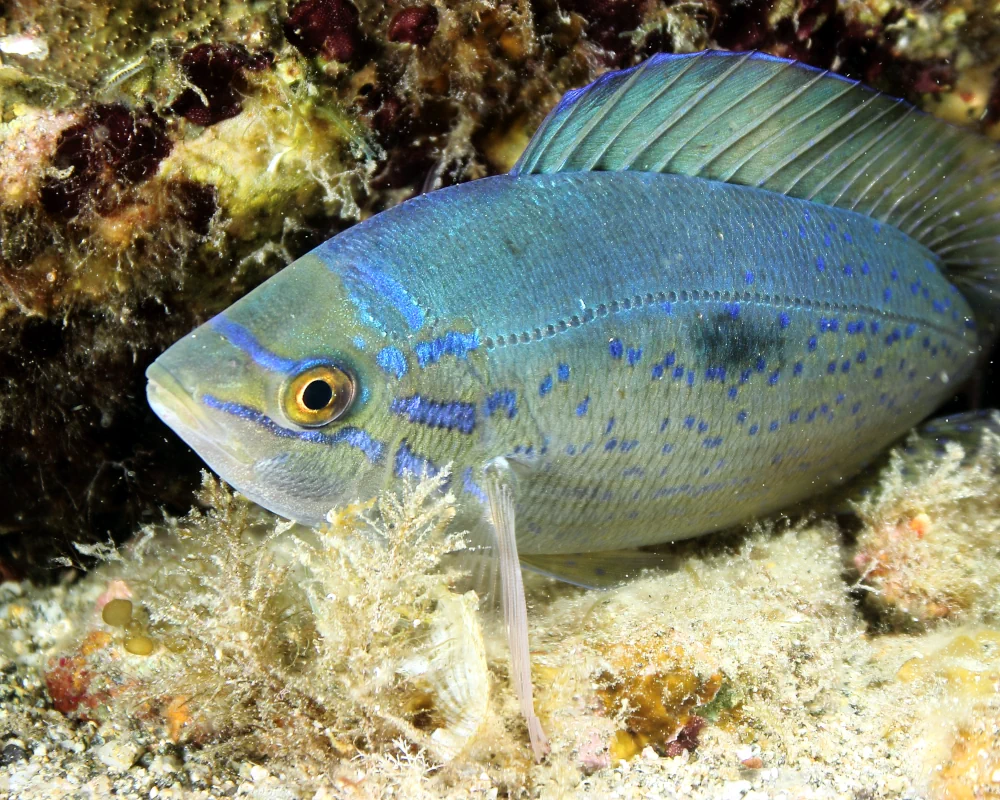
During the breeding season, male picarels develop brighter coloration, with blue lines and spots © Planctonvideo | Dreamstime.com
The picarel is listed as many other marine species within The IUCN Red List of threatened species. The picarel appears in the IUCN Red List since 2014 within the category Least Concern !
Within the same genus
Within the same family
Gilthead seabreamSparus aurata

Jolthead porgyCalamus bajonado
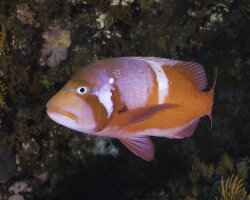
Roman seabreamChrysoblephus laticeps
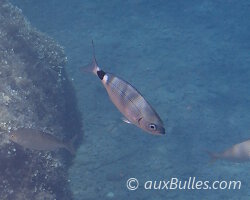
Saddled seabreamOblada melanurus
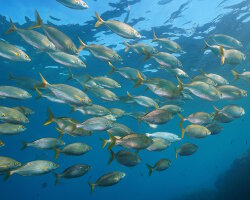
SalemaSarpa salpa
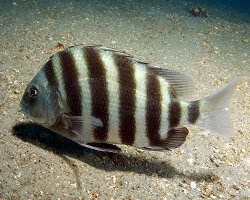
SheepsheadArchosargus probatocephalus
Sheepshead porgyCalamus penna
White seabreamDiplodus sargus
Discover also

Arctic shannyStichaeus punctatus
Clown corisCoris aygula

Dwarf hawkfishCirrhitichthys falco

Flagtail shrimpgobyAmblyeleotris yanoi
Sailfin snapperSymphorichthys spilurus
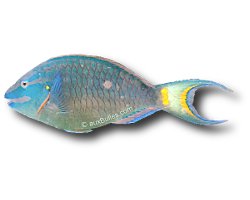
Stoplight parrotfishSparisoma viride

Wolf eelAnarrhichthys ocellatus
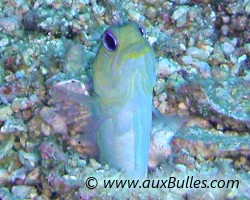
Yellowhead jawfishOpistognathus aurifrons
The marine species in the Mediterranean Sea


Our latestUpdates

Major movesThe 2026 Route du Rhum enters a decisive phase as Tom Laperche extends his lead in the Ultim class, Armel Le Cléac'h capsizes, and Class40 skippers prepare to face a powerful weather front.Read more

A tough startThe 2026 Route du Rhum gets off to an intense start, with major technical failures, Francis Joyon's capsize, impressive speeds and strategic route choices near the Azores. A look back at the first 48 hours of racing.Read more

A smooth start, an uncertain AtlanticDiscover the 2026 Route du Rhum start off Saint-Malo, where favorable initial conditions contrast with an uncertain Atlantic crossing shaped by changing winds and weather.Read more
Photo of the Day

Méduse pélagique
(Pelagia noctiluca)
(Pelagia noctiluca)
 Copyright © 2007-2026 auxBulles.com - All rights reserved. Legal notices.
Photo credits - Our partners