Sealife guideThe coral hindCephalopholis miniata
Last updated on 09/18/2026 at 11:46 PM
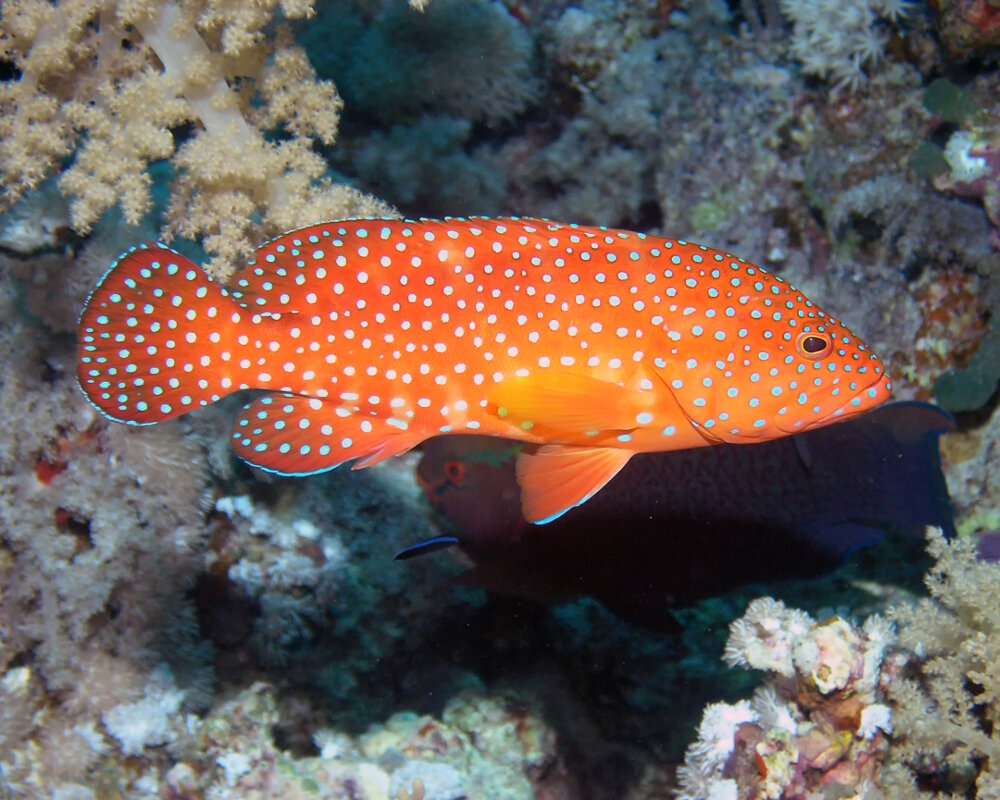
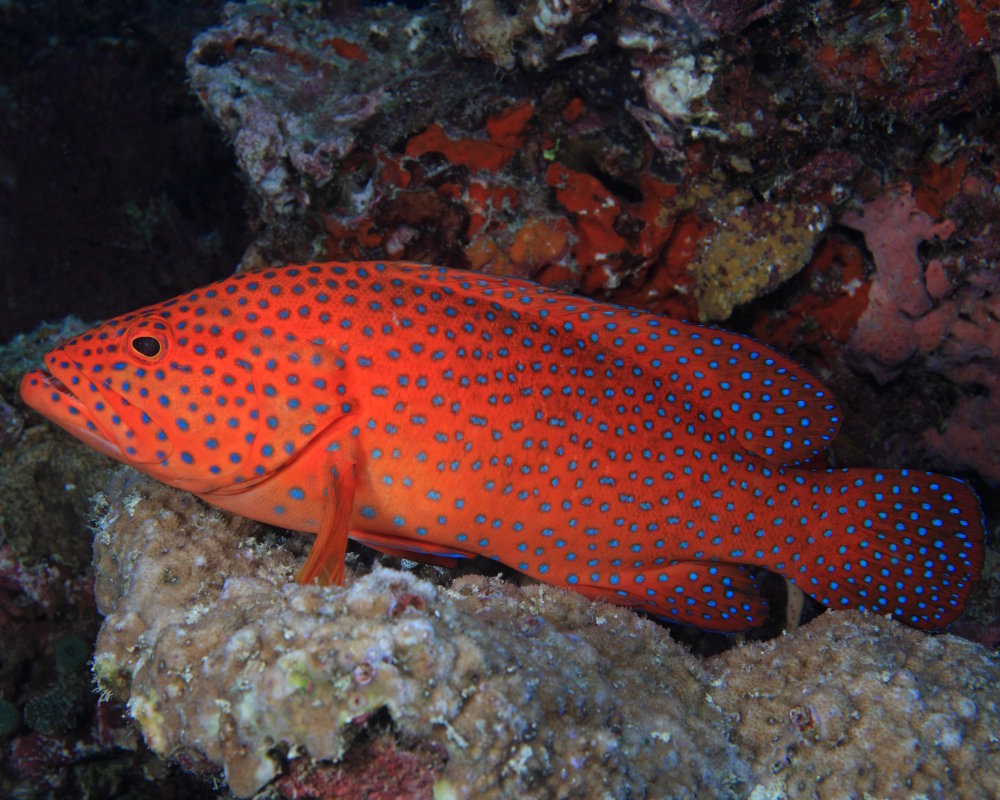
The coral hind (Cephalopholis miniata) is a reef fish that is easily recognized by its orange-red coloration covered with numerous small bright blue spots. Found in the tropical waters of the Indo-Pacific, it generally lives near coral reefs, where it ambushes small fish and crustaceans.
Territorial and generally not very shy, the coral hind often lives alone or in small groups and shelters in reef crevices or beneath rocky overhangs.
Taxonomy
English names
Coral hindCoral grouper
French namesVieille de corailVieille étoilée (Réunion)
Spanish namesCherna estrellada
Scientific nameCephalopholis miniata (Forsskål, 1775)
Description
The coral hind has a streamlined, slightly laterally compressed body, with a pointed head and a large mouth lined with small teeth, some of which are canine-like. Its coloration ranges from pale orange to deep red, with the rear part of the body generally darker. The head, body, and fins are covered with numerous small bright blue spots, while the pectoral fins are generally yellowish orange and lack these spots.
The coral hind's coloration can change rapidly: some individuals temporarily develop more contrasting vertical bands or mottling on their sides. Juveniles are generally more yellow or light orange, and their blue spots are fewer and more widely spaced. The coral hind typically averages around 16 inches in length, but the largest individuals can reach up to 20 inches in total length.
Geographic range
The coral hind inhabits the tropical waters of the Indo-Pacific, from the Red Sea and the coast of East Africa to Durban, South Africa, and eastward to the Line Islands in the Pacific. In the Indian Ocean, it is found around the
Seychelles,
Maldives, Madagascar, and Comoros, as well as in the western and central Pacific around the islands of Indonesia, Fiji, and Tonga.
Habitat
The coral hind lives in clear waters around coral reefs, both near the coast and offshore. It mainly inhabits reef areas exposed to currents and wave action rather than the most sheltered areas. It can be observed from a few feet deep to around 492 feet.
The coral hind is territorial and defends part of the reef where it lives. Adults are generally solitary or found in small groups and stay close to rocks or shelters. Juveniles hide more often among corals and in reef crevices for protection.
Diet
The coral hind is a carnivorous predator that mainly feeds on small fish living around coral reefs, including the
sea goldie (
Pseudanthias squamipinnis), a small fish that lives in groups above reefs. It supplements its diet with
crustaceans and other small prey.
It generally hunts by ambush, remaining motionless near the seafloor or beside a shelter before suddenly lunging at approaching prey. Its large mouth allows it to quickly swallow the small fish and
crustaceans it captures.
Reproduction
The coral hind is an
oviparous fish with external fertilization. The species is a protogynous hermaphrodite: it begins its sexual life as a female before some individuals change sex and become males. Dominant adult males generally live with several females within the same territory.
Spawning takes place in open water, where the eggs are fertilized before being carried away by ocean currents. After hatching, the larvae spend about two months in the plankton before gradually moving toward the seafloor once they reach a few inches in length.
Did you know ?
The coral hind is listed as many other marine species within The
IUCN Red List of threatened species. The coral hind appears in the
IUCN Red List since 2018 within the category Least Concern !
Tips for observing
Watch for confusion
The coral hind (
Cephalopholis miniata) can be confused with the
halfspotted grouper (
Cephalopholis hemistiktos), a species also found in the Red Sea. The coral hind can be identified by the numerous small blue spots covering almost its entire body, whereas these spots are absent from the upper part of the halfspotted grouper's body. The halfspotted grouper also has a darker caudal fin and darker rear portions of its dorsal and anal fins.
Within the same genus
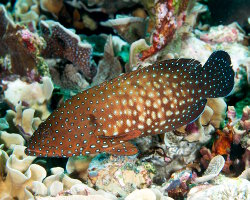
Bluespotted grouper
(Cephalopholis cyanostigma)
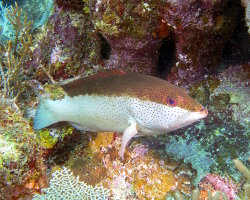
Coney
(Cephalopholis fulva)
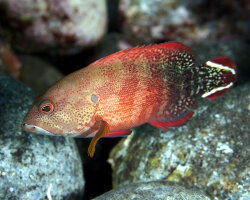
Darkfin hind
(Cephalopholis urodeta)
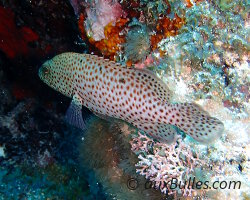
Graysby
(Cephalopholis cruentata)
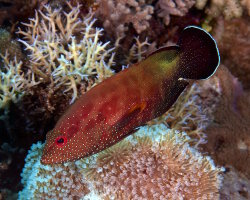
Halfspotted grouper
(Cephalopholis hemistiktos)
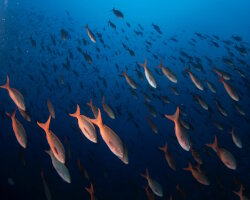
Pacific creolefish
(Cephalopholis colonus)
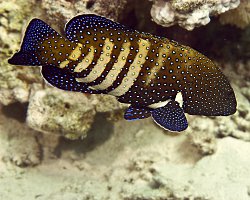
Peacock grouper
(Cephalopholis argus)
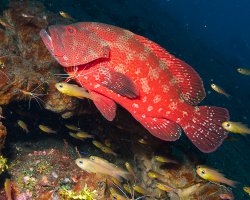
Tomato grouper
(Cephalopholis sonnerati)
Within the same family

Camouflage grouper
(Epinephelus polyphekadion)
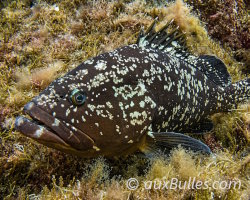
Dusky grouper
(Epinephelus marginatus)
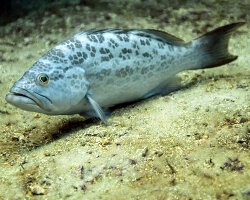
Gag grouper
(Mycteroperca microlepis)
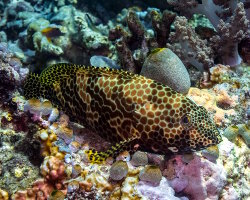
Honeycomb grouper
(Epinephelus merra)

Malabar grouper
(Epinephelus malabaricus)
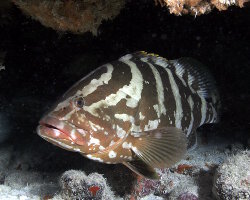
Nassau grouper
(Epinephelus striatus)
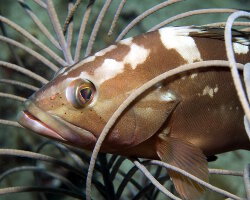
Red grouper
(Epinephelus morio)
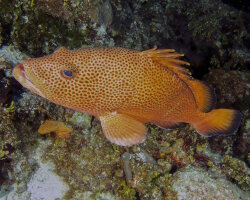
Red hind grouper
(Epinephelus guttatus)
Discover also
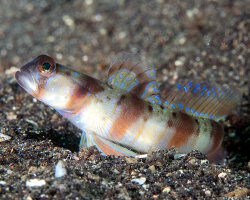
Arcfin shrimpgoby
(Amblyeleotris arcupinna)
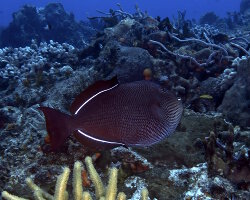
Black triggerfish
(Melichthys niger)

Blackside hawkfish
(Paracirrhites forsteri)

Elegant sculpin
(Bero elegans)
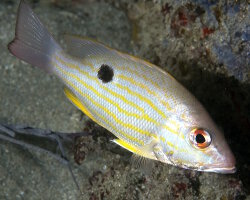
Lane snapper
(Lutjanus synagris)

Shadowfin soldierfish
(Myripristis adusta)

Speckled butterflyfish
(Chaetodon citrinellus)
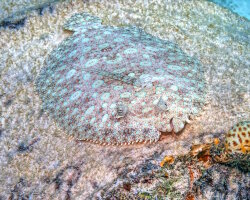
Tropical flounder
(Bothus mancus)
The marine species in the Indo-Pacific
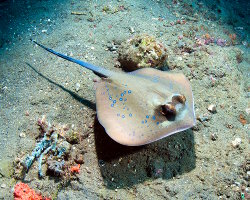
Bluespotted ribbontail ray
(Taeniura lymma)
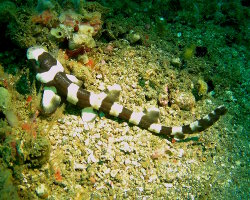
Brownbanded bamboo shark
(Chiloscyllium punctatum)
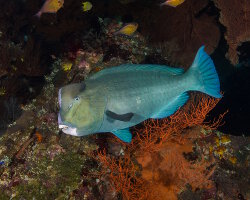
Bumphead parrotfish
(Bolbometopon muricatum)
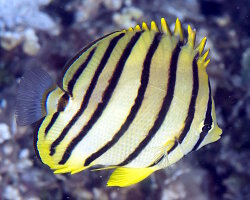
Eightband butterflyfish
(Chaetodon octofasciatus)
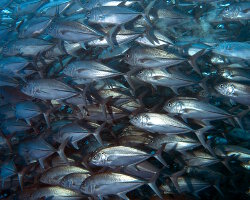
Giant trevally
(Caranx ignobilis)
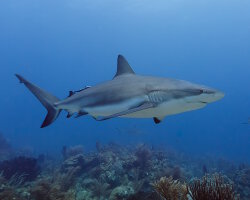
Gray reef shark
(Carcharhinus amblyrhynchos)

Honeycomb filefish
(Cantherhines pardalis)
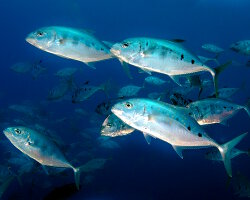
Yellowspotted trevally
(Turrum fulvoguttatum)