Sealife guideThe white trevallyPseudocaranx dentex
Last updated on 10/09/2026 at 10:48 PM
The white trevally (Pseudocaranx dentex) is a silvery fish with blue-green reflections on its back. A yellow stripe runs along its sides, and a black spot is visible near the gill opening.
It inhabits tropical and warm-temperate waters in several oceans. It frequents bays, coastal areas, and continental shelf bottoms, where it often moves in schools.
Taxonomy
English names
White trevallyGuelly jack
French namesCarangue dentue
Spanish namesJurel dentón
Scientific namePseudocaranx dentex (Bloch & Schneider, 1801)
Description
The white trevally has a streamlined body that is laterally compressed. Its back is blue-green, while its sides and belly are silvery. A yellow stripe runs along its sides and widens toward the rear. A dark spot, usually clearly visible, marks the upper part of the gill cover near the gill opening. Its fins often have yellowish hues.
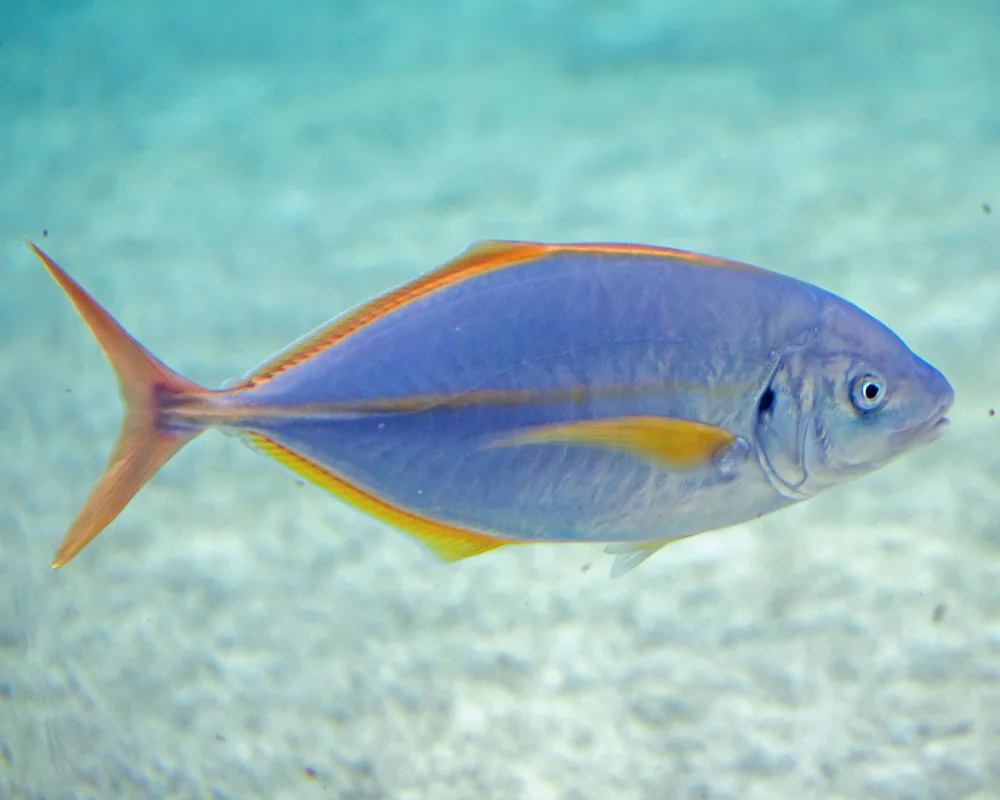
The white trevally (Pseudocaranx dentex) has a yellow stripe running along its sides and a dark spot on the upper part of its gill cover
© Christian Weiß | Dreamstime.comIt typically averages around 16 inches in total length, but the largest individuals can exceed 3.3 feet.
Geographic range
The white trevally inhabits tropical and subtropical waters in several oceans. In the western Atlantic, it occurs from North Carolina, Bermuda, and
Florida south to Brazil. In the eastern Atlantic, it is found in the Mediterranean Sea, the Azores, Madeira, the Canary Islands, and Cape Verde, among other locations. It is also found in the Indian and Pacific Oceans, particularly off South Africa, Japan,
Hawaii,
Australia, and New Zealand.
Habitat
The white trevally often lives in schools above continental shelf bottoms, near reefs and rocky areas. It may swim near the surface, in open water, or close to the seabed, usually at depths of 33 to 98 feet, although it can also be found much deeper.
Juveniles tend to inhabit shallow coastal waters, particularly bays and estuaries.
Diet
The white trevally has a varied diet. It feeds on invertebrates living on or near the seabed, including
crustaceans,
mollusks,
worms, and
echinoderms. In open water, it may also consume plankton, particularly small
crustaceans such as krill.
Reproduction
The white trevally's breeding season varies by region. In the Azores, spawning takes place mainly in summer, while in Japan it may occur in winter. Eggs and sperm are released into the water, where fertilization takes place. The eggs then drift in the marine environment, where the larvae develop after hatching.
Did you know ?
The white trevally has an unusual feeding behavior. It mainly searches for prey on or near the seabed, but it can also feed in open water by filtering plankton as it swims, a method also used by small pelagic fish such as anchovies and sardines.
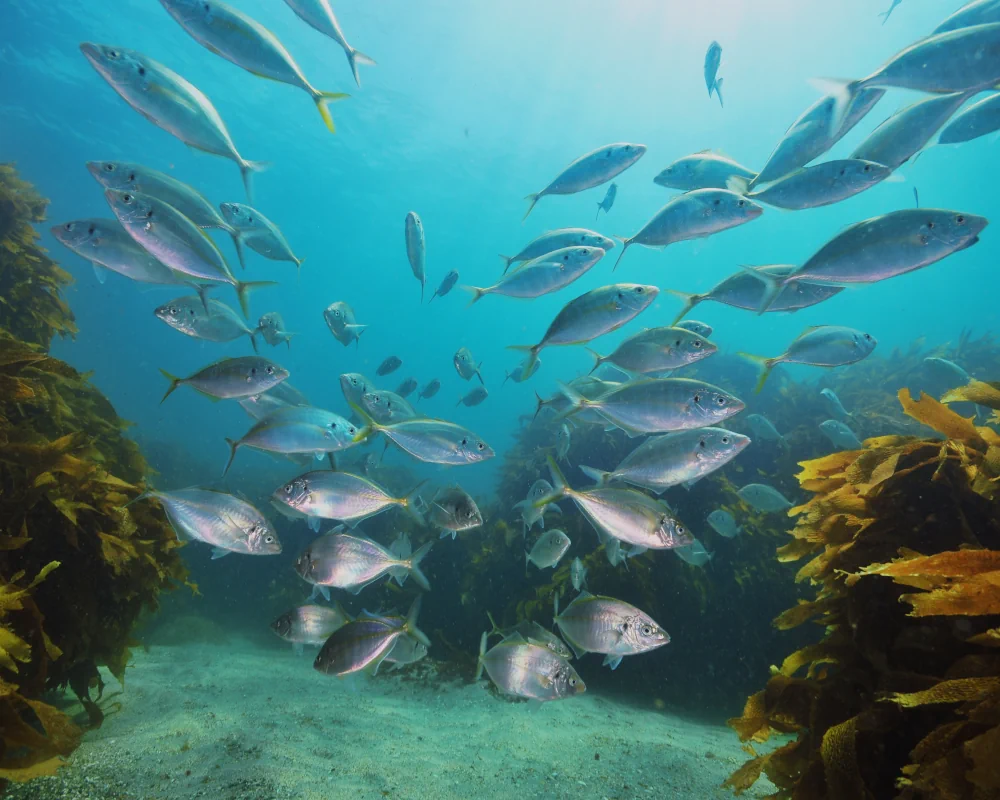
A school of white trevally (Pseudocaranx dentex) swims over a sandy seabed amid a kelp forest (Ecklonia radiata) in New Zealand
© Daniel Poloha | Dreamstime.comThe white trevally is listed as many other marine species within The
IUCN Red List of threatened species. The white trevally appears in the
IUCN Red List since 2015 within the category Least Concern !
Within the same family
Bar jack
(Caranx ruber)

Black tail permit fish
(Trachinotus falcatus)
Greater amberjack
(Seriola dumerili)
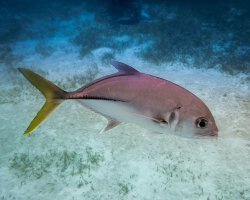
Horse-eye jack
(Caranx latus)

Leerfish
(Lichia amia)
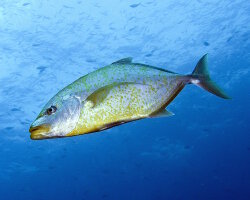
Orangespotted trevally
(Flavocaranx bajad)
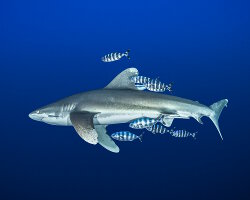
Rudderfish
(Naucrates ductor)
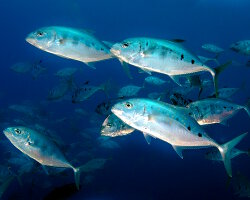
Yellowspotted trevally
(Turrum fulvoguttatum)
Discover also

Banggai cardinalfish
(Pterapogon kauderni)
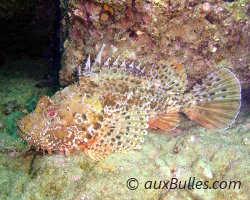
Black scorpionfish
(Scorpaena porcus)
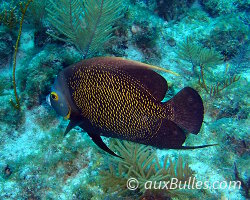
French angelfish
(Pomacanthus paru)

Malabar grouper
(Epinephelus malabaricus)

Narrow lined pufferfish
(Arothron manilensis)
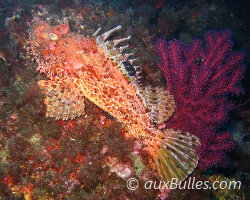
Red scorpionfish
(Scorpaena scrofa)
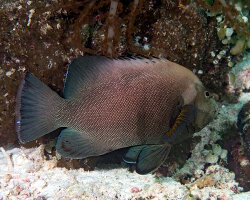
Redmouth grouper
(Aethaloperca rogaa)
Yellowmouth barracuda
(Sphyraena viridensis)
The marine species in the Atlantic

Atlantic horseshoe crab
(Limulus polyphemus)
Bandtail puffer
(Sphoeroides spengleri)
Giant caribbean anemone
(Condylactis gigantea)
Gilthead seabream
(Sparus aurata)
Mahi-mahi
(Coryphaena hippurus)
Painted tunicate
(Clavelina picta)
Queen angelfish
(Holacanthus ciliaris)
West Indian sea egg
(Tripneustes ventricosus)
Dive centers
Noa dive center