

Sealife guideThe sandbar sharkCarcharhinus plumbeus
Last updated on 09/14/2026 at 11:03 PM
The sandbar shark (Carcharhinus plumbeus) is a large coastal shark recognizable by its robust body, short, rounded snout, and especially its large first dorsal fin positioned far forward on the body. Despite its impressive size, it feeds primarily on fish and small marine animals and therefore contributes to the balance of coastal ecosystems.
Found in the tropical and warm-temperate waters of several regions around the world, it inhabits both coastal waters and offshore areas and can undertake significant seasonal migrations.
Taxonomy
English names
Sandbar shark
French namesRequin gris
Spanish namesTiburón trozo
Scientific nameCarcharhinus plumbeus (Nardo, 1827)
FamilyCarcharhinidae
OrderCarcharhiniformes
ClassElasmobranchii
Description
The sandbar shark has a robust, elongated body, a short, rounded snout, and grayish brown to bronze coloration on the back, contrasting with its white underside. It is particularly recognizable by its large, triangular, slightly curved first dorsal fin, positioned far forward on the body, just behind the pectoral fins. A small ridge connects its two dorsal fins, while its upper teeth are large, triangular, and edged with very sharp serrations.

The sandbar shark (Carcharhinus plumbeus) © Mihail Ivanov | Dreamstime.com
The largest individuals can reach up to 10 feet in length as adults.
Geographic range
The sandbar shark inhabits the tropical and warm-temperate waters of the Atlantic, Indian, and Pacific oceans, as well as parts of the Mediterranean Sea, where it is found particularly on the continental shelf.
The sandbar shark sometimes undertakes long seasonal migrations, moving closer to shore at certain times of the year before returning to more distant or deeper areas.
The sandbar shark can be observed regularly in certain regions, particularly Florida, where it frequents coastal waters and returns each year during its seasonal migrations. The Jupiter area on Florida's east coast is one of the well-known sites for observing it.
Habitat
The sandbar shark primarily lives in coastal waters and on the continental shelf, but it can also move farther offshore and, more rarely, enter oceanic waters. It is commonly found in bays, estuaries, and areas near ports, where it generally swims above sandy or muddy bottoms. It often swims close to the seafloor rather than near the surface.
It occurs from the surface to depths of about 919 feet, although it usually inhabits shallower waters. Young and adult sharks do not always live in the same areas. They often occupy different habitats depending on their age.
Diet
The sandbar shark is an opportunistic predator that feeds primarily on fish, but also on small sharks, rays, cephalopods, shrimp and other crustaceans, as well as gastropods, which it generally searches for near the seafloor.
Its diet changes with age. Young sharks consume large quantities of crustaceans, such as crabs and shrimp. As they grow, they gradually eat more fish and other prey.
Reproduction
The sandbar shark is a placental viviparous species: after fertilization, the embryos develop inside the female's uterus and receive the nutrients necessary for their growth through a structure that functions as a placenta. Gestation lasts about twelve months. A litter generally consists of 1 to 14 pups, which measure about 22 to 30 inches at birth.
Females reach sexual maturity at a size generally greater than that of males.
Did you know ?
The sandbar shark is listed as many other marine species within The IUCN Red List of threatened species. The sandbar shark appears in the IUCN Red List since 2021 within the category Endangered !
Within the same genus
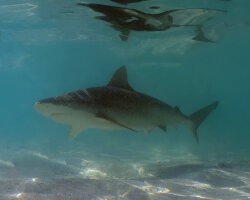
Blacknose sharkCarcharhinus acronotus
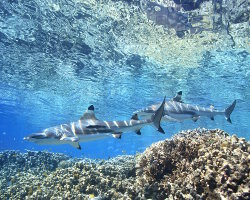
Blacktip reef sharkCarcharhinus melanopterus
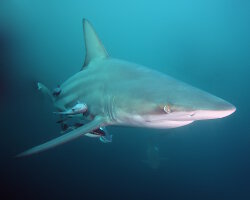
Blacktip sharkCarcharhinus limbatus
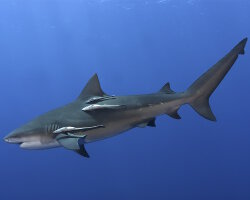
Bull sharkCarcharhinus leucas
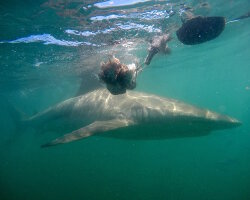
Copper sharkCarcharhinus brachyurus
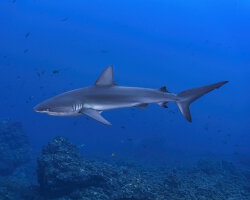
Galapagos sharkCarcharhinus galapagensis
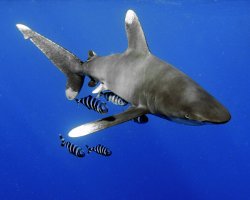
Oceanic whitetip sharkCarcharhinus longimanus
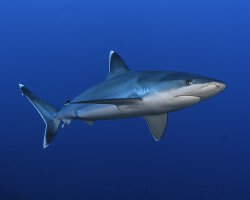
Silvertip sharkCarcharhinus albimarginatus
Within the same family
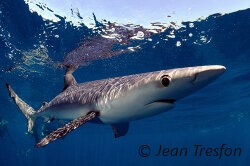
Blue sharkPrionace glauca
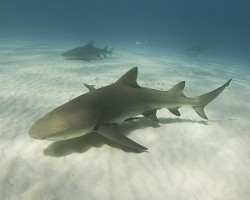
Lemon sharkNegaprion brevirostris
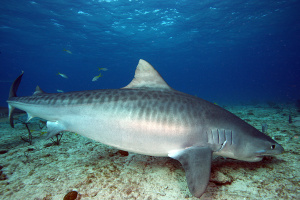
Tiger sharkGaleocerdo cuvier
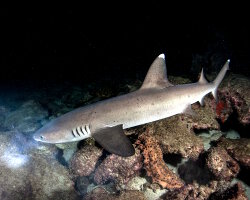
Whitetip reef sharkTriaenodon obesus
Discover also
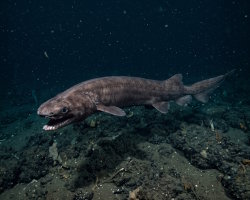
Frilled sharkChlamydoselachus anguineus
Hammerhead sharks
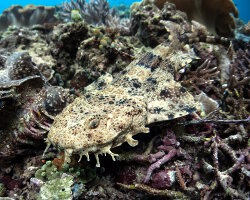
Japanese wobbegongOrectolobus japonicus
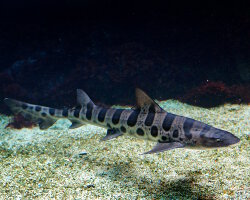
Leopard sharkTriakis semifasciata
Longfin makoIsurus paucus
Spiny dogfishSqualus acanthias
Tasselled wobbegongEucrossorhinus dasypogon
Whale sharkRhincodon typus
Dive centers


Our latestUpdates
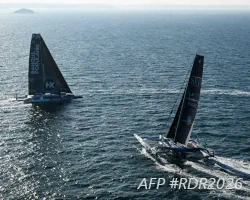
Major movesThe 2026 Route du Rhum enters a decisive phase as Tom Laperche extends his lead in the Ultim class, Armel Le Cléac'h capsizes, and Class40 skippers prepare to face a powerful weather front.Read more
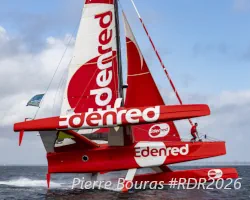
A tough startThe 2026 Route du Rhum gets off to an intense start, with major technical failures, Francis Joyon's capsize, impressive speeds and strategic route choices near the Azores. A look back at the first 48 hours of racing.Read more

A smooth start, an uncertain AtlanticDiscover the 2026 Route du Rhum start off Saint-Malo, where favorable initial conditions contrast with an uncertain Atlantic crossing shaped by changing winds and weather.Read more
Photo of the Day

Méduse pélagique
(Pelagia noctiluca)
(Pelagia noctiluca)
 Copyright © 2007-2026 auxBulles.com - All rights reserved. Legal notices.
Photo credits - Our partners