

Islands destinationRota IslandMariana Islands | Pacific Ocean
Last updated on 10/01/2026 at 12:40 AM
Located in the western Pacific, Rota is the southernmost island of the Northern Mariana Islands. About 31 miles northeast of Guam, it is known for its lush landscapes, limestone cliffs, white-sand beaches, and exceptionally clear waters. The island is also home to extensive tropical forest and several protected areas that preserve wildlife and plant species characteristic of the Mariana Islands.
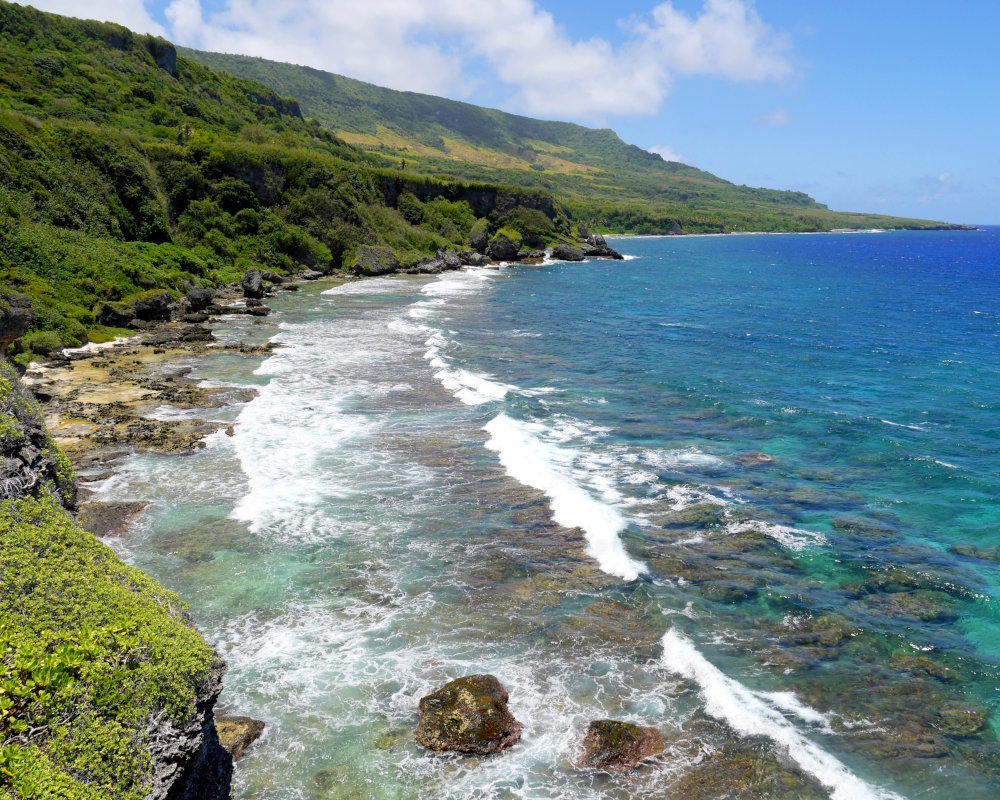
Panoramic view of the coastline of Rota Island in the Northern Mariana Islands © GemStocks | Dreamstime.com
Known by its Chamorro name, Luta, Rota also has a remarkable cultural and historical heritage. The remains of Chamorro villages, ancient latte stone quarries, traces of the Spanish, German, and Japanese periods, and several sites associated with World War II reflect the island's eventful history. Its coral reefs and shipwrecks also make it a popular destination for divers.
A lush island in the Southern Marianas
The southernmost of the Northern Mariana Islands
Rota lies at the southern end of the Northern Mariana Islands, about 31 miles northeast of Guam. The island is dominated by hills covered in tropical vegetation and has several villages, including Sinapalo, the largest and most populated, and Songsong, located in the southwestern part of the island. This settlement pattern gives Rota a more rural and peaceful atmosphere than the more populated islands of the archipelago.
Landscapes between forests and cliffs
Rota's landscape combines tropical forests, limestone plateaus, coastal cliffs, and beaches bordered by turquoise waters. Mount Sabana, the island's highest point, dominates the interior landscape and offers sweeping views. To the south, Mount Taipingot, nicknamed Wedding Cake Mountain because of its successive terraces, forms one of Rota's most recognizable landforms. The Sabana area is also an important refuge for wildlife and native forests.
A particularly well-preserved natural environment
Forests rich in wildlife
Much of Rota retains relatively well-preserved tropical vegetation. The Sabana Protected Area covers about 5.8 square miles and protects native forests as well as several species characteristic of the Mariana Islands. These include the Mariana fruit bat, the Mariana crow, the Mariana kingfisher, and numerous seabirds. Protecting these habitats helps preserve one of the island's most important remaining forest areas.
A refuge for seabirds
On the eastern coast, the I'Chenchon Park Wildlife Conservation Area, also known as the Chenchun Bird Sanctuary, protects a large area of limestone forest and coastal cliffs. The site provides an important nesting area for several seabird species and also contains archaeological remains of Chamorro villages. Protecting these areas makes it possible to experience Rota's still-abundant natural environment while limiting disturbance to the species that live there.
An exceptional Chamorro heritage
Latte Stone Villages
Rota preserves several remarkable remains of Chamorro civilization, including the Mochong Village, considered the largest latte stone village in the Mariana Islands. Located on the northern coast, the site extends for about 1,509 feet and includes several groups of stones that testify to ancient settlement. Dugai Village also has sixteen latte structures built on a plateau overlooking the surrounding landscape.
The As Nieves Quarry
The As Nieves latte stone quarry, also known as Taga Stone Quarry, is one of Rota's most impressive archaeological sites. Nine enormous stone pillars and seven capstones can still be seen at various stages of extraction. Some of the pillars reach considerable dimensions, providing evidence of the work carried out by the island's ancient inhabitants to produce the monumental elements used in their structures.
A history shaped by several powers
From the Spanish era to the German period
Chamorro communities had occupied Rota for centuries before the arrival of Europeans. Spanish explorer Ferdinand Magellan is believed to have visited the island in 1521, before Spain officially took possession of it in the 17th century. Rota then remained under Spanish rule for more than two centuries before being ceded to Germany in 1899. This period left a few architectural traces, including the small German Chapel, now considered the last surviving building on Rota dating from that era.
The Japanese period and World War II
Japan took control of Rota in 1914 and developed, among other things, sugar cane cultivation. A sugar mill and a railway network were built on the island to transport the crop to the mill. During World War II, Rota remained under Japanese control and several military installations were established, including a naval gun near Sasanhaya Bay. Remains from this period can still be seen today, particularly in caves and around former military installations.
A coastline well suited to diving
Reefs rich in marine life
The waters surrounding Rota are home to numerous coral reefs, rock formations, and several shipwrecks. In the Sasanhaya Bay Fish Reserve, the Coral Gardens are known for their particularly extensive coral growth. The area is protected, and collecting shells, corals, or marine animals is prohibited. Divers can observe a wide variety of tropical fish and other marine life.
Underwater Caves and Shipwrecks
One of Rota's dive sites is Rota Hole, a large underwater cavern accessible by boat and known for the patterns of light that appear inside. Several shipwrecks add to the opportunities for exploration, including the Shoun Maru, which lies at a depth of about 98 feet in Sasanhaya Bay. Rota's clear waters also make it possible to observe numerous fish, corals, and other tropical species.
How to get there ?
From Saipan
Rota can be reached from Saipan, the main gateway to the Northern Mariana Islands. Inter-island flights regularly connect the two islands, including services operated by Star Marianas Air. Since Saipan is served by several international flights, it is generally possible to reach Rota by connecting through the archipelago's main island. Because inter-island flight schedules may change, it is best to check them before departure.
From Guam or abroad
Rota can also be reached directly from Guam, about 31 miles to the southwest. Air services connect Guam and Rota, while travelers arriving from abroad can reach Guam or Saipan before continuing to Rota. International connections to the Marianas change regularly; in 2026, several direct flights to Saipan resumed from Seoul, Tokyo, Hong Kong, and Manila. Flight schedules and connections should therefore be checked when planning a trip.
Mariana islands
Guam island
Mariana islands
Northern Mariana islands
Saipan island
Tinian Island
The islands from pacific Ocean

Alcatraz island
Cocos island
Galapagos islands
Kei islands
Malpelo island
Moorea island
Motuarohia island
Rurutu island
Explore new islands
Cayman Brac island
Hamilton island
Hawaii islands
Iraklia island
Key Largo island

Medes islands
Petit Ribaud island

Santorini island
Our latestUpdates
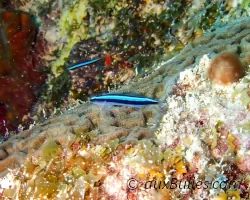
The neon gobyDiscover the neon goby (Elacatinus oceanops), a small western Atlantic reef fish known for its brilliant blue stripe and its role as a cleaner fish that removes parasites from other fish.Read more

The poison gobyDiscover the poison goby (Gobiodon citrinus), a tiny reef fish with a bright yellow body and distinctive blue markings. It lives among branching Acropora corals in the tropical waters of the Indo-Pacific.Read more
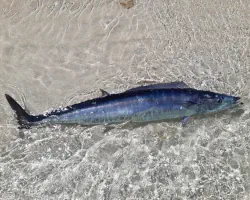
The wahooDiscover the wahoo (Acanthocybium solandri), a powerful pelagic predator found in tropical and subtropical oceans. Recognizable by its streamlined body and distinctive blue vertical stripes, it is a fast swimmer that feeds mainly on fish and squid.Read more
Photo of the Day
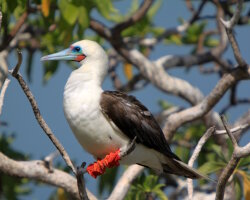
Fou à pieds rouges
(Sula sula)
(Sula sula)
 Copyright © 2007-2026 auxBulles.com - All rights reserved. Legal notices.
Photo credits - Our partners