

Islands destinationBora Bora islandSociety islands - French Polynesia | Pacific Ocean
Last updated on 08/21/2026 at 06:11 PM
Located in the heart of the Society islands in French Polynesia, Bora Bora is one of the South Pacific's most iconic destinations. Dominated by majestic Mount Otemanu, this former volcanic island is surrounded by a lagoon in countless shades of blue, itself protected by a coral reef and dotted with small coral islets known as motu.
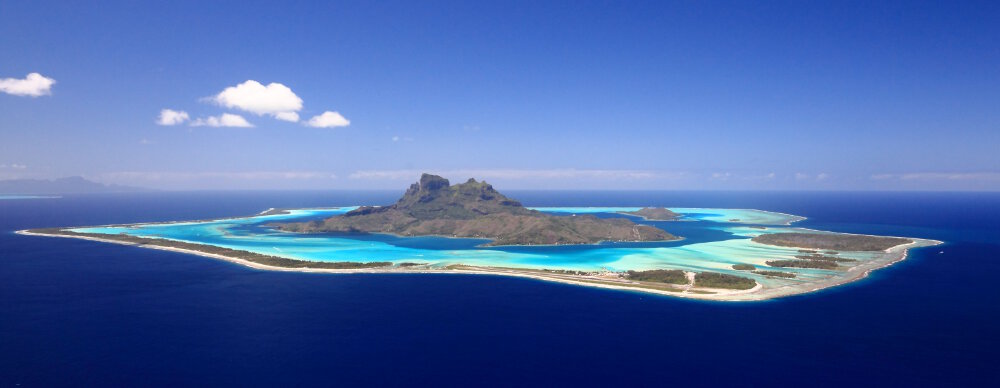
Bora Bora island (Océan Pacifique) © Achim Baqué | Dreamstime.com
Nicknamed the Pearl of the Pacific, Bora Bora combines spectacular tropical landscapes, white-sand beaches, crystal-clear waters, and luxury accommodations, particularly its famous overwater bungalows. Although the island is especially popular for honeymoons and romantic getaways, its lagoon and mountains also offer numerous activities, from scuba diving and boat excursions to hiking.
Mount Otemanu and the landscapes of Bora Bora
At the center of Bora Bora rises Mount Otemanu, a former volcano whose summit reaches 2,385 feet. With its dark, rugged silhouette towering over the lagoon, it is the island's most recognizable landmark and can be seen from numerous viewpoints, both along the shoreline and from the motu surrounding the main island.
Bora Bora's mountains are covered in lush tropical vegetation that contrasts with the lagoon's turquoise waters. Several excursions allow visitors to explore the island's interior by hiking, off-road vehicle, or bicycle, while boat trips offer an exceptional perspective of Mount Otemanu and the various motu. For travelers seeking spectacular views, helicopter flights also provide the opportunity to admire the entire lagoon from above.
The lagoon, the heart of the island
The Bora Bora Lagoon is the island's main attraction. Its shallow, crystal-clear waters, protected by the coral reef, display countless shades of blue and are perfect for swimming, kayaking, paddleboarding, and snorkeling. A boat excursion allows you to explore different parts of the lagoon, discover coral gardens, and reach some of the motu for a lunch with your feet in the water.
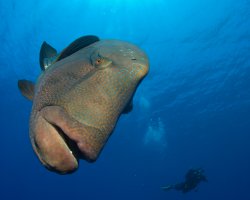
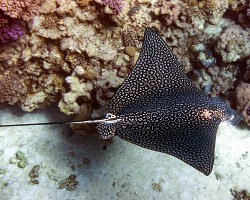
The lagoon is also home to a remarkable diversity of marine life. Depending on the sites visited, excursions may include encounters with manta rays, eagle rays, reef sharks, and numerous tropical fish. Divers can explore the reefs and deeper waters around the island, where the abundance of marine life makes Bora Bora a particularly appealing scuba diving destination.
Matira and the beaches of Bora Bora
Located at the southern tip of the main island, Matira Beach is Bora Bora's most famous public beach. Its light-colored sand, turquoise waters, and shallow seafloor make it a favorite spot for swimming and snorkeling. It also provides an opportunity to enjoy the lagoon without staying at one of the large resorts located on the motu.
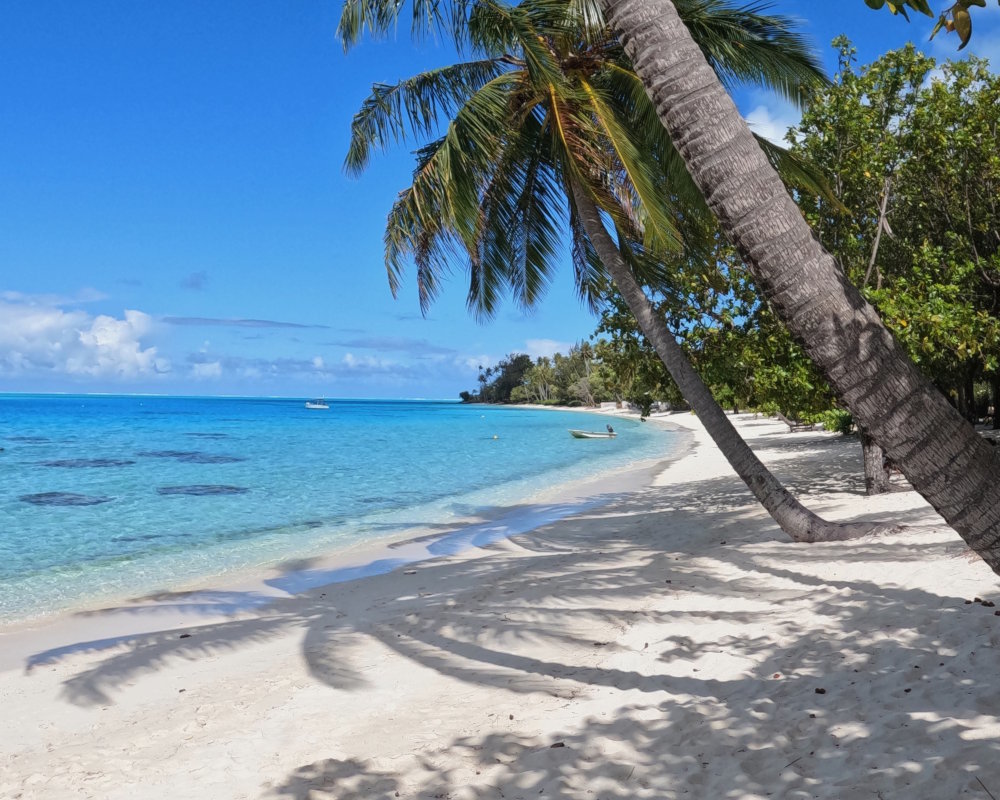
The white-sand beach of Matira in Bora Bora, French Polynesia © Eric Dhooghe | Dreamstime.com
The island's other beaches and small coves offer a variety of settings, while the motu provide even more secluded landscapes in the heart of the lagoon. A boat excursion is one of the best ways to discover these islets, often lined with coconut palms and white-sand banks. At the end of the day, a sunset cruise offers the chance to enjoy the last rays of sunlight over Mount Otemanu and the lagoon.
A destination of romance and luxury
Bora Bora is world-renowned for its overwater bungalows, which have become one of the iconic images of French Polynesia. Built above the lagoon, these accommodations provide direct access to the turquoise waters and often offer spectacular views of Mount Otemanu. This concept has played a major role in establishing Bora Bora's reputation as a premier destination for honeymoons and romantic getaways.
Luxury, however, extends beyond accommodation. Major resorts also offer spas, restaurants, water activities, and lagoon excursions. It is nevertheless possible to discover a simpler side of Bora Bora by exploring the main island by bicycle, enjoying Matira Beach, or experiencing Polynesian culture.
Bora Bora's culture and history
Behind its image as a tropical paradise, Bora Bora has a rich Polynesian heritage. Ancient marae, sacred temples once used for religious ceremonies, bear witness to the island's history and the importance of traditional culture. Discovering local crafts, cuisine, music, and Polynesian dances also provides a better understanding of Bora Bora's cultural identity.
The island also has a more recent heritage linked to World War II. Bora Bora was used as a U.S. military base as part of Operation Bobcat beginning in 1942. Several remnants of this period can still be seen, including artillery positions and former military equipment, offering another perspective on the island's history.
Must-see attractions
A stay in Bora Bora would not be complete without a lagoon excursion. Take a boat trip to discover the motu, enjoy a snorkeling session in the turquoise waters, and observe rays, reef sharks, and tropical fish. A stop on a motu for lunch in a paradise setting is also one of the island's signature experiences.
On the main island, don't miss Matira Beach and the views of Mount Otemanu. Exploring the interior of Bora Bora on foot, by bicycle, or on an off-road excursion is a great way to complement the lagoon experience. Finally, a sunset cruise or a scenic flight over the island offers a spectacular perspective of the lagoon and motu.
How to get there ?
From France, the main gateway to French Polynesia is Tahiti, home to Tahiti-Faa'a International Airport near Papeete. Once you arrive in Tahiti, you need to take a domestic flight to Bora Bora. The flight from Tahiti takes approximately 50 minutes and is operated in particular by Air Tahiti.
Bora Bora Airport is located on Motu Mute, a small islet north of the main island. Upon arrival, the connection between the airport and the main island or your accommodation is by shuttle boat. Hotels and local operators generally arrange transfers, particularly for properties located on the motu.
The marine species in Bora Bora


Leeward islands
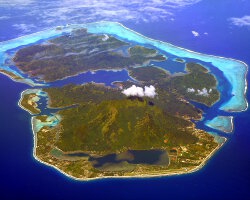
The islands from pacific Ocean
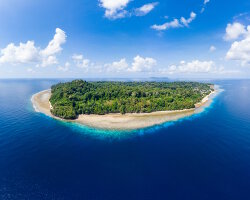
Ai island
Caroline islands
Galapagos islands
Japan islands
Lau islands
Mamanuca islands
Moorea island
Saipan island
Explore new islands
Our latestUpdates
The Guide des poissons de Nouvelle-CalédonieDiscover Guide to the Fishes of New Caledonia by Pierre Laboute and René Grandperrin, an illustrated reference featuring nearly 1,200 species, from rivers and coral reefs to the depths of the ocean.Read more
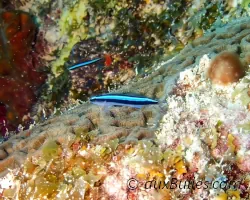
The neon gobyDiscover the neon goby (Elacatinus oceanops), a small western Atlantic reef fish known for its brilliant blue stripe and its role as a cleaner fish that removes parasites from other fish.Read more

The poison gobyDiscover the poison goby (Gobiodon citrinus), a tiny reef fish with a bright yellow body and distinctive blue markings. It lives among branching Acropora corals in the tropical waters of the Indo-Pacific.Read more
Photo of the Day
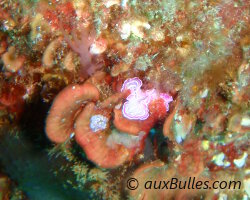
Ver plat rose
(Prostheceraeus roseus)
(Prostheceraeus roseus)
 Copyright © 2007-2026 auxBulles.com - All rights reserved. Legal notices.
Photo credits - Our partners