

Islands destinationRimatara islandTubuai islands - Austral islands - French Polynesia | Pacific Ocean
Last updated on 08/21/2026 at 06:11 PM
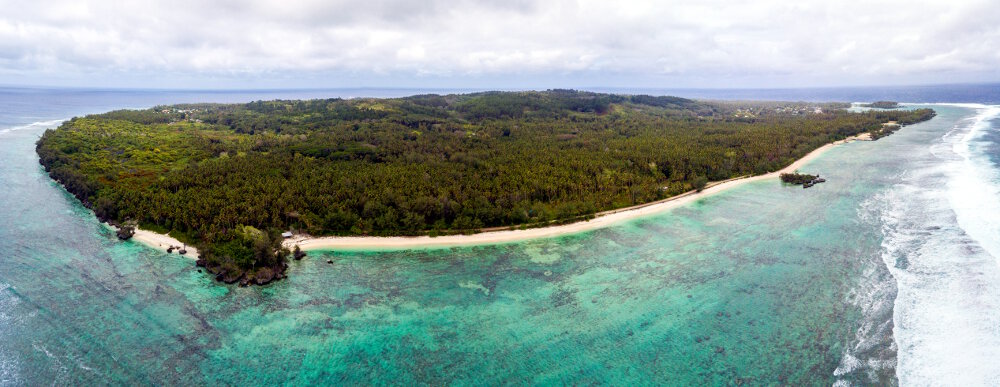
Rimatara island (Océan Pacifique) © Dmitry Malov | Dreamstime.com
Located about 400 miles south of Tahiti, Rimatara is the smallest inhabited island in the Austral Islands of French Polynesia. Covering just 3.5 sq mi, this small, almost circular volcanic island offers a very different experience from the best-known Polynesian destinations. Here, there are no large hotels or mass tourism, but peaceful villages, plantations, white-sand beaches, and particularly abundant tropical vegetation.
Rimatara is best known for its exceptional cultural and natural heritage. The island is home to the Kuhl's Lorikeet, called Ura by the local people, a small parrot with striking colors that has become the emblem of Rimatara and one of the rarest bird species in French Polynesia. From exploring the villages of Amaru, Anapoto, and Mutuaura to visiting ancient religious and royal sites, cycling, and observing wildlife, Rimatara is an ideal destination for discovering an authentic and unspoiled side of Polynesia.
A small, unspoiled island in the heart of the Austral Islands
Rimatara belongs to the Tubuai Islands group within the Austral Islands. Covering about 3.5 sq mi and with a circumference of barely 5.3 miles, it is the smallest inhabited island in the archipelago. Its relatively low-lying terrain and almost circular shape make it easy to explore much of the island, particularly on foot or by bicycle.
The interior of Rimatara looks more like a vast tropical garden than a traditional beach destination. Taro plantations, fruit trees, pandanus, and numerous flowering plants create an exceptionally lush landscape. The coastline alternates between small coves, white-sand beaches, and rocky areas where feo, formations of fossilized coral, sometimes emerge. This abundant natural environment partly explains the island's agricultural character and the still very traditional way of life of its inhabitants.
The three main villages of Rimatara are Amaru, Anapoto, and Mutuaura. A walk through these villages offers a glimpse of a much more secluded Polynesia than that of Tahiti or Bora Bora, where agriculture, handicrafts, and community life still play an important role. Tourism remains deliberately limited, and accommodations are mainly provided by family-run guesthouses.
The Ura, Rimatara's emblematic bird
Discovering Rimatara is inseparable from encountering the Ura, the local name for the Kuhl's Lorikeet (Vini kuhlii). With its red, blue, purple, and green plumage, this small parrot is a remarkable sight as it moves through the trees in search of nectar and fruit. Rimatara is now one of its last natural refuges, and the species receives special protection on the island.
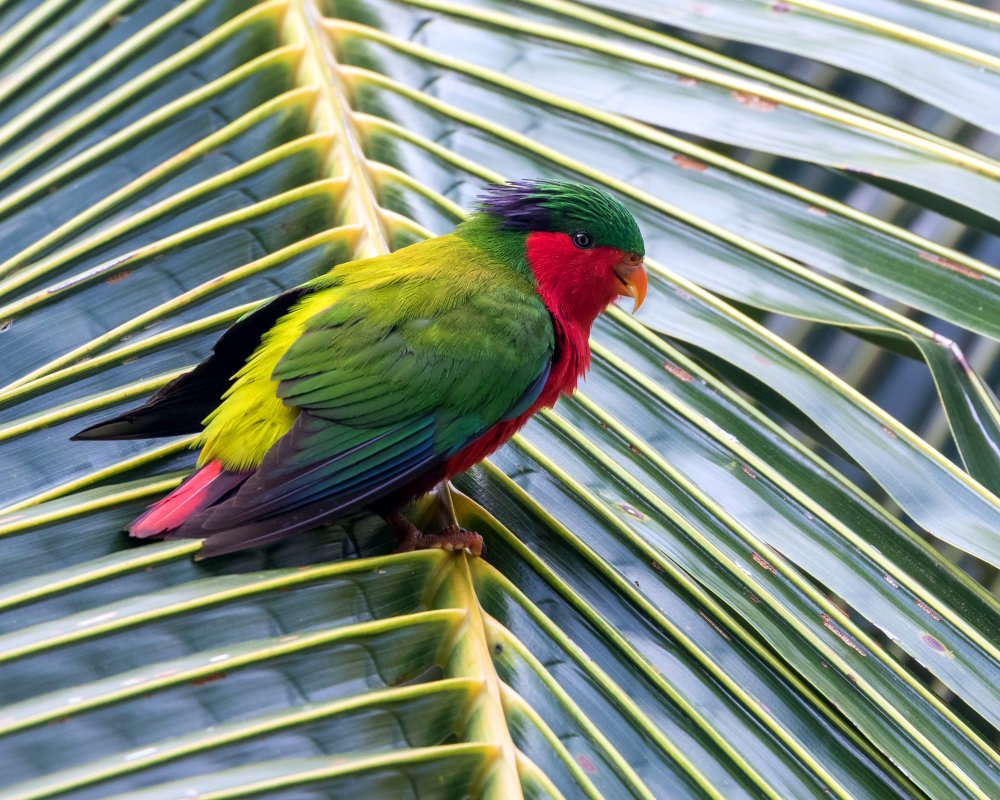
A Kuhl's Lorikeet (Vini kuhlii), called Ura by the local people, the emblematic bird of Rimatara island in the Austral Islands, French Polynesia © Agami Photo Agency | Dreamstime.com
The presence of the Ura is also closely linked to the recent history of biodiversity conservation in the Austral Islands. The species was reintroduced to Atiu, in the Cook Islands, in 2007 using birds from Rimatara. This operation highlights the importance of this small Polynesian island in preserving this rare species. During an excursion, it is possible to search for the bird with a local guide while taking care not to disturb the birds.
Rimatara is also home to a second endemic bird species, the Rimatara Reed Warbler (Acrocephalus rimitarae). This ornithological richness adds a special dimension to walks through the island's interior, where fruit trees and lush vegetation provide suitable habitat for numerous species. For travelers interested in nature, Rimatara is therefore one of the most unusual destinations in the Austral Islands.
Amaru and Rimatara's royal heritage
The village of Amaru, Rimatara's main village, is one of the best starting points for discovering the island's history. Its former seaside cemetery, located facing the ocean, contains the graves of the royal family that once ruled Rimatara. The tombs recall the existence of the Tamaeva dynasty, which ruled the island until the end of the 19th century and whose memory remains deeply rooted in local culture.
Rimatara's heritage, however, extends beyond the royal tombs. The island preserves several remains from the pre-European period, including the Hirirua marae and Pito, a small ceremonial site located in the island's interior. The Teruatavai caves are also among the remarkable sites to discover. These places provide insight into the social and religious organization of ancient Polynesian communities.
Traditional culture remains very much a part of everyday life. Rimatara has its own dialect and is known for handicrafts made from pandanus. Local residents make hats, baskets, and various woven items. Visiting a workshop or craft center is a good way to better understand this traditional skill passed down through generations and to meet the island's inhabitants.
Things not to miss
The village of Amaru and its former royal cemetery are essential stops for understanding Rimatara's history. Facing the ocean, the graves of former rulers recall the island's royal past. Take time to discover the churches and the villages of Anapoto and Mutuaura as well, which offer an appreciation of the peaceful atmosphere of local life.
The Hirirua marae, Pito, and the Teruatavai caves are among the island's main cultural and archaeological sites. To better understand their history and the traditions associated with them, it is best to visit them with a local guide or ask for advice at your family-run guesthouse.
Finally, do not miss the opportunity to discover the Ura, the Kuhl's Lorikeet, a true symbol of Rimatara. An excursion dedicated to this rare bird allows you to search for it in its natural environment. The island's beaches and small coves are also worth a stop, particularly to enjoy the clear waters, while a walk or bike ride through the plantations reveals another side of Rimatara.
How to get there ?
Rimatara has its own airport and is served by Air Tahiti from Tahiti-Faa'a International Airport, with a flight time of almost 2 hours. Air service to the Austral Islands varies depending on the day and time of year, with Rimatara generally receiving several flights per week.
Rimatara Airport is about 15 minutes by car from the main villages. There is no regular shuttle service, so it is advisable to arrange your transfer with your family-run guesthouse or accommodation before arrival. Once there, the island's small size makes bicycles and walking convenient ways to get around, although a car can be useful for exploring the various villages and sites more easily.
Rimatara can also be visited as part of a cruise through the Austral Islands, with some maritime routes stopping in the archipelago. Whatever the way you arrive, Rimatara should be considered a destination focused on discovering nature, culture, and local life rather than tourist infrastructure. This low level of tourism is precisely one of its main attractions.
The marine species in French Polynesia






Tubuai islands



The islands from pacific Ocean

Bora Bora island
Clipperton island

Easter island

Guam island

Lau islands

New-Zealand

Vanua Levu island

Yasawa islands
Explore new islands






Our latestUpdates
The Guide des poissons de Nouvelle-CalédonieDiscover Guide to the Fishes of New Caledonia by Pierre Laboute and René Grandperrin, an illustrated reference featuring nearly 1,200 species, from rivers and coral reefs to the depths of the ocean.Read more
The neon gobyDiscover the neon goby (Elacatinus oceanops), a small western Atlantic reef fish known for its brilliant blue stripe and its role as a cleaner fish that removes parasites from other fish.Read more

The poison gobyDiscover the poison goby (Gobiodon citrinus), a tiny reef fish with a bright yellow body and distinctive blue markings. It lives among branching Acropora corals in the tropical waters of the Indo-Pacific.Read more
Photo of the Day
Crevette nettoyeuse d'Amboine
(Lysmata amboinensis)
(Lysmata amboinensis)
 Copyright © 2007-2026 auxBulles.com - All rights reserved. Legal notices.
Photo credits - Our partners