

Sealife guideThe blue-barred parrotfishScarus ghobban
Last updated on 11/07/2026 at 02:20 AM
The blue-barred parrotfish (Scarus ghobban) is a tropical Indo-Pacific fish, recognizable by its bright colors and fused teeth that form a distinctive beak. It is primarily found around coral reefs and lagoons, where it feeds by scraping algae from rocks and reef structures.
Taxonomy
English names
Blue-barred parrotfish
French namesPoisson perroquet barbe bleuePoisson perroquet crèmePoisson perroquet sourisPoisson perroquet à bandes bleuesPoisson perroquet à écailles jaunes
Spanish namesLoro barbazul
Scientific nameScarus ghobban (Forsskål, 1775)
FamilyScaridae
OrderPerciformes
ClassActinopterygii
Description
The blue-barred parrotfish has an elongated, laterally compressed body, a rounded head and a distinctive mouth with fused teeth forming two dental plates that make up a powerful beak. Its lips partially cover these plates. Its coloration varies depending on its stage of development and sex.

The blue-barred parrotfish (Scarus ghobban) © Para827 | Dreamstime.com
During the initial phase, the body is yellowish-orange, with five irregular blue bars often visible along the sides. The scales may also have bluish centers. The head is yellowish to orange, while the dorsal and anal fins are yellow to orange with blue edges.
During the terminal phase, males display blue-green or greenish coloration on the back and upper body, while the sides are generally yellow. The scales have pinkish edges, and blue stripes extend backward from the eyes. The dorsal and anal fins retain their blue margins. The caudal fin, slightly notched in individuals in the initial phase, becomes crescent-shaped in large males.
The blue-barred parrotfish averages around 12 inches in total length, although the largest individuals can reach up to 30 inches.
Geographic range
The blue-barred parrotfish inhabits tropical and subtropical waters throughout the Indo-Pacific, from the Red Sea, Persian Gulf and eastern coast of Africa to the Pacific islands, including Rapa in French Polynesia. Its range extends north to southern Japan and south to the western and eastern coasts of Australia.
Other islands where the species has been recorded include Socotra, the Seychelles, Madagascar and Lord Howe Island, off the coast of Australia.
The blue-barred parrotfish is also found in the eastern Pacific, from the Gulf of California to Ecuador. It has also colonized the eastern Mediterranean through the Suez Canal, where it is considered a non-native species originating from the Indo-Pacific.
Habitat
The blue-barred parrotfish inhabits coral reefs in lagoons as well as exposed offshore reefs. It is also found along reef slopes and near drop-offs, generally in shallow to moderately deep water, but can be observed at depths of up to 295 feet.
Adults are often solitary, although they may occasionally gather in small groups. Males are commonly found along the outer edges of barrier reefs, while females may occupy deeper areas. Juveniles tend to live closer to shore, on algae-rich reefs.
Diet
The blue-barred parrotfish is primarily herbivorous. Using its fused, beak-like teeth, it scrapes algae from rocks and coral surfaces. By grazing on these surfaces, it helps regulate algae growth on reefs and contributes to maintaining the balance of coral reef ecosystems.
Reproduction
The blue-barred parrotfish is an oviparous species that reproduces by releasing eggs and sperm into the water. During spawning, individuals may form pairs. After fertilization, the eggs develop in the water and hatch into pelagic larvae that drift in the plankton before gradually settling in coastal reef habitats.
This species is also a protogynous hermaphrodite: individuals begin their reproductive lives as females, and some later change sex to become males.
Did you know ?
The blue-barred parrotfish can change sex during its lifetime ! This phenomenon, known as protogynous hermaphroditism, means that an individual begins its reproductive life as a female and may later become a male. This transformation is accompanied by a change in coloration, which explains why adult males and females can look very different.
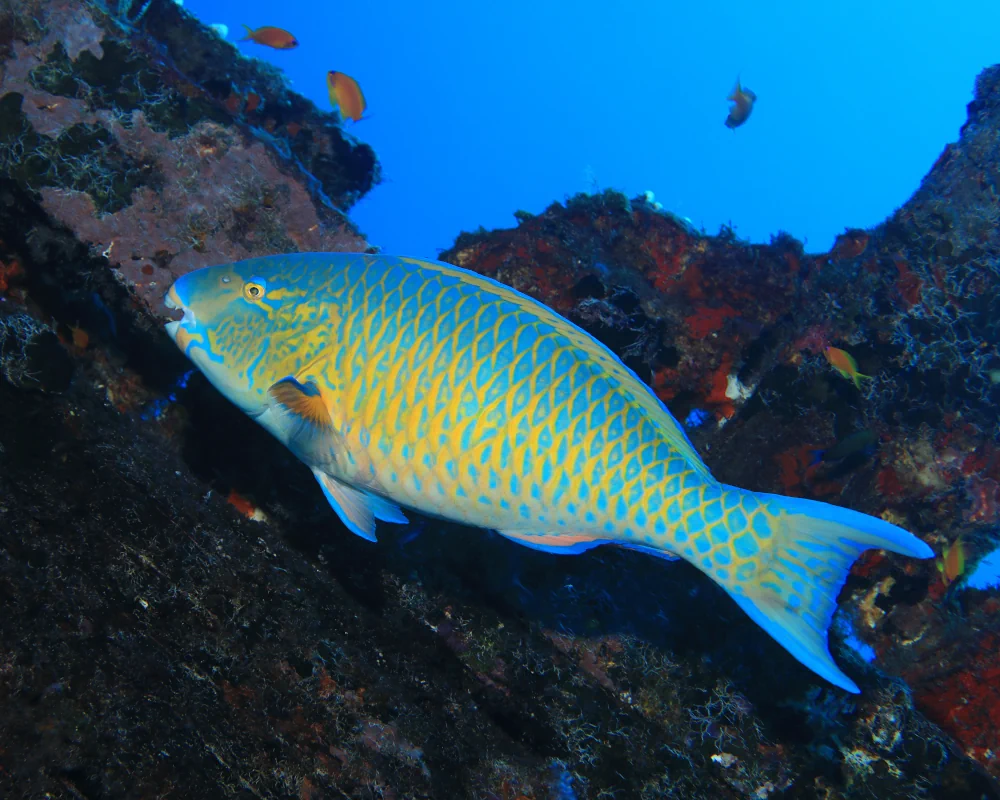
The blue-barred parrotfish (Scarus ghobban) © Aquanaut4 | Dreamstime.com
The blue-barred parrotfish is listed as many other marine species within The IUCN Red List of threatened species. The blue-barred parrotfish appears in the IUCN Red List since 2012 within the category Least Concern !
Within the same genus
Blue parrotfishScarus coeruleus

Ember parrotfishScarus rubroviolaceus
Midnight parrotfishScarus coelestinus
Princess parrotfishScarus taeniopterus
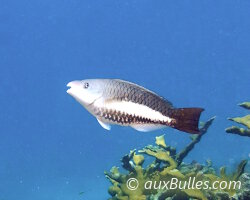
Queen parrotfishScarus vetula
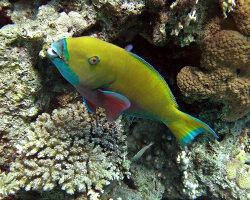
Rusty parrotfishScarus ferrugineus
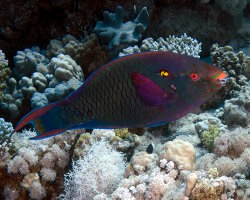
Swarthy ParrotfishScarus niger
Within the same family
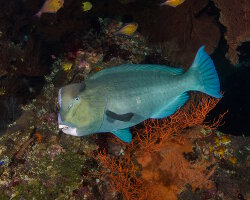
Bumphead parrotfishBolbometopon muricatum
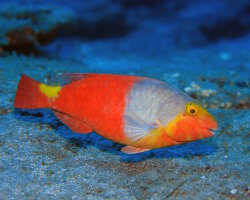
European parrotfishSparisoma cretense
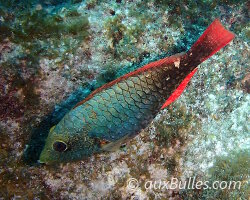
Redband parrotfishSparisoma aurofrenatum
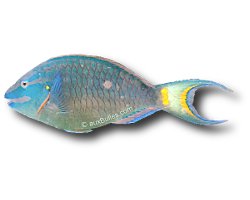
Stoplight parrotfishSparisoma viride
Discover also
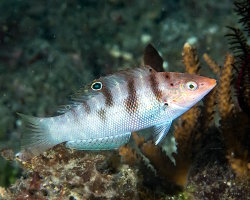
Batu corisCoris batuensis

Blackspot razorfishIniistius dea

Harlequin bassSerranus tigrinus
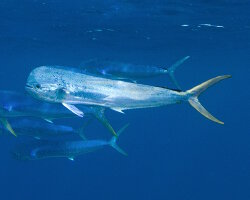
Mahi-mahiCoryphaena hippurus

Pacific Diana's pigfishBodianus dictynna
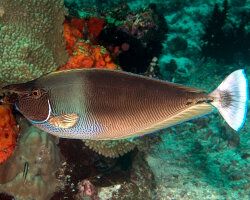
Paletail unicornfishNaso brevirostris

Seale's cardinalfishOstorhinchus sealei

Yellowfin breamAcanthopagrus australis
The marine species in the Indo-Pacific

Our latestUpdates

Major movesThe 2026 Route du Rhum enters a decisive phase as Tom Laperche extends his lead in the Ultim class, Armel Le Cléac'h capsizes, and Class40 skippers prepare to face a powerful weather front.Read more

A tough startThe 2026 Route du Rhum gets off to an intense start, with major technical failures, Francis Joyon's capsize, impressive speeds and strategic route choices near the Azores. A look back at the first 48 hours of racing.Read more

A smooth start, an uncertain AtlanticDiscover the 2026 Route du Rhum start off Saint-Malo, where favorable initial conditions contrast with an uncertain Atlantic crossing shaped by changing winds and weather.Read more
Photo of the Day

Méduse pélagique
(Pelagia noctiluca)
(Pelagia noctiluca)
 Copyright © 2007-2026 auxBulles.com - All rights reserved. Legal notices.
Photo credits - Our partners