

Islands destinationKadavu: discover Fiji's wild islandFiji islands | Pacific ocean
Last updated on 08/21/2026 at 01:25 AM
Located in the southern part of the Fijian archipelago, Kadavu is the country's fourth-largest island. Much less developed for tourism than Viti Levu or Vanua Levu, it appeals to travelers with its pristine landscapes, tropical forests, villages and, above all, the coral reefs surrounding its coastline. The island is an ideal destination for travelers seeking nature and outdoor activities.
Kadavu is particularly famous for the Great Astrolabe Reef, one of the largest barrier reefs in the Southern Hemisphere. Its waters, rich in marine life, attract divers and snorkelers, while the island's forests offer numerous opportunities for hiking and birdwatching. You can also explore Kadavu by kayak, discover its wild coastline and meet local communities.
A pristine island in southern Fiji
Kadavu stands apart from Fiji's main tourist islands because of its still-wild character. Tourist infrastructure is limited, and much of the island remains covered in tropical vegetation. Roads are few, and some villages and natural sites can only be reached by boat or on foot.
This low level of development gives Kadavu a particularly peaceful atmosphere. You can discover secluded beaches, forest-lined bays, mangroves and lush hills without encountering the crowds found at the archipelago's main beach resorts.
The island is particularly well suited to travelers who want to get away from the busiest tourist routes. Activities focus on nature, scuba diving, snorkeling, kayaking, fishing and hiking through the tropical forest.
The Great Astrolabe Reef
The Great Astrolabe Reef is one of Kadavu's greatest natural treasures. This vast barrier reef runs along the southern coast of the island before extending northeast around Ono island and several smaller islands. It forms an immense network of reefs, passages and lagoons that are particularly rich in marine life.
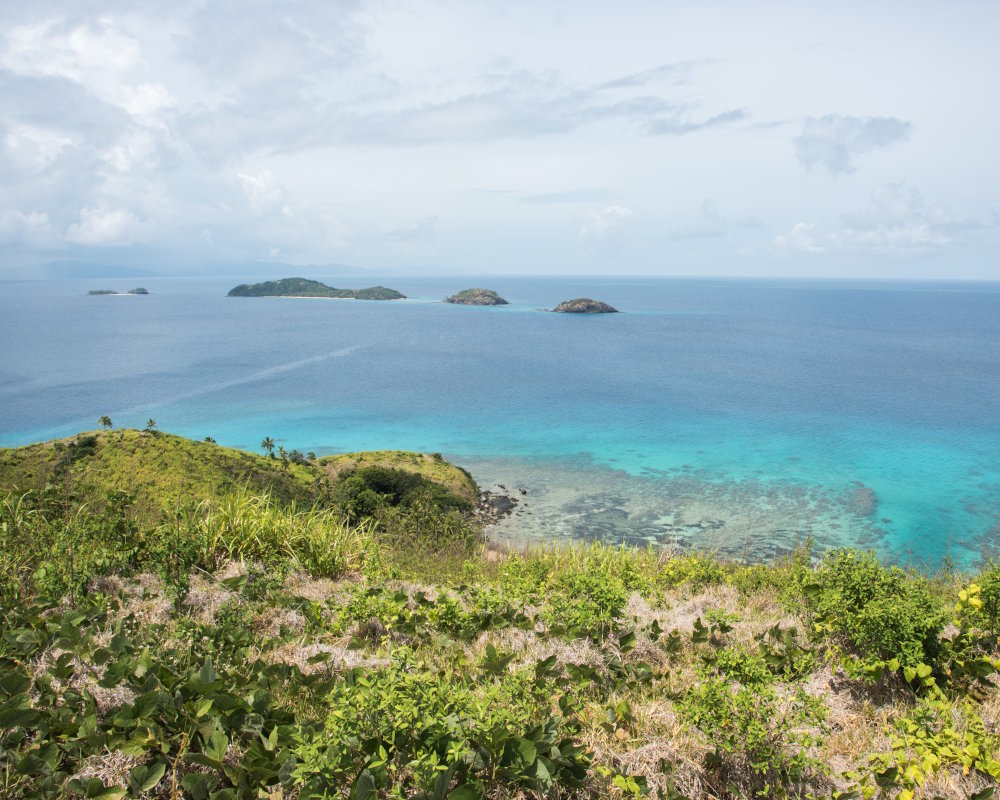
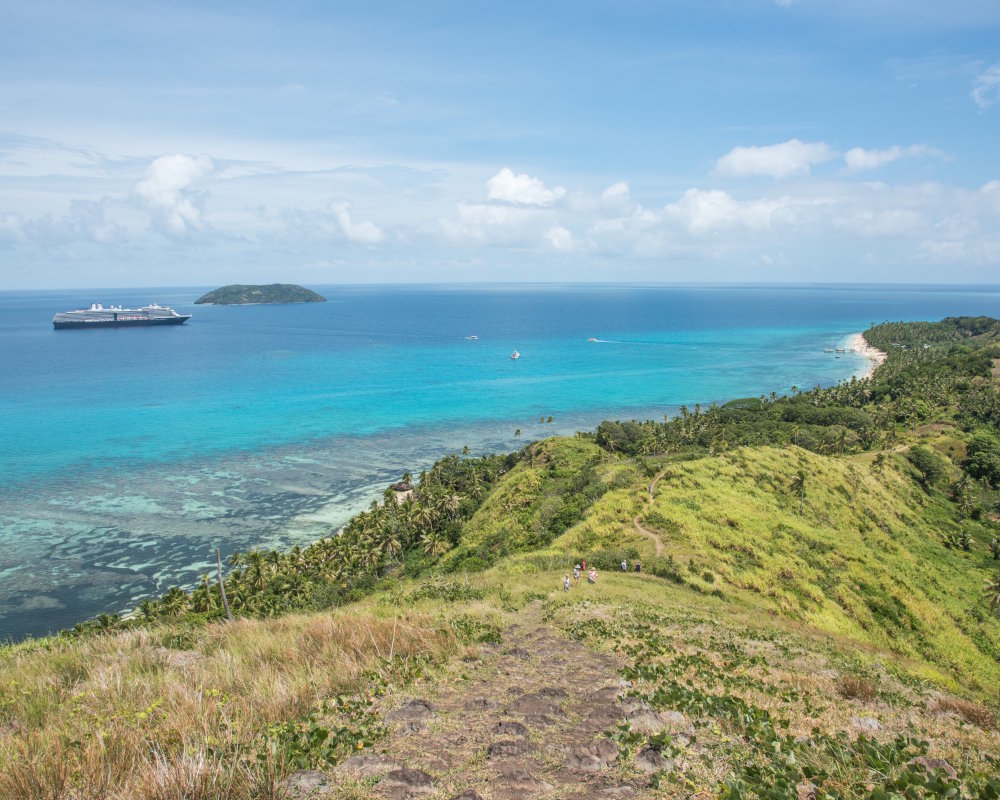
Currents flowing through some of the passages bring nutrients that encourage the growth of abundant corals and attract large fish. Divers may encounter schools of fish, giant trevally, tuna, sharks and various pelagic species.
Dozens of scuba diving sites can be accessed around the reef. Some are suited to experienced divers because of the currents, while more sheltered areas also offer opportunities for snorkeling and observing the reefs from the surface.
Swimming with reef manta rays
Kadavu is also one of Fiji's most interesting destinations for observing reef manta rays. Several sites around the Great Astrolabe Reef regularly attract these large rays, which come to feed in plankton-rich waters or visit cleaning stations where small fish and shrimp remove parasites from their bodies.
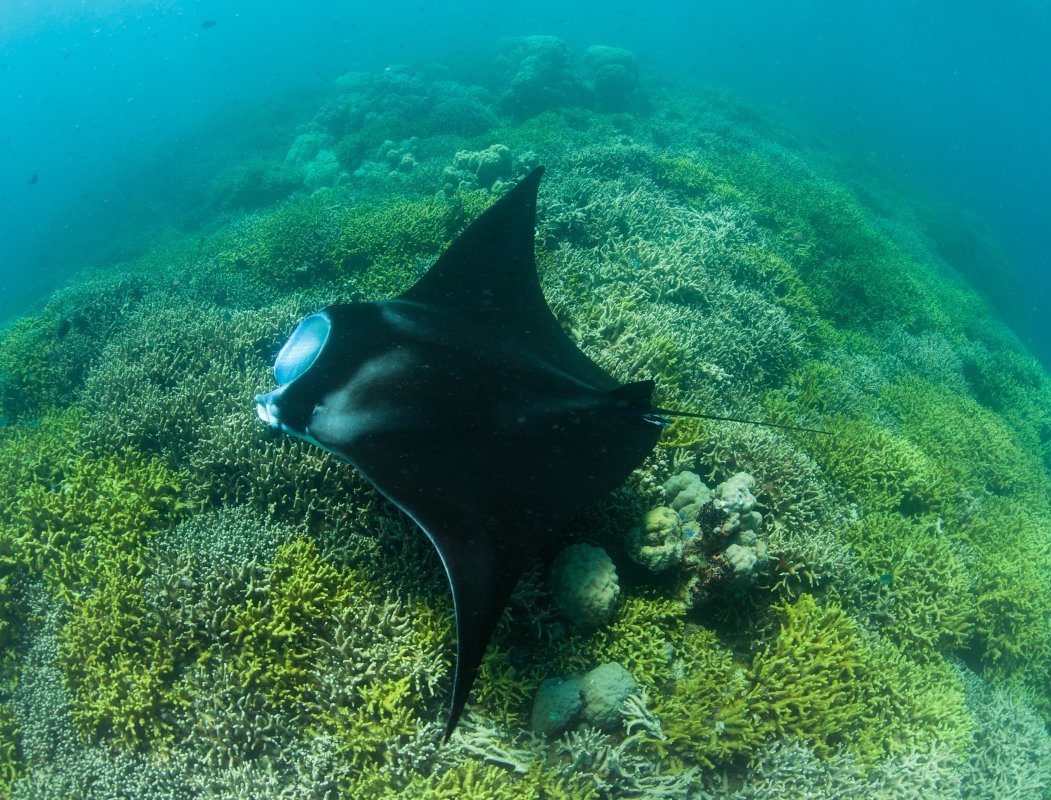
A reef manta ray (Mobula alfredi) swimming above a shallow cleaning station © Ethan Daniels | Dreamstime.com
The Manta Reef, located offshore east of the northern tip of the small island of Vurolevu, is particularly renowned for encounters with these impressive animals, which often visit the shallow cleaning station in the morning. Depending on the site, they can be observed while scuba diving or snorkeling, particularly when conditions allow access to the shallower areas.
As with any encounter with a large marine animal, it is important to maintain a respectful distance and never attempt to touch the rays. Sightings can also vary depending on weather conditions, currents and the availability of food.
Kadavu's tropical forests
Away from the coast, tropical forests cover much of Kadavu. The island's terrain, combined with its warm and humid climate, supports dense vegetation that provides habitat for a particularly interesting variety of terrestrial wildlife.
Kadavu is home to several bird species endemic to Fiji. You may try to spot the Kadavu parrot and the whistling fruit dove, two emblematic species of the island's birdlife. In total, four bird species endemic to Kadavu are particularly sought after by birdwatchers.
To increase your chances of spotting these birds, it is best to go with a local guide familiar with the trails and wildlife habits. The forests and mangroves also provide an excellent opportunity to discover terrestrial biodiversity that differs from that of Fiji's more developed islands.
Hiking and exploring the wild coastline
Kadavu's landscapes can also be explored on foot. Several trails cross the tropical forest and lead to viewpoints, waterfalls or villages. These hikes offer another way to appreciate the island's terrain, away from its exclusively marine landscapes.
Kadavu's coastline is also particularly well suited to sea kayaking. You can paddle between small bays, along cliffs and into some mangrove areas. Multi-day excursions even allow you to explore part of the coastline while combining kayaking, snorkeling and hiking.
Exploring the coastline should nevertheless be organized with a professional operator or local guide, particularly to account for currents, weather and areas that are difficult to access. The isolation of some areas is part of Kadavu's appeal, but it also requires careful planning.
Villages at the heart of local life
Kadavu is home to numerous villages where daily life remains closely connected to the sea, the forest and Fijian traditions. Local communities also play an important role in protecting the natural resources and reefs surrounding the island.
A visit accompanied by a local resident allows you to discover another side of Kadavu and learn more about local customs. You may be invited to take part in a sevusevu ceremony, during which yaqona, also known as kava, plays an important role in welcoming visitors.
When visiting a village, be sure to respect local customs, places of worship and private property. Asking permission before photographing residents and following your guide's recommendations will help ensure a respectful visit.
Secluded beaches and lagoons
Kadavu's coastline alternates between light-sand beaches, coral reefs, mangroves and sheltered bays. Some beaches are difficult to reach by road and can only be accessed by boat or after a hike, helping preserve their secluded character.
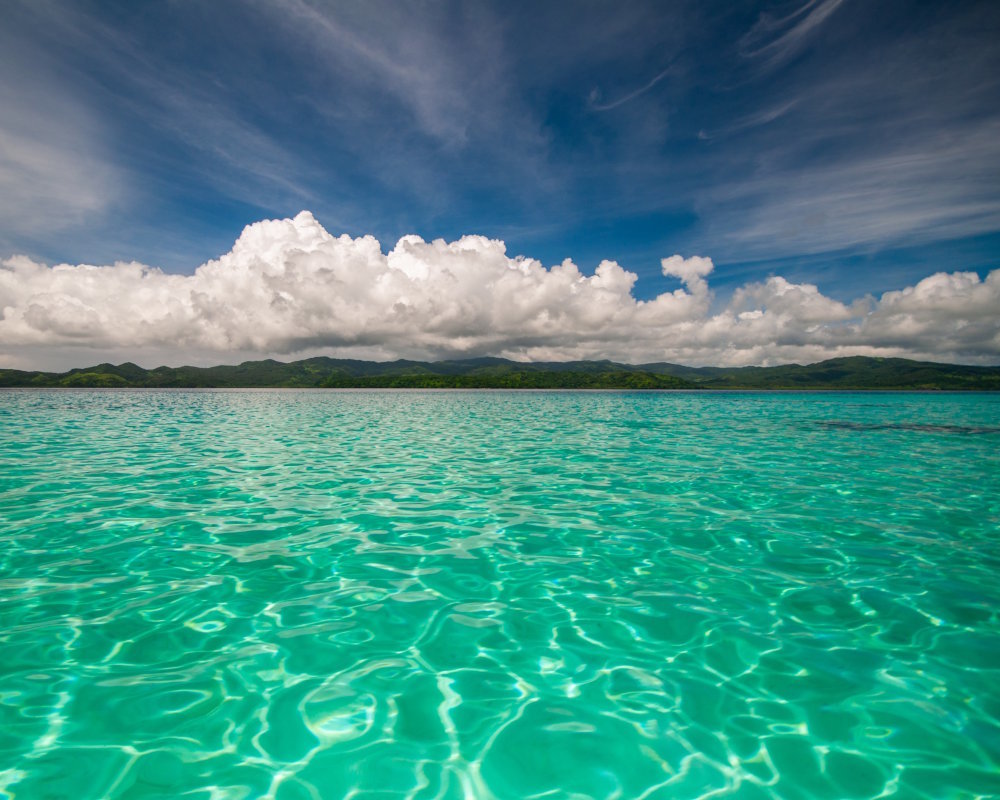
Panoramic view of the crystal-clear waters of a lagoon on Kadavu island, Fiji © Christianherzog | Dreamstime.com
The lagoons and reefs close to shore offer many opportunities for snorkeling. In shallow waters, you can observe tropical fish and corals without necessarily having to scuba dive.
The coastal scenery is particularly impressive when viewed from the water. A boat or kayak excursion allows you to appreciate the island's terrain, nearby islands and the many coves that cut into the coastline.
Things not to miss
The Great Astrolabe Reef is Kadavu's must-see attraction for exploring the underwater world. Scuba diving and snorkeling allow you to discover its colorful reefs and exceptionally rich marine life. Encounters with reef manta rays are also among the island's most sought-after experiences.
On land, you can explore the tropical forests, look for Kadavu's endemic birds and hike to waterfalls or viewpoints with a local guide. A kayaking excursion provides another way to explore the wild coastline, mangroves and secluded bays.
Finally, take time to discover the villages and local traditions. Kadavu offers a Fiji experience focused more on nature and communities than the large beach resorts found on the country's more heavily visited islands.
How to get there ?
The fastest way to reach Kadavu island is by air. The island has Vunisea Airport, which receives domestic flights from Nadi on Viti Levu. The flight from Nadi generally takes between 40 and 50 minutes.
It is also possible to reach Kadavu by boat from Suva on Viti Levu. The crossing is considerably longer, with an overnight journey of around seven to eight hours depending on the service. This option can be appealing to travelers who prefer not to fly, but schedules and sea conditions should be checked before departure.
Once on the island, transportation depends largely on your accommodation and the area you are visiting. Boats are essential for reaching some dive sites, smaller islands and the most remote sections of the coastline. For hikes and village visits, consider organized excursions or traveling with a local guide.
Fiji islands
Fiji islands
Lau islands
Lomaiviti islands
Mamanuca islands
Taveuni island
Vanua Levu island
Viti Levu island
Yasawa islands
The islands from pacific ocean
Explore new islands
Our latestUpdates
The Guide des poissons de Nouvelle-CalédonieDiscover Guide to the Fishes of New Caledonia by Pierre Laboute and René Grandperrin, an illustrated reference featuring nearly 1,200 species, from rivers and coral reefs to the depths of the ocean.Read more
The neon gobyDiscover the neon goby (Elacatinus oceanops), a small western Atlantic reef fish known for its brilliant blue stripe and its role as a cleaner fish that removes parasites from other fish.Read more

The poison gobyDiscover the poison goby (Gobiodon citrinus), a tiny reef fish with a bright yellow body and distinctive blue markings. It lives among branching Acropora corals in the tropical waters of the Indo-Pacific.Read more
Photo of the Day
Ver plat rose
(Prostheceraeus roseus)
(Prostheceraeus roseus)
 Copyright © 2007-2026 auxBulles.com - All rights reserved. Legal notices.
Photo credits - Our partners